Quick Facts
- Adoption Rate: Approximately 86% of YouTube viewers in the United States use the platform to learn new things.
- Teacher Integration: Research indicates that 86% of teachers use YouTube content to assist in lesson planning.
- Daily Consumption: Global users view more than 500 million educational videos on the platform every single day.
- Learning Style: About 65% of the general population are visual learners, making video an ideal medium.
- Core Benefit: YouTube educational videos provide visual pedagogy and micro-learning opportunities that improve information retention.
- Pedagogical Impact: The platform supports flipped classroom models and self-paced instruction for students of all ages.
YouTube educational videos provide visual pedagogy and micro-learning opportunities that improve information retention. The platform supports flipped classroom models and self-paced instruction, allowing students to pause, rewind, and replay complex topics. By offering diverse formats from expert creators, it complements traditional curriculum materials and helps personalize the learning experience for students of all ages.

For a long time, YouTube was synonymous with music videos, cat compilations, and viral challenges. However, a quiet revolution has taken place beneath the surface of the world’s largest video platform. Today, YouTube has evolved into a robust piece of EdTech infrastructure, serving as a primary classroom for millions of self-taught learners and a critical resource for professional educators.
The shift from pure entertainment to a global knowledge repository is driven by the sheer accessibility of the content. Whether you are a college student struggling with multivariable calculus or a professional looking to master Python, there is likely a high-quality video explaining exactly what you need to know. This democratization of information is perhaps the most significant educational advancement of the 21st century.
The Psychology of Visual Pedagogy
Why is a ten-minute video often more effective than an hour spent with a textbook? The answer lies in the science of information retention. Traditional textbooks rely heavily on linguistic processing, which can be taxing for the brain when dealing with abstract concepts. In contrast, youtube educational videos leverage visual pedagogy, combining auditory explanation with moving graphics to reduce the cognitive load.
Research into multisensory learning suggests that when we engage both our visual and auditory senses simultaneously, our brains form stronger neural connections to the material. This is why micro-learning—breaking down complex topics into short, digestible bursts—has become the gold standard for modern education. Instead of a 50-minute lecture, a student can watch three 5-minute videos that each tackle a single specific concept. This asynchronous learning approach allows for self-paced instruction where the learner has total control over the speed of information delivery.
| Feature | Traditional Textbook Learning | YouTube-Based Learning |
|---|---|---|
| Engagement Level | High linguistic demand, often passive | Multisensory engagement, active visual pedagogy |
| Pacing | Fixed by curriculum or reading speed | Self-paced instruction with pause/rewind capabilities |
| Retention Rate | Lower for abstract or mechanical concepts | Higher due to micro-learning and visualization |
| Accessibility | Limited by physical or financial barriers | Free, global access with an internet connection |
The role of creator language also cannot be overstated. Educational creators often explain concepts using relatable analogies and modern vernacular that "speaks" to the viewer, rather than the dense, academic tone found in traditional curriculum integration materials. This shift in instructional design makes daunting subjects like quantum physics or organic chemistry feel approachable.
Best Educational YouTube Videos for Students: An Age-Based Guide
Finding the right content depends heavily on the developmental stage of the learner. The platform offers a vast spectrum of resources, but navigating them requires a curated approach to ensure the material matches the student’s needs.
Early Learners: Educational Videos for 7 Year Olds
For younger children, the goal is to spark curiosity while building foundational skills in literacy and numeracy. High-quality educational videos for 7 year olds on youtube focus on bright visuals, catchy music, and repetitive patterns to reinforce basic concepts.
- SciShow Kids
- Subscribers: 1M+
- USP: Explains "why" things happen in the natural world through experiments and animations.
- Primary Subject: General Science
- Numberblocks
- Subscribers: 6M+
- USP: Uses personified blocks to teach arithmetic and number sense visually.
- Primary Subject: Early Mathematics
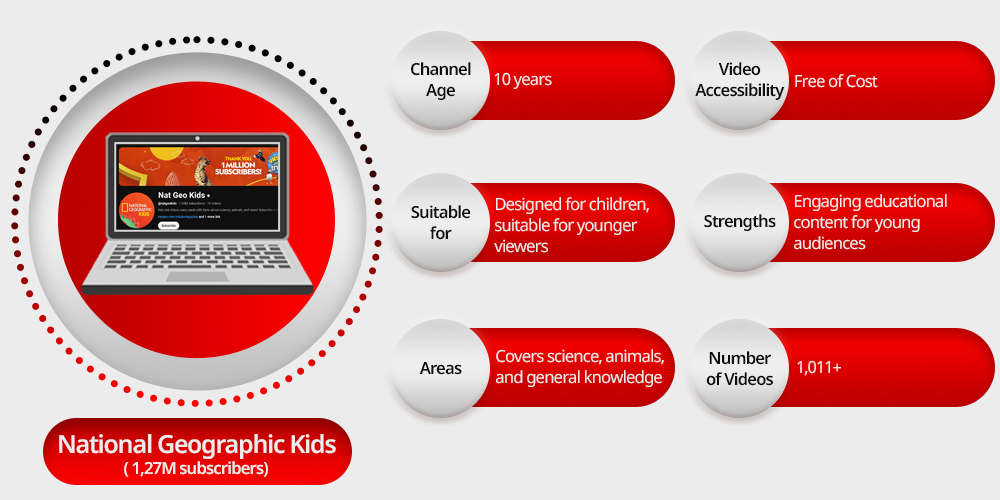
- National Geographic Kids
- Subscribers: 900K+
- USP: High-production value videos about animals and geography.
- Primary Subject: Biology and Ecology
Middle and High School: Educational Videos for Teens
As students move into more complex academic territory, they need resources that support their official school curriculum. The best educational youtube videos for students in this age bracket often focus on test preparation and simplifying difficult subjects like algebra or world history. Educational youtube videos for teens bridge the gap between classroom lectures and homework help.
- CrashCourse
- Subscribers: 15M+
- USP: Fast-paced, humorous, and highly structured courses on everything from Literature to Chemistry.
- Primary Subject: Multi-disciplinary
- Veritasium
- Subscribers: 14M+
- USP: Tackles scientific misconceptions and complex physics through high-end cinematography and experiments.
- Primary Subject: Physics and Engineering
Best YouTube Channels for Math and Science
When it comes to the "hard sciences," YouTube is an absolute powerhouse. The best youtube channels for math and science have become so influential that they are often used as primary teaching tools in a flipped classroom model, where students watch the instructional video at home and do the "homework" in class with the teacher.
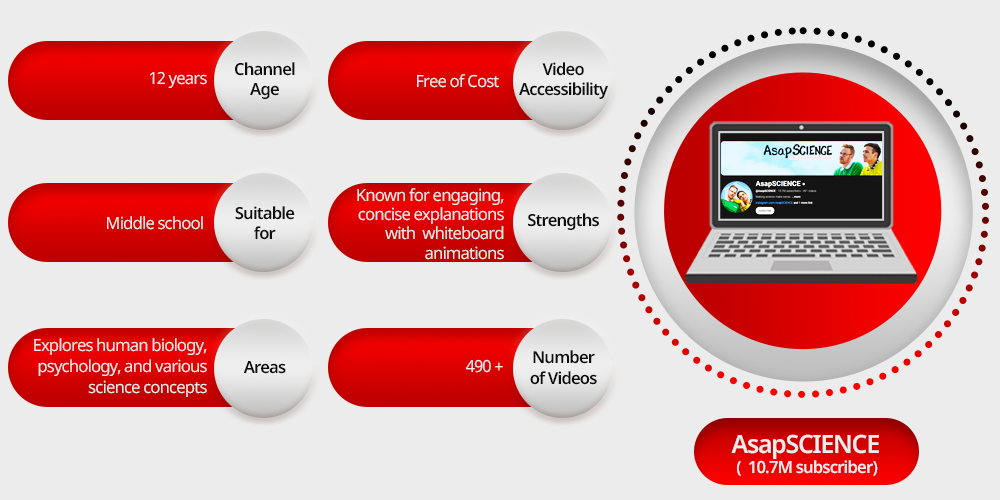
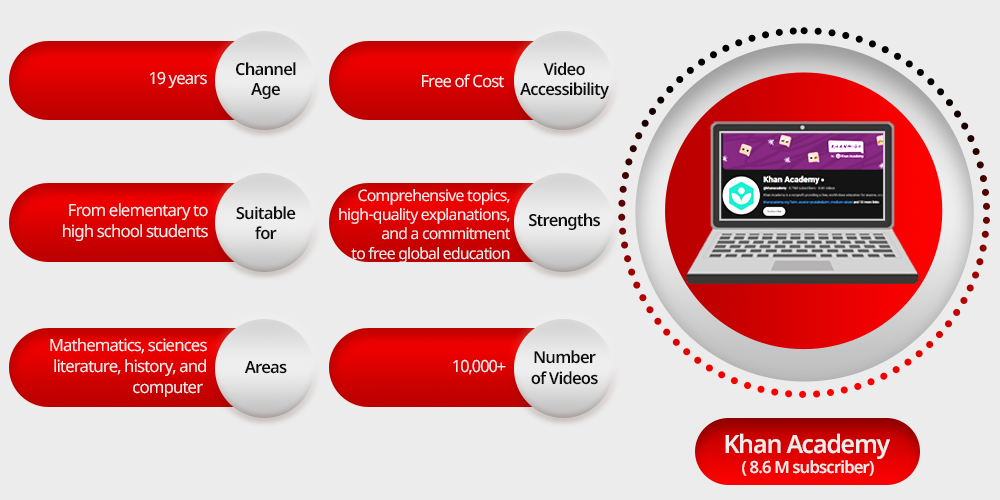
- Khan Academy
- Subscribers: 8M+
- USP: A comprehensive, non-profit approach to education with a focus on mastery-based learning.
- Primary Subject: K-12 Mathematics, Science, and Humanities
- Numberphile
- Subscribers: 4M+
- USP: Celebrated mathematicians explain the beauty and mystery of numbers on brown paper.
- Primary Subject: Advanced Mathematics
- SciShow
- Subscribers: 7M+
- USP: Daily science news and deep dives into the quirks of the universe.
- Primary Subject: Biology, Chemistry, and Space Science
Beyond K-12: YouTube Educational Videos for Adults
Learning doesn't stop after graduation. In fact, youtube educational videos for adults are one of the fastest-growing segments of the platform. Whether it is for professional development, competitive exam prep, or simply lifelong learning, adults are using the platform to gain tangible skills.
Professional skill-building is a major draw. You can find university-level lectures on computer science from Harvard (CS50) or deep dives into financial literacy and investment strategies. For those looking for intellectual stimulation without the pressure of a degree, channels focused on philosophy, sociology, and high-level history provide a constant stream of high-quality content.
Academic credibility is crucial for adult learners. Many institutions now host their own channels, providing a seal of approval on the information presented. This allows learners to engage with subject matter experts directly, bypassing the traditional gatekeepers of higher education.
Ensuring Quality: How to Evaluate Educational Video Credibility on YouTube
With millions of hours of content uploaded daily, not every video is accurate. Developing digital literacy is essential for any learner using the platform. Knowing how to evaluate educational video credibility on youtube is a skill that must be taught alongside the subject matter itself.
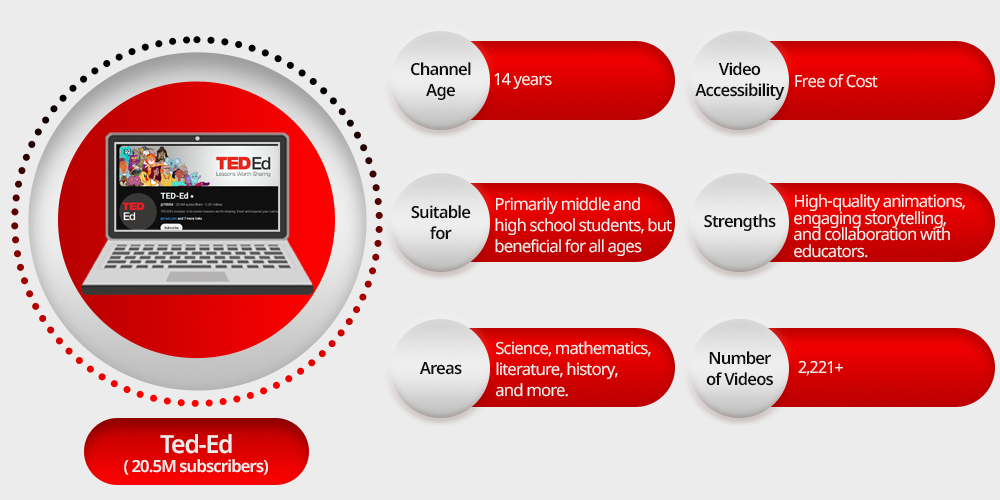
First, check the credentials of the creator. Are they an established expert in their field, or are they a hobbyist? While many hobbyists produce excellent work, for academic subjects, it is often better to look for reputable institutional affiliations. Following organizations like TED-Ed, NASA, or the Smithsonian ensures that the content has gone through a rigorous fact-checking process.
Second, look at the description box. High-quality creators will almost always list their sources and provide links to further reading. This transparency is a hallmark of academic credibility. If a video makes bold claims without citing evidence, it should be treated with skepticism.
Finally, cross-reference the information. No single video should be your only source of truth. Use educational videos for students as a starting point, but always verify the facts with textbooks or other trusted supplemental materials. Learning how to find high quality educational videos on youtube involves filtering for depth, clarity, and verified expertise.
FAQ
What is the best educational content on YouTube?
The best educational content on YouTube typically comes from established channels that prioritize academic rigor and high instructional design. Channels like Khan Academy for mathematics, TED-Ed for general knowledge, and CrashCourse for high school and college subjects are widely considered the gold standard. This content is characterized by clear visual pedagogy, accurate information, and a structure that aligns with recognized educational standards.
Who is the number one education channel on YouTube?
In terms of pure subscribers and cultural impact on the K-12 sector, Khan Academy is often cited as the number one education channel. However, in the broader entertainment-education (edutainment) space, channels like Cocomelon lead in views for early childhood, while Veritasium and Mark Rober lead for science-focused content for teens and adults. The "number one" channel often depends on the specific demographic and subject matter being searched.
What is the most viewed education video?
The most viewed educational videos tend to be for very young children, specifically those involving nursery rhymes and basic phonics. However, in the realm of academic education, videos explaining fundamental concepts—like how the immune system works or basic algebra tutorials—regularly garner tens of millions of views. For instance, some of the most popular TED-Ed animations and Kurzgesagt videos reach massive global audiences due to their high information retention value.
How many views do you need to make $10,000 a month on YouTube?
Earning $10,000 a month on YouTube varies wildly based on the CPM (Cost Per Mille) of the educational niche. Generally, an education channel might need between 2 million and 5 million views per month to reach that figure through AdSense alone. However, many educational creators diversify their income through sponsorships, merchandise, and platforms like Patreon, meaning they may reach that income level with fewer views if they have a highly engaged and loyal audience.
Conclusion
The transformation of YouTube from an entertainment hub into a cornerstone of the global EdTech infrastructure is a testament to the power of video-based learning. By embracing visual pedagogy and providing a platform for self-paced instruction, YouTube has made high-quality education more accessible than it has ever been in human history.
As we move forward, the focus will shift even more toward digital literacy and the ability to curate one's own learning path. Whether you are a parent looking for educational videos for 7 year olds or a professional seeking advanced certifications, the resources are at your fingertips. The key is to remain curious, stay critical of your sources, and leverage these tools to build a custom education that fits your unique goals.