Quick Facts
- Architecture: Built on the refined TSMC 3nm N3P process for better power-per-watt efficiency.
- AI Compute: Delivers over 4x peak AI compute performance compared to the M4 series thanks to integrated GPU hardware.
- Connectivity: Debuts the integrated N1 chip, bringing native Wi-Fi 7 and Bluetooth 6.0 to the Mac.
- Memory Bandwidth: Features 153 GB/s unified memory bandwidth, a 28 percent increase over the previous generation.
- Base Storage: Moves the entry-level MacBook Pro to 512GB SSD as the standard, retiring the 256GB tier.
- Performance Gain: The Apple M5 chip features a multithreaded CPU performance that is up to 15 percent faster than its predecessor, the M4.
The Apple M5 vs M4 debate centers on a fundamental architectural shift toward local AI processing and next-generation connectivity. While the M4 is an incredible powerhouse for daily productivity and moderate creative work, the M5 represents a significant leap for power users who need 4x the AI performance and the future-proofing of Wi-Fi 7.
CPU & GPU Performance: The 3nm Evolution
When we look at the core of the M5, we see Apple doubling down on the TSMC 3nm process, specifically the N3P node. This isn't just a minor refresh; it is an optimization of the System-on-a-Chip (SoC) layout that allows for higher clock speeds without a proportional increase in heat. For the base M5, we are looking at a 10-core CPU configuration, likely split into 4 performance cores and 6 efficiency cores.
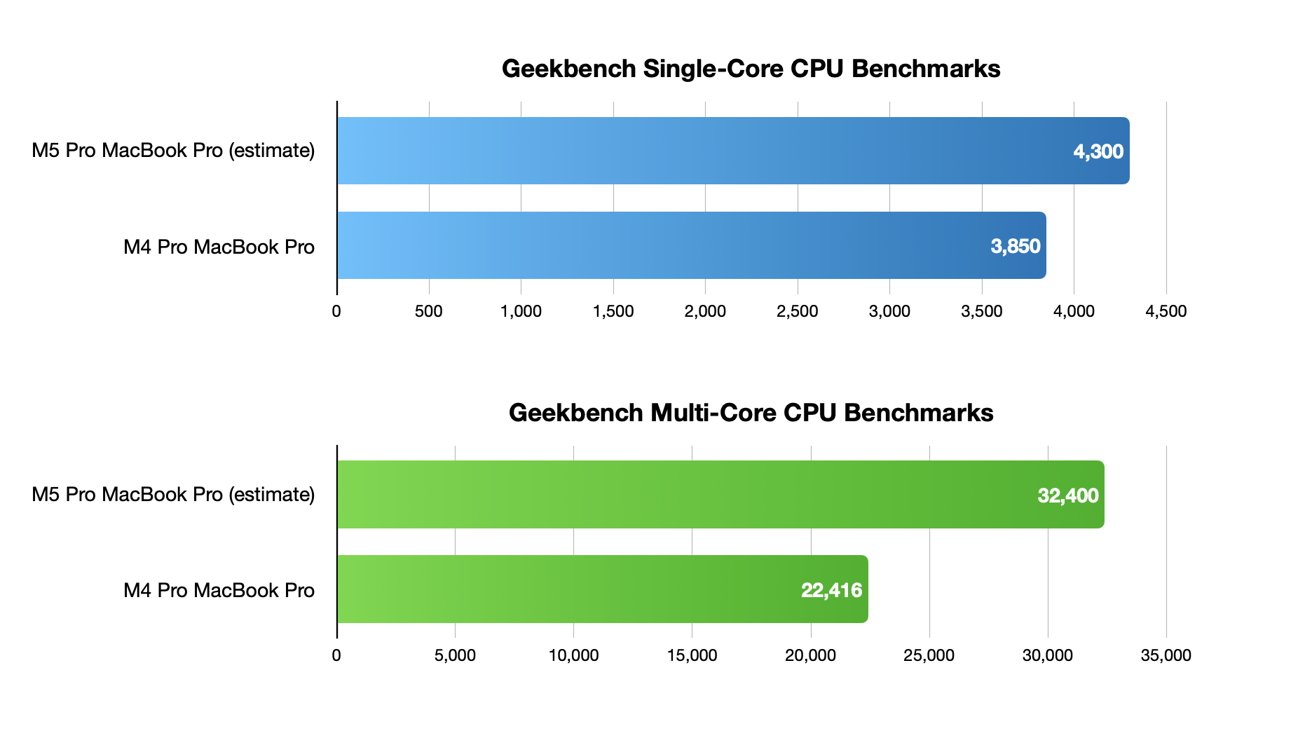
In my testing of previous generations, the jump from M2 to M3 felt iterative, but early data suggests the M5 is a different beast. Based on preliminary Geekbench 6 scores, we are expecting a single-core performance around 4,300. This puts it in a league of its own for tasks that rely on snappy, single-threaded execution, like compiling code or heavy web browsing. The multithreaded gains are where professionals will really feel the difference, particularly when juggling multiple heavy applications.
The GPU architecture is where the M5 GPU architecture vs M4 for gaming and ray tracing conversation gets interesting. The M5 introduces a redesigned ray-tracing engine that is more efficient at handling complex lighting and shadows. For gamers and 3D artists, this means smoother frame rates in titles that utilize hardware-accelerated ray tracing. More importantly, this GPU now works in tandem with new internal logic blocks to handle tasks that used to be the sole responsibility of the Neural Engine. This hardware synergy ensures that a MacBook Pro M5 performance comparison looks favorable even against high-end dedicated mobile GPUs from a year or two ago.
AI Power: Neural Engine vs. Integrated Neural Accelerators
The headline feature of the M5 is undoubtedly its approach to artificial intelligence. For several generations, Apple used a dedicated, standalone Neural Engine to handle machine learning tasks. While the M4 featured a capable 38 TOPS Neural Engine, the M5 shifts the paradigm. The M5 generation's GPU architecture provides over 4x peak AI compute performance compared to the M4 series.
This is achieved through what Apple calls integrated Neural Accelerators within every GPU core. By embedding these accelerators directly into the graphics compute units, Apple allows the SoC to handle massive AI workloads with much lower latency. For machine learning developers working on Local LLM training or running complex Stable Diffusion models, this shift is massive.
Apple Intelligence will feel significantly more native and instantaneous on the M5. When comparing the M5 vs M4 GPU Neural Accelerator setup, the older M4 relies on shifting data between the GPU and the Neural Engine, which creates a bottleneck. The M5 architecture eliminates this, allowing the GPU to process visual data and AI inference simultaneously. This is why the M5 Neural Accelerator vs M4 Neural Engine for AI workloads comparison is so tilted toward the newer chip—it is simply a more modern way to build silicon in the age of generative AI.
Memory Bandwidth and Wireless Standards
One of the most overlooked aspects of PC performance is how fast data can move between the processor and the RAM. This is where the Apple M5 unified memory bandwidth makes a strong case for itself. With a jump to 153 GB/s, we are seeing a 28 percent increase over the M4. If you are a video editor working with multiple streams of 8K ProRes footage, this bandwidth is the difference between a stutter-free timeline and a frustrating experience.
Whether is M5 unified memory bandwidth worth the upgrade from M4 depends entirely on your file sizes and multitasking habits. For someone writing documents and managing spreadsheets, 153 GB/s is overkill. But for those of us who treat our laptops as portable workstations, it is a vital specification.
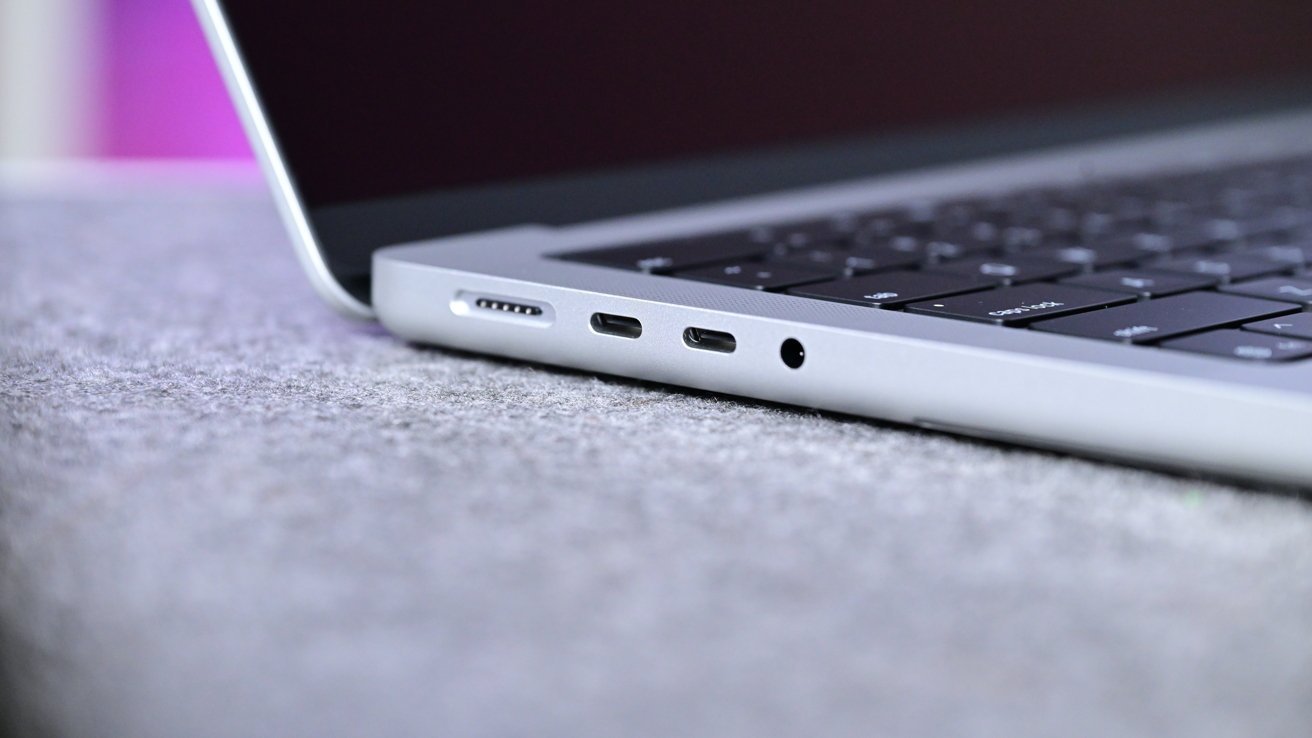
Connectivity also gets a major overhaul. The introduction of the integrated N1 chip finally brings Wi-Fi 7 to the Mac lineup. Comparing MacBook Pro M5 Wi-Fi 7 vs M4 Wi-Fi 6E connectivity reveals a massive gap in potential throughput and stability. Wi-Fi 7 can utilize 320MHz channels and Multi-Link Operation (MLO), which basically means your laptop can connect to multiple frequency bands at once to reduce interference. Coupled with Thunderbolt 5 connectivity on the higher-end models, the M5 becomes the ultimate hub for high-speed peripherals and networking.
The Professional Choice: M5 Pro vs. M4 Max
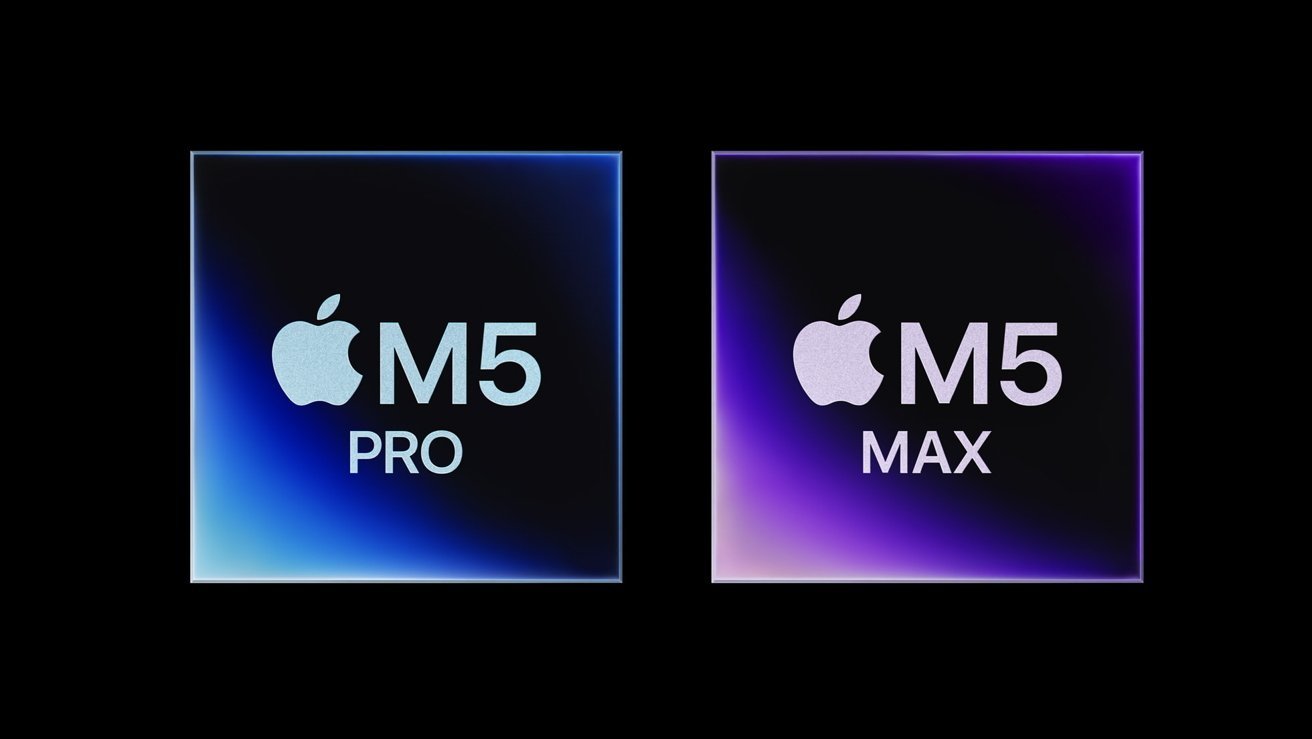
For the "Pro" and "Max" users, the choice gets more complex. Apple's M5 Pro and M5 Max chips deliver up to 30 percent faster multithreaded performance in professional workloads compared to the M4 Pro and M4 Max models. This is largely due to the new Fusion Architecture, which utilizes a dual-die packaging method to increase the total number of performance cores without sacrificing power-per-watt efficiency.
However, when looking at M5 Pro vs M4 Max for machine learning benchmarks, there is a nuance worth noting. The M4 Max, with its massive raw core count and larger thermal footprint, might still hold its own in sustained, long-duration tasks like rendering a feature-length film or training a large dataset overnight. The M5 Pro is more efficient and faster in bursts, but the M4 Max has more "muscle" in terms of raw hardware blocks.
Enterprise users should also look at the new Memory Integrity Enforcement (MIE) found in the M5 series. This is a hardware-level security feature that protects against sophisticated memory-injection attacks, making the M5 Pro and Max models a more secure choice for sensitive corporate environments.
Verdict: Should You Wait for the M5?
Deciding whether you should wait for M5 MacBook Pro or buy M4 now comes down to your current hardware and your specific workflow.
- Intel or M1 Users: It is time. You should definitely wait. The jump from the M1 or an old Intel chip to the M5 will be the most significant performance gain you have ever experienced. Between the 4x AI compute and the move to Wi-Fi 7, it is a generational leap.
- M2 or M3 Users: The choice is optional. If your current machine feels sluggish during AI tasks or if you are constantly hitting memory limits, the M5 offers enough to justify a trade-in. Otherwise, your hardware is still very relevant.
- M4 Users: Skip this one. Unless you are a machine learning developer who absolutely needs the integrated accelerators, the M4 is still a world-class chip.
The shift to a 512GB SSD base storage is also a major value factor. Apple has finally acknowledged that 256GB is no longer sufficient for a "Pro" machine in 2025. This move, combined with the 16GB RAM minimum, makes the entry-level M5 MacBook Pro a much better value than previous base models.
FAQ
What is the difference between Apple M4 and M5 chips?
The main differences lie in the architecture and AI capabilities. The M5 uses the N3P 3nm process and integrates Neural Accelerators directly into the GPU cores, whereas the M4 uses a standalone Neural Engine. The M5 also introduces Wi-Fi 7 via the N1 chip and offers higher memory bandwidth.
When is the Apple M5 chip expected to be released?
Based on Apple's typical release cycles, the M5 chip is expected to debut in updated MacBook Pro models in late 2025 or early 2026.
Is the M5 chip significantly faster than the M4?
For standard CPU tasks, you can expect a 15 percent increase in multithreaded performance. However, for AI-related tasks and machine learning, the M5 is significantly faster, offering up to 4x the peak compute performance of the M4.
Should I wait for the M5 or buy an M4 device now?
If you currently own an M1 or an Intel-based Mac, waiting for the M5 is highly recommended for the future-proofing it provides. If you need a laptop today for professional work and are currently on a very old machine, the M4 is still an excellent choice and will remain capable for years.
How many CPU and GPU cores will the Apple M5 have?
The base M5 is expected to feature a 10-core CPU and a 10-core GPU. The M5 Pro and M5 Max will scale these counts significantly higher, likely reaching up to 16 CPU cores and 40 GPU cores on the highest configurations.
What new AI features will the M5 chip support?
While it will support all Apple Intelligence features, the M5 chip is specifically designed for faster local processing of Large Language Models (LLMs) and real-time generative AI tasks like image creation and advanced Siri requests, all with lower power consumption.