Our Top Picks
The Motorola Razr Ultra is currently the best flip phone of 2025/2026, offering a Motorola Razr Ultra review score that beats competitors due to its superior 5,000-nit display and 68W charging speed. It effectively eliminates the 'performance gap' traditionally seen in foldables, making it the first clamshell that requires zero compromise on power.
The Motorola Razr Ultra review proves that Motorola has finally unseated Samsung as the king of foldables by delivering a device powered by the Snapdragon 8 Elite and flagship performance that matches any standard slab phone. If you want the most functional cover screen and the fastest charging in the category, this is the device to buy.
Design and Durability: Beyond Glass and Metal
For years, the foldable market has been dominated by a cold, clinical aesthetic of glass and polished aluminum. With the Motorola Razr Ultra, the narrative shifts toward a tactile experience that feels high-end yet remarkably human. I spent my first week with the Midnight Alcantara model, and the difference in daily use is profound. Unlike the slippery glass of the Galaxy Z Flip series, the Alcantara provides a natural grip that makes one-handed use far less anxiety-inducing.
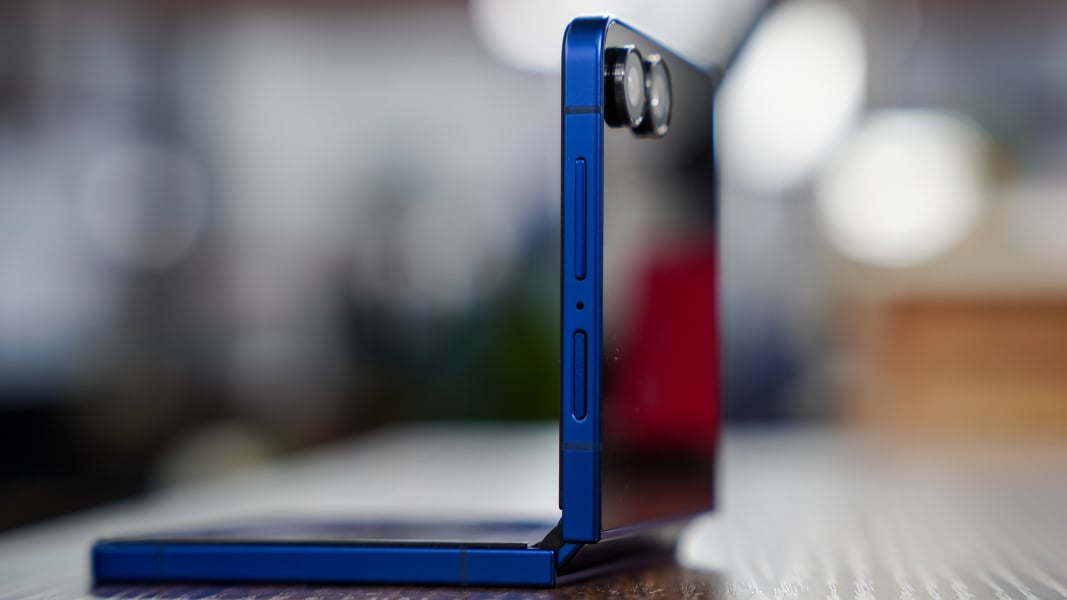
Motorola hasn't just focused on textures; the engineering under the hood is equally impressive. The device features a titanium-reinforced hinge that feels noticeably more fluid than previous generations. It allows the phone to fold completely flat with no visible gap, a feat that still eludes some competitors. More importantly, the Motorola Razr Ultra IP48 rating and hinge durability provide peace of mind. While it isn't fully dust-proof, the IP48 rating means it can handle significant water exposure and protects against larger solid particles, which is a major step forward for the clamshell form factor.
The color palette continues Motorola’s partnership with Pantone, offering shades that feel curated rather than manufactured. Whether you choose the warm wood finish or the deep Alcantara tones, you are getting a premium build quality that stands out in a sea of generic metal rectangles.
Display Mastery: The 5,000-Nit Revolution
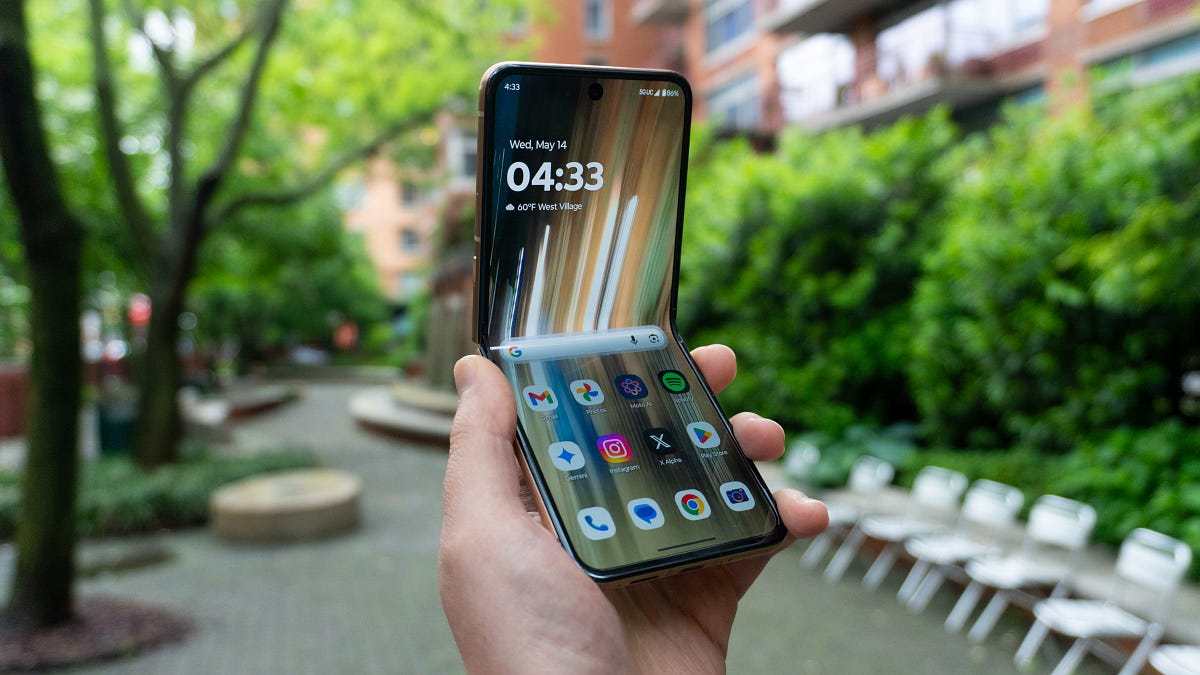
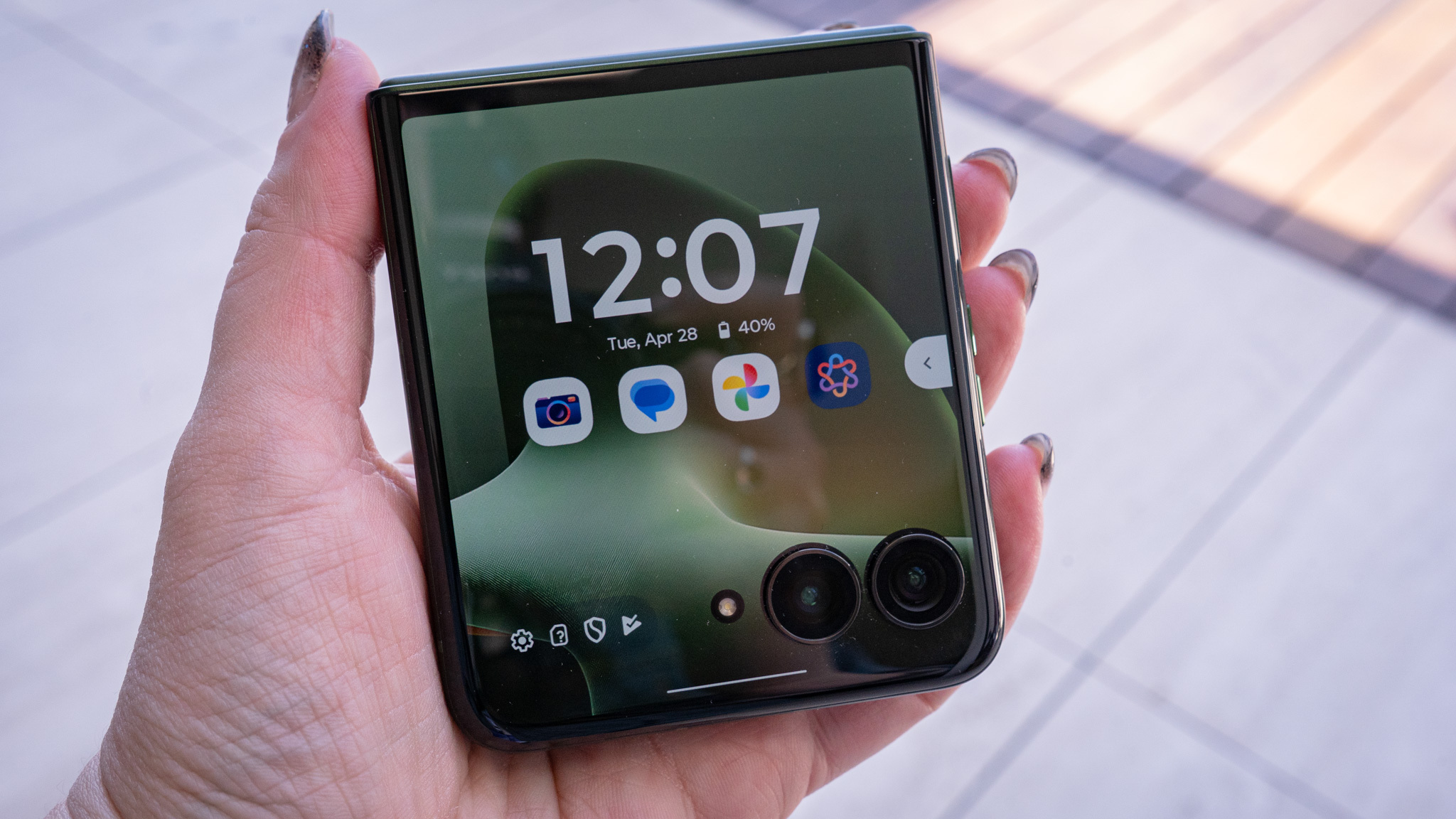
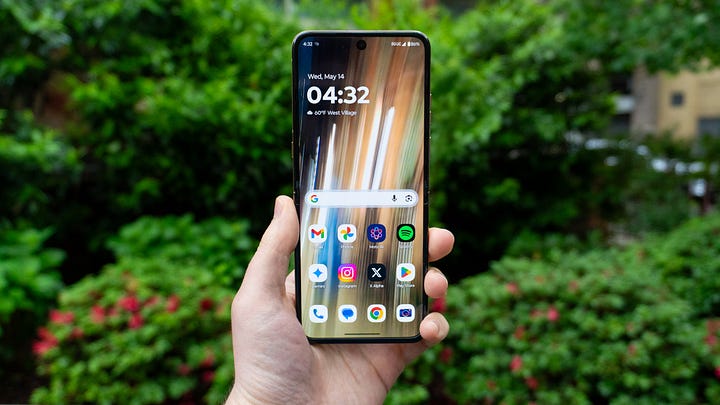
The most immediate "wow" factor of this device isn't the hinge—it’s the brightness. Motorola has equipped this phone with a 7.0-inch internal Super HD AMOLED main display and a 4.0-inch external pOLED cover screen, both of which support a 165Hz refresh rate. But the headline figure is the 5,000 nits of peak brightness. In the height of a California afternoon, the LTPO AMOLED technology ensured that I never had to squint or hunt for shade to read a text message.
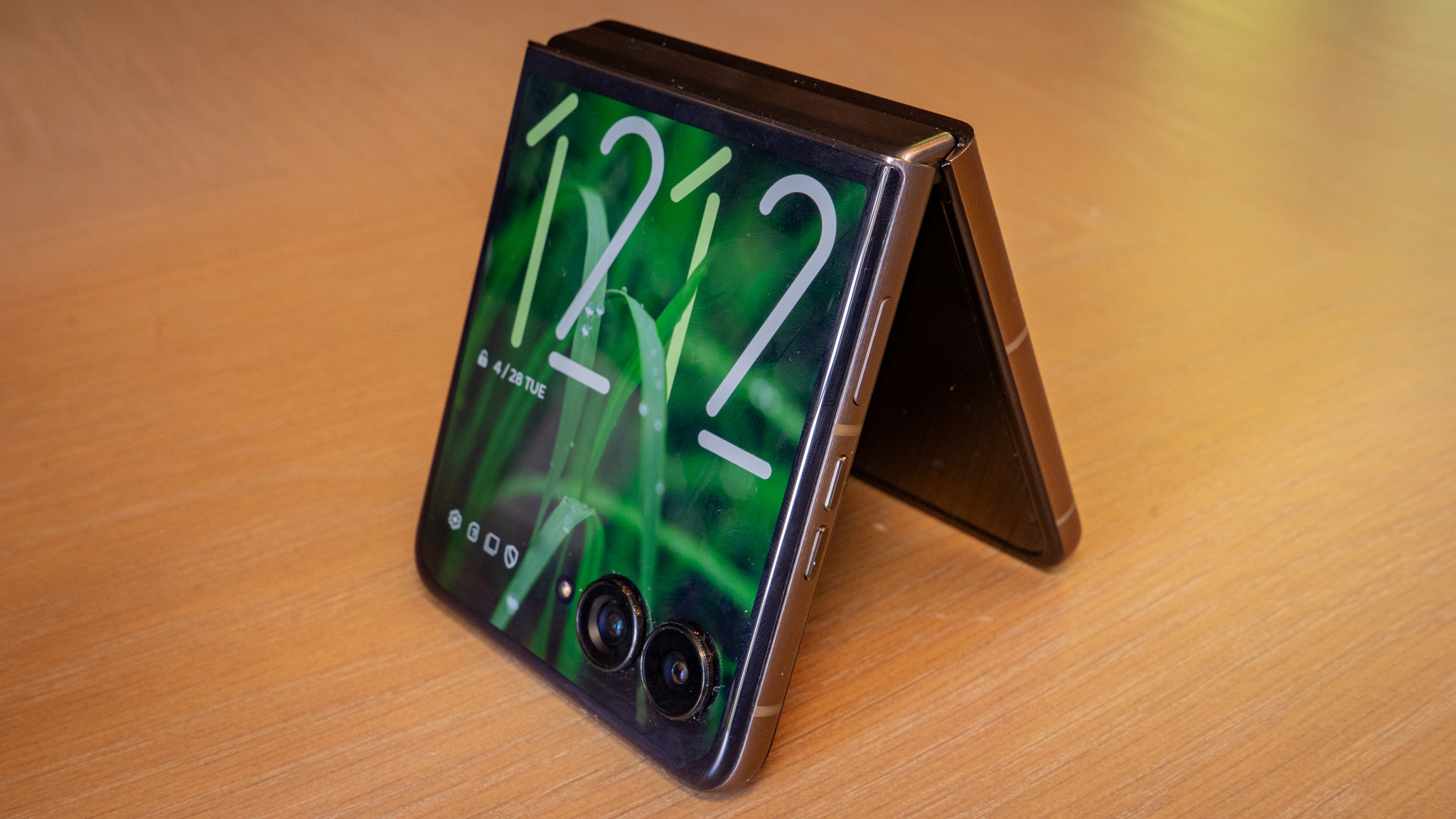
The 4-inch cover screen remains the gold standard for the category. While Samsung limits its external display largely to widgets and "allowed" apps, Motorola treats the Motorola Razr Ultra display and cover screen specs as a primary interface. You can run full versions of almost any app here. I found myself replying to emails on Outlook, navigating via Google Maps, and even playing quick rounds of casual games without ever opening the phone. Using the best apps to use on Motorola Razr Ultra cover screen feels like using a miniature version of a flagship phone, rather than a cramped secondary display.
The 165Hz refresh rate on both screens provides a level of fluidity that makes every scroll feel instantaneous. Motorola Razr Ultra 165Hz display outdoor visibility is currently unmatched, comfortably beating the 3,000-nit peaks we are seeing from other 2025 flagships.
Performance: Snapdragon 8 Elite & Gaming
One of the biggest complaints about foldables has historically been the "foldable tax"—the idea that you pay more for a fancy hinge but get a slightly weaker processor or less RAM to manage heat and battery. That era is over. The Motorola Razr Ultra is powered by the Qualcomm Snapdragon 8 Elite processor and features 16GB of RAM with storage options reaching up to 1TB.
In my testing, this translated to a mobile productivity powerhouse. Multitasking between several heavy apps was seamless, and Motorola Razr Ultra gaming performance Snapdragon 8 Elite benchmarks put it right alongside the best slab flagships. I ran Genshin Impact at maximum settings, and while the phone does get warm near the hinge, it never throttled to the point of unplayability. The flagship performance here is undeniable; this isn't just a "good flip phone," it’s a top-tier smartphone that happens to fold.
Battery Life and Charging: The 68W Advantage
Battery anxiety is a real concern in the clamshell world because of the split-cell design required by the hinge. However, Motorola has managed to pack a 4,700mAh battery that supports 68W wired TurboPower charging and 30W wireless charging.
In my Motorola Razr Ultra battery life and charging tests, the 68W speed was a game-changer. While Samsung users are often stuck at a wall for over an hour, I was able to go from 10% to 75% in just under 25 minutes. This changes how you interact with the device; you no longer need to charge it overnight if you can get a full day’s power while taking a morning shower.
Sarah’s Battery Stress Log
- 08:00 AM: 100% - Off the charger.
- 12:00 PM: 82% - Heavy use of the cover screen for Spotify and Slack.
- 04:00 PM: 55% - Afternoon of photography and GPS navigation.
- 08:00 PM: 28% - Social media scrolling and a few YouTube videos.
- 11:00 PM: 12% - End of day.
- Verdict: Reliable all-day endurance for most users.
The Motorola Razr Ultra battery life and 68W charging speed provide a safety net that other foldables simply don't offer. You also get the convenience of reverse wireless charging, allowing you to top up your earbuds by placing them on the phone’s back.
Camera Quality: The LOFIC Sensor Debate
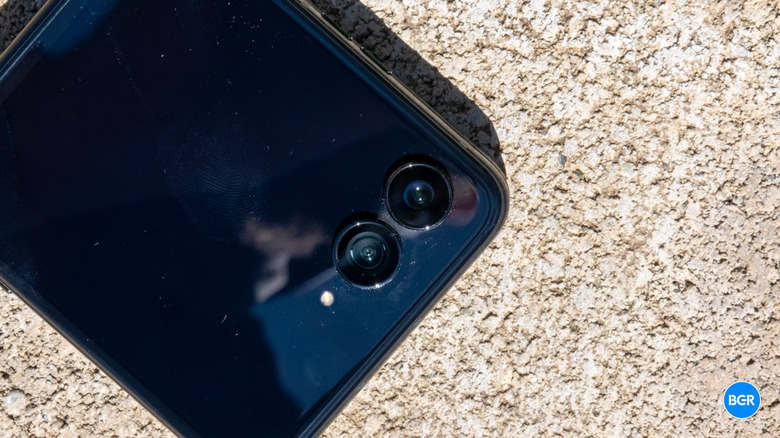
The camera system on the Razr Ultra is a fascinating case of "quality over quantity." You get a 50MP main sensor paired with a 50MP ultra-wide lens. The main sensor utilizes LOFIC (Lateral Overflow Integration Capacitor) technology, which significantly boosts dynamic range. In high-contrast scenes—like a sunset behind a city skyline—the Razr Ultra captures detail in the shadows that usually gets lost on smaller sensors.
The elephant in the room is the lack of a dedicated telephoto lens. This means Motorola Razr Ultra camera quality without telephoto lens relies heavily on digital cropping. While the 2x digital zoom is passable thanks to the high resolution of the main sensor, anything beyond 5x starts to show significant noise and loss of detail. If you are a paparazzi-style zoom enthusiast, you might find this limiting. However, for the social media-focused user who wants natural colors, fast shutter speeds, and great low-light performance, the generative AI enhancements in the post-processing pipeline do an excellent job of making every shot look "pro."
Software and AI: Moto AI vs. Long-term Support
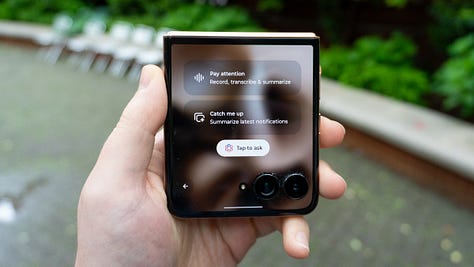
Software is where the Motorola Razr Ultra vs Galaxy Z Flip comparison gets complicated. Motorola has integrated Moto AI deeply into the experience, featuring a partnership with Perplexity that makes the phone feel like a genuine personal assistant. Using Moto AI and Perplexity on Razr Ultra allows for incredibly fast information retrieval without having to sift through search engine ads. You can ask the phone to summarize a long webpage or find specific photos from your gallery using natural language, and it works surprisingly well.
However, we have to talk about longevity. Motorola Razr Ultra software update policy vs Samsung remains a sticking point. Motorola currently promises three years of major OS updates. In a world where Samsung and Google are offering seven years of support, Motorola’s policy feels short for a premium device. If you tend to trade in your phone every two or three years, this won't bother you. But if you plan on keeping your device for the better part of a decade, the future-proofing here is less certain.
Verdict: Should You Upgrade?
The Motorola Razr Ultra review concludes that this is the most polished hardware package in the flip category to date. It is the first time a foldable has felt like a true "no-compromise" flagship. When looking at the Motorola Razr Ultra vs Galaxy Z Flip 7 specs comparison, Motorola wins on almost every hardware metric, from display brightness to charging speed.
| Feature | Motorola Razr Ultra | Samsung Galaxy Z Flip 7 | Winner |
|---|---|---|---|
| Main Display | 165Hz, 5,000 nits | 120Hz, 3,000 nits | Motorola |
| Cover Screen | 4.0-inch, Full Apps | 3.4-inch, Widgets | Motorola |
| Charging Speed | 68W Wired | 25W Wired | Motorola |
| Processor | Snapdragon 8 Elite | Snapdragon 8 Elite | Tie |
| Software Support | 3 Years | 7 Years | Samsung |
| Camera Zoom | Digital Only | Dedicated Telephoto | Samsung |
You should buy this phone if you value display quality, rapid charging, and a functional cover screen above all else. However, you might want to wait if you prioritize having the longest possible software support or a dedicated optical zoom lens.
FAQ
Is the Motorola Razr Ultra worth buying?
Yes, if you want the most advanced hardware in a foldable format. It offers a combination of speed, display quality, and charging that currently leads the industry.
How long does the battery last on the Motorola Razr Ultra?
In our real-world testing, the 4,700mAh battery consistently lasted a full day of mixed usage, typically ending at 11:00 PM with about 10-15% remaining.
How does the Razr Ultra compare to the Samsung Galaxy Z Flip?
The Razr Ultra leads in display brightness, charging speed, and cover screen functionality, while Samsung offers longer software support and better water/dust resistance ratings.
Does the Motorola Razr Ultra have a visible screen crease?
The crease is still present but is significantly less noticeable than on previous models or competitors, thanks to the improved hinge design that spreads the fold over a wider radius.
Is the camera quality good on the Motorola Razr Ultra?
The 50MP main sensor delivers excellent dynamic range and color accuracy, though it lacks a telephoto lens for high-quality long-distance zooming.
How durable is the hinge on the Motorola Razr Ultra?
The hinge is titanium-reinforced and designed to withstand over 400,000 folds, which is roughly equivalent to 100 folds a day for over 10 years.