
Quick Facts
- Primary Mechanism: Wave superposition allows a single diaphragm to reproduce multiple frequencies simultaneously by merging them into a single complex waveform.
- Human Auditory Range: Humans possess an auditory frequency perception spanning from 20Hz to 20,000Hz, though sensitivity varies by age and environment.
- Efficiency Benchmark: High-output speaker sound reproduction typically exceeds 94dB sensitivity in professional or high-end hi-fi settings.
- Crossover Logic: Standard 3-way speaker systems split electrical signals at roughly 300Hz and 3kHz to optimize driver performance.
- Phase Rules: Total phase cancellation occurs when two identical waveforms are 180 degrees out of phase, while a 0-degree relationship produces maximum amplitude.
- Material Science: Advanced materials like Beryllium and Graphene are utilized to achieve ideal pistonic movement and minimize diaphragm distortion.
Speakers play multiple instruments simultaneously by utilizing the principle of wave superposition. Instead of producing separate waves for each sound, a speaker's diaphragm moves according to a single, complex waveform that represents the sum of all individual frequencies. This unified wave vibrates the air, and the human brain then deconstructs this signal back into distinct instrumental parts through auditory frequency perception.
The Physics of Superposition: One Driver, Many Voices
To understand speaker sound reproduction, we must first abandon the idea that a speaker is playing "different" sounds at once. In reality, it is playing one very messy sound that contains the information for everything else. This is the magic of wave superposition. Imagine a calm pond. If you drop a stone, a neat circle of ripples moves outward. If you drop five stones, the surface of the water becomes a chaotic zig-zag of peaks and valleys. However, those original ripples don't disappear; they combine. The speaker diaphragm acts like the surface of that pond, moving back and forth in a way that represents the mathematical sum of every instrument in the recording.
When we talk about how speakers play multiple instruments simultaneously, we are really discussing longitudinal waves. Unlike the 2D waves we see on a guitar string, sound travels as pulses of high and low pressure in 3D space. If a kick drum requires a massive 40Hz push and a violin requires a delicate 2,000Hz shimmer, the speaker cone doesn't choose between them. It performs a large, slow movement for the drum while jittering at high speed for the violin at the same time.
This leads to what I call the Speaker-Ear Inversion. Your eardrum is a single membrane that vibrates in response to all the sounds in a room. To reproduce that experience, a speaker simply reverses the process. We also have to consider the scale of these waves. For instance, the Middle-C wavelength is approximately 1.3 meters long. A speaker must be able to move air across these physical scales while maintaining the tiny, microscopic vibrations required for high-frequency overtones. This complexity is handled through psychoacoustics, where our brain takes the combined air pressure changes and identifies the "timbre" of each instrument based on its harmonic structure.

Speaker Driver Mechanics: From Voice Coils to Pistonic Movement
While physics provides the theory, the hardware—specifically speaker driver mechanics—is where the "rubber meets the road." The most common design is the dynamic driver. This uses a voice coil suspended in a magnetic field. When an electrical current passes through the coil, it creates a magnetic field that interacts with a permanent magnet, pushing and pulling the cone.
The goal for any high-end speaker is perfect pistonic movement. This means the cone moves back and forth as a single, rigid unit. If the cone is too soft, it "breaks up," meaning parts of the cone move while others lag behind, causing distortion. This is why you see engineers obsessing over material stiffness. To achieve speaker driver mechanics for clear audio reproduction, manufacturers use exotic materials like Beryllium or Graphene. These materials are incredibly stiff yet lightweight, allowing for an incredibly fast transient response—the ability of the driver to start and stop on a dime.
However, not all drivers are created equal. When considering the benefits of planar magnetic vs dynamic drivers, we see two different ways of moving air. A dynamic driver uses a point-source (the coil) to move a large cone. A planar magnetic driver uses a thin, flat membrane with electrical traces spread across its entire surface. This allows the whole membrane to move uniformly and much faster than a heavy cone, often resulting in superior clarity for mid-to-high frequencies.
| Driver Type | Mechanism | Key Strength | Best Use Case |
|---|---|---|---|
| Dynamic | Voice coil & cone | High displacement, powerful bass | Subwoofers & Woofers |
| Planar Magnetic | Thin film in magnetic field | Extremely fast transient response | High-end headphones & Tweeters |
| Electrostatic | Charged membrane in electric field | Near-zero distortion, airy sound | Audiophile-grade listening |
Managing Acoustic Wave Interference and Phase Coherence
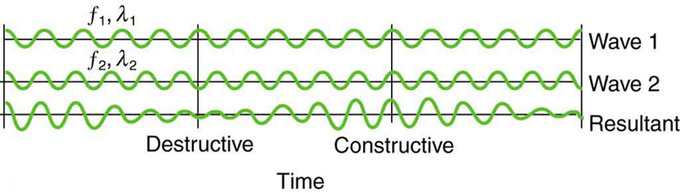
One of the greatest challenges in audio engineering is managing how different sound waves interact with one another. When two waves meet, they can either reinforce each other (constructive interference) or cancel each other out (destructive interference). In the world of hi-fi, total phase cancellation occurs when two identical waveforms are 180 degrees out of phase, which results in a complete loss of sound at that specific frequency.
In multi-driver systems, a crossover network is used to divide the audio signal. It sends the low frequencies to the woofer and the high frequencies to the tweeter. Without a high-quality crossover, both drivers might play the same frequencies at the crossover point, leading to acoustic wave interference. If the timing (phase) isn't perfect, you’ll experience a "suck-out" in the soundstage, often leading to the common issue of troubleshooting muddy vocals in multi driver speakers.
To ensure a stable soundstage, engineers aim for phase coherence. This means the sound from the tweeter and the woofer arrives at your ear at the exact same time. Some designers tilt the speaker cabinet backward or use point-source drivers (where the tweeter sits inside the woofer) to align the "acoustic centers" of the drivers. Another pro tip involves the 3-to-1 rule for microphone placement, which states that the distance between microphones must be three times the distance from the source to avoid phase interference—a principle that also helps engineers understand how to achieve balanced frequency response in hifi systems when recording the music we eventually play back.
Environmental Physics: Room Interaction and Cabinet Design
The last "driver" in your audio system isn't in the box—it is the room itself. The physics of managing acoustic wave interference in home audio involves more than just the speaker; it involves the walls, floor, and ceiling. Cabinet design plays a massive role in how the speaker interacts with the room. For example, the impact of cabinet size on low frequency sound reproduction is non-negotiable. A small bookshelf speaker will typically see a bass roll-off below 60Hz because it simply cannot move enough air volume within its small enclosure to sustain long, low-frequency waves.
Internal cabinet resonance is another enemy. When a driver moves forward, it also sends a wave backward into the box. If that wave bounces around and comes back through the cone, it smears the sound. Innovative companies have developed technologies like Metamaterial Absorption Technology (MAT), which acts as an "acoustic black hole" to absorb 99% of that unwanted rear-wave energy.
When optimizing soundstage and imaging for bookshelf speakers, placement is key. Placing a speaker too close to a wall can cause a phenomenon called comb filtering, where the reflected sound arrives just late enough to cancel out certain frequencies, making the music sound thin or unnatural. By pulling the speakers away from the wall and angling them slightly toward the listening position, you minimize these reflections and allow the timbre accuracy of the recording to shine through.
FAQ
How do speakers reproduce sound waves?
Speakers convert electrical energy into mechanical energy. An electrical signal representing audio travels through a voice coil, creating a magnetic field that interacts with a permanent magnet. This causes a diaphragm to move back and forth, pushing air molecules and creating longitudinal waves that our ears perceive as sound.
What role do crossovers play in sound reproduction?
A crossover acts as a frequency filter that directs specific ranges of sound to the appropriate driver. It ensures that the heavy, slow-moving woofer only handles bass, while the light, fast tweeter handles the treble. This prevents drivers from operating outside their mechanical limits and maintains a balanced frequency response.
Why do some speakers sound clearer than others?
Clarity is largely a result of transient response and material stiffness. Speakers made with high-quality materials like Beryllium or carbon fiber can start and stop moving more precisely, reducing "ringing" or distortion. Additionally, better phase coherence and crossover design ensure that sound waves don't interfere with each other destructively.
What is frequency response in speaker sound reproduction?
Frequency response refers to the range of sounds a speaker can reproduce, measured in Hertz (Hz). A "flat" frequency response means the speaker plays all frequencies from deep bass to high treble at the same relative volume level, without emphasizing or muffling any specific part of the music.
How can I improve the sound reproduction of my home speakers?
Improving sound reproduction often starts with placement. Ensure your speakers are at ear level and positioned to form an equilateral triangle with your listening chair. Adding acoustic treatments like rugs or foam panels can reduce room reflections and comb filtering, while using high-quality cables and amplification ensures the drivers receive a clean, powerful signal.
The journey from a single electrical pulse to the complex, multi-layered symphony in your living room is a triumph of engineering. By understanding the physics of wave superposition and the mechanical precision of modern drivers, we can better appreciate the art of listening. Whether you prefer the punch of a dynamic driver or the ethereal speed of a planar magnetic membrane, the goal remains the same: a pure, uncolored connection to the music.