Our Top Picks
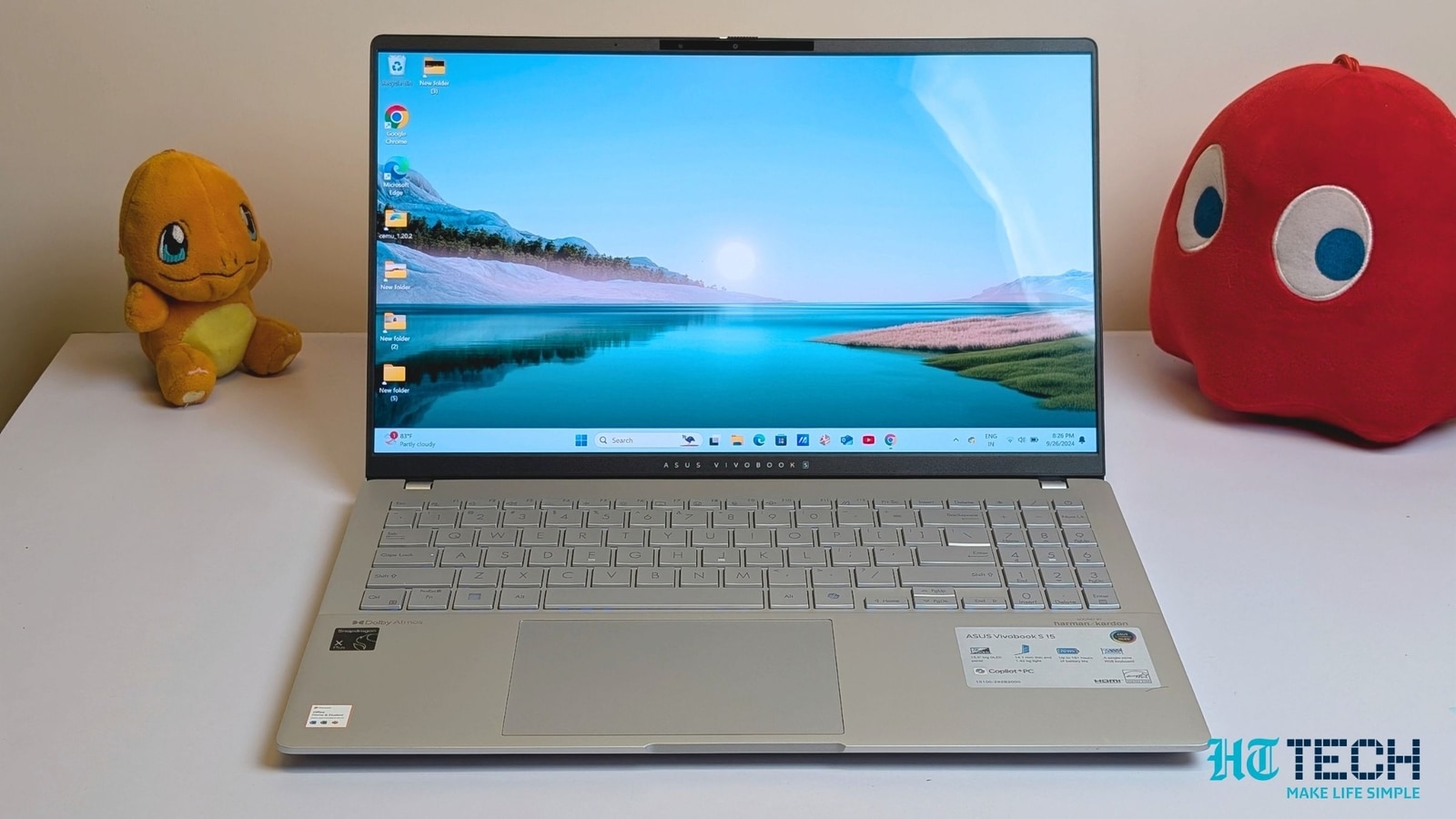
The Asus Vivobook S15 with the Snapdragon X Plus processor is an excellent choice for productivity-focused users like students and mobile professionals who prioritize battery life over raw multi-core power. While it lacks the peak performance of the 12-core Elite variant, its efficiency and price point make it a strong contender for everyday tasks.
The Asus Vivobook S15 Snapdragon has arrived, promising a more affordable entry point into the world of Copilot+ PCs. But does the 8-core Snapdragon X Plus deliver enough power for daily tasks, or are you better off upgrading to the Elite model? This review breaks down the battery life, performance, and real-world value of Asus's latest ARM-powered machine.
| Feature | Specification (S5507) |
|---|---|
| Processor | Qualcomm Snapdragon X Plus (8-core, X1P-42-100) |
| Graphics | Qualcomm Adreno X1-45 GPU |
| Neural Processor | Qualcomm Hexagon NPU (45 TOPS) |
| Display | 15.6-inch 3K (2880 x 1620) 120Hz Lumina OLED |
| RAM | 16GB LPDDR5X |
| Storage | 1TB M.2 NVMe PCIe 4.0 SSD |
| Battery | 70Wh (Up to 15 hours real-world) |
| Weight | 1.42kg |
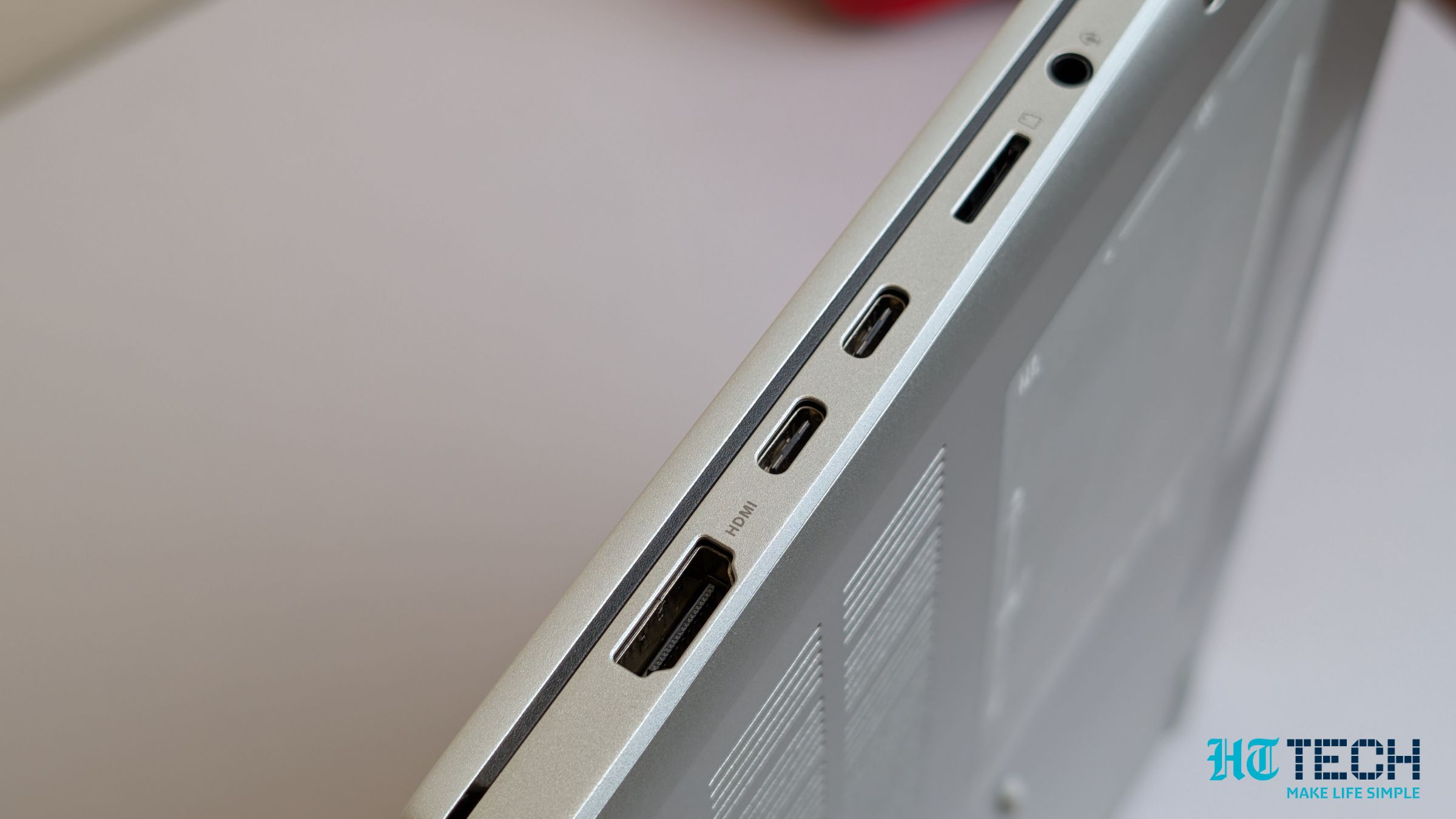
| Ports | 2x USB4, 2x USB 3.2 Gen 1 Type-A, HDMI 2.1, MicroSD |
Performance: Snapdragon X Plus vs Elite Comparison
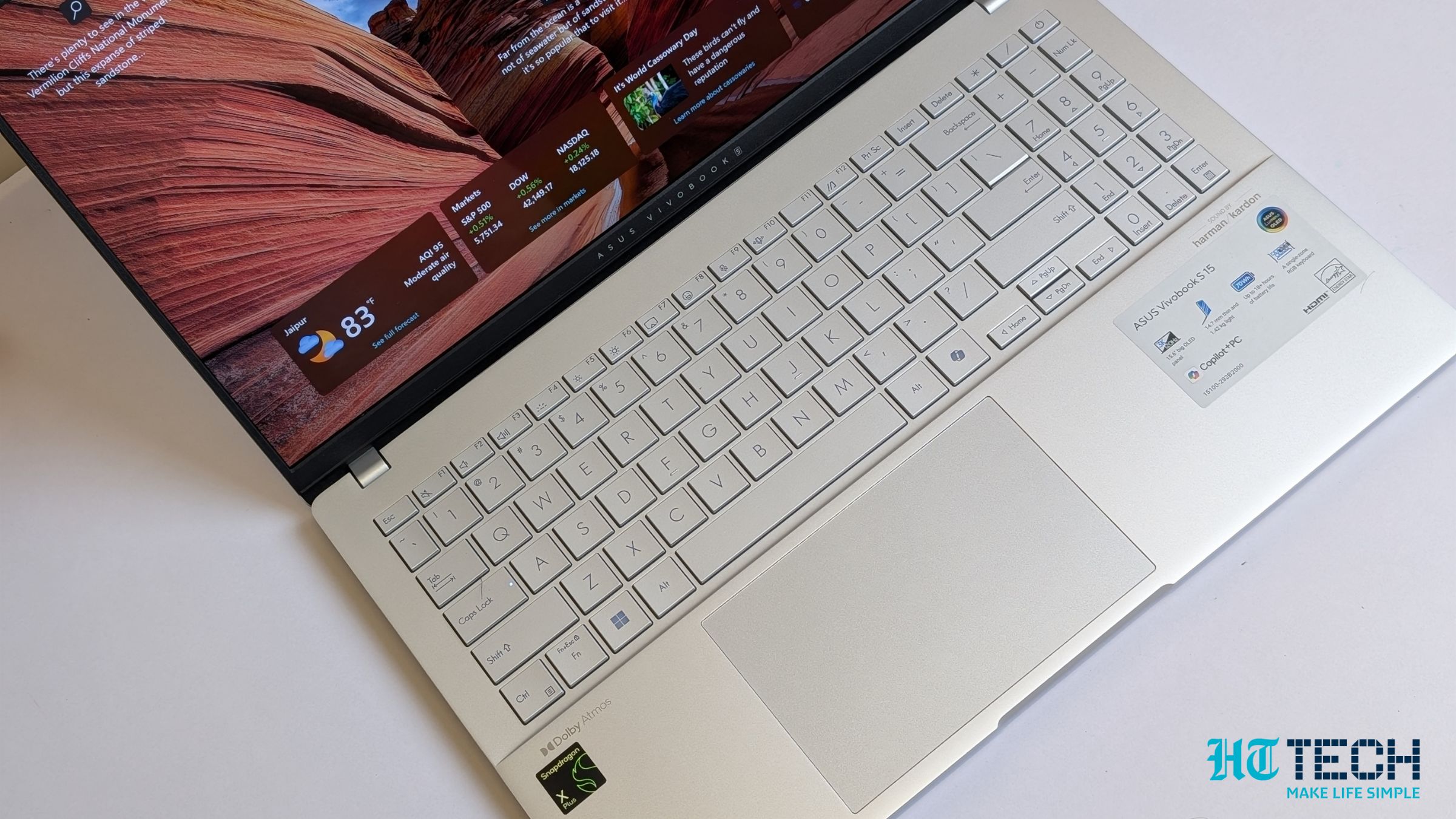
When we look under the hood of the new Vivobook S15 Snapdragon, the main talking point is the silicon. For the first time, we are seeing the 8-core variant of the Qualcomm Oryon CPU, specifically the X1P-42-100. This is the entry-level tier of the Snapdragon family, sitting below the 10-core and 12-core Elite models. In our testing, this chip handles native applications like Microsoft Edge, Spotify, and the Office suite with impressive snap. For many users, the snappy response of the ARM64 architecture in daily tasks will feel indistinguishable from much higher-priced machines.
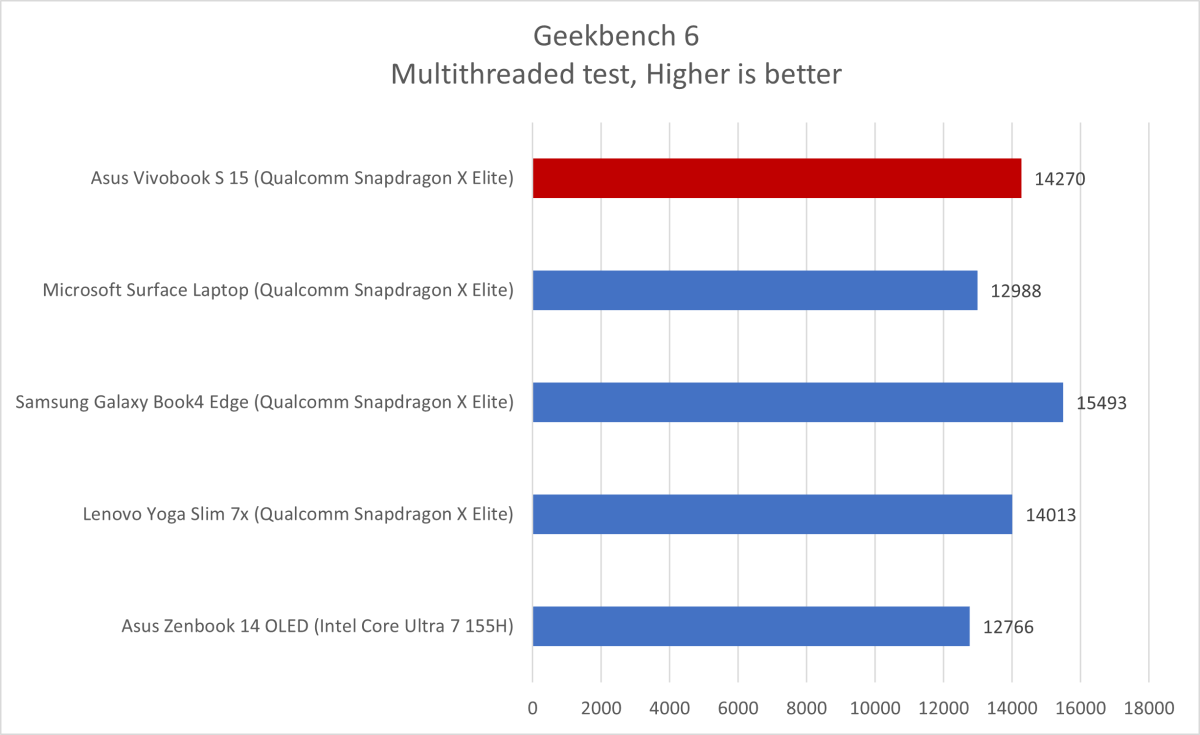
However, we need to talk about the multi-core gap. In our Asus Vivobook S15 performance review, we found that while single-core performance remains competitive, the 8-core chip lags behind the 12-core Elite version by roughly 40-50% in heavy multi-threaded workloads like 4K video rendering or heavy code compilation. The Adreno X1-45 GPU is also scaled back compared to the Elite models. This makes the Vivobook S15 Snapdragon X Plus vs Elite performance comparison fairly straightforward: if you are a professional video editor, the Elite is mandatory; if you are a student or office worker, the X Plus is more than enough.
Despite having fewer cores, this model still qualifies for Copilot+ PC certification because it retains the same Qualcomm Hexagon NPU found in the high-end chips. This NPU delivers 45 trillion operations per second (TOPS) of performance for local AI processing. This ensures that features like Live Captions, Windows Studio Effects, and Cocreator run smoothly without taxing the main processor or draining the battery. This makes the Vivobook S15 Snapdragon X Plus for college students an enticing option, as it offers modern AI features at a lower entry price.
Display and Design: The Lumina OLED Advantage
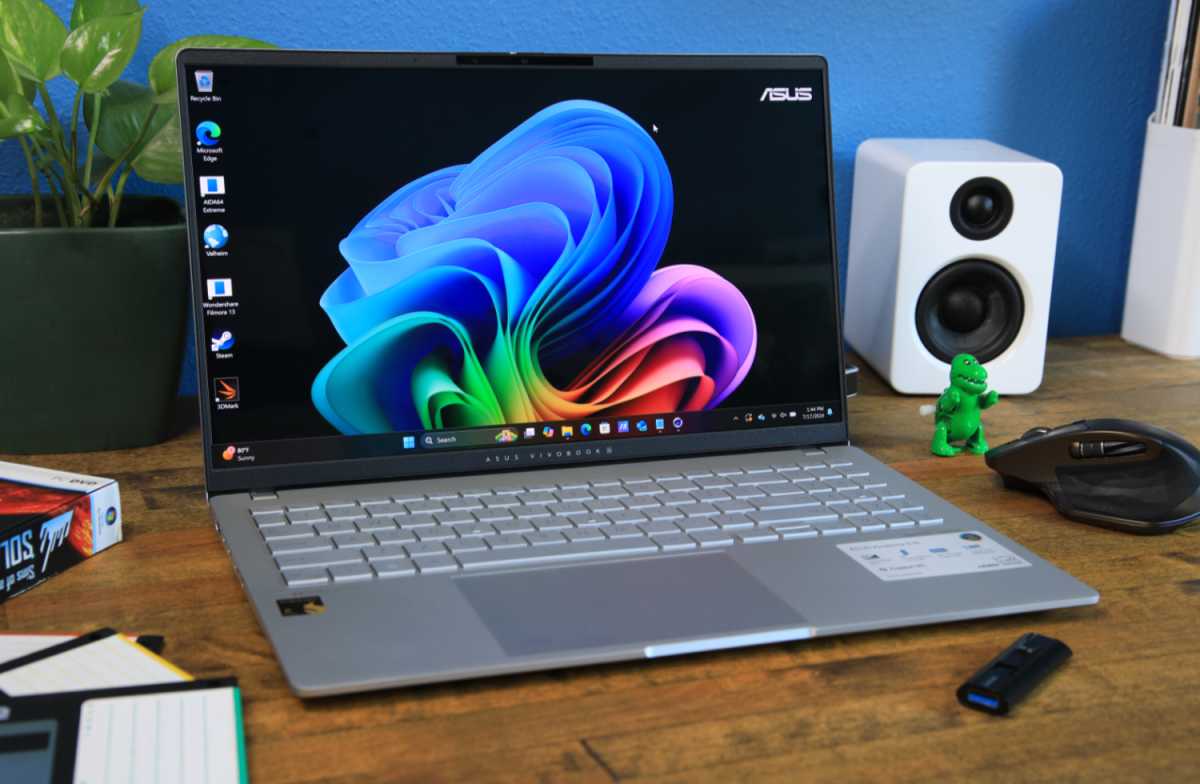
One area where Asus did not compromise is the screen. The 15.6-inch 3K panel uses Lumina OLED technology, providing deep blacks and vibrant colors that make traditional LCD screens look dull. With a 120Hz refresh rate and 600 nits of peak brightness, the visual experience is premium. This display quality opens up Asus Vivobook S15 OLED photo editing capabilities for hobbyists who need color accuracy (100% DCI-P3 coverage) but don't want to spend $2,000 on a workstation.
The build quality remains a highlight of the Vivobook S15 Snapdragon series. It features a 1.42kg portable chassis that feels sturdy despite its thin profile. Carrying this in a backpack through a campus or an airport is effortless. Inside, the ErgoSense keyboard design provides 1.7mm of key travel, which is generous for a modern ultraportable. Asus also managed to fit a dedicated number pad, a rarity in the 15-inch portable category, which is a massive benefit for anyone working with spreadsheets or data entry.

Battery Life: Real-World Endurance for Travel
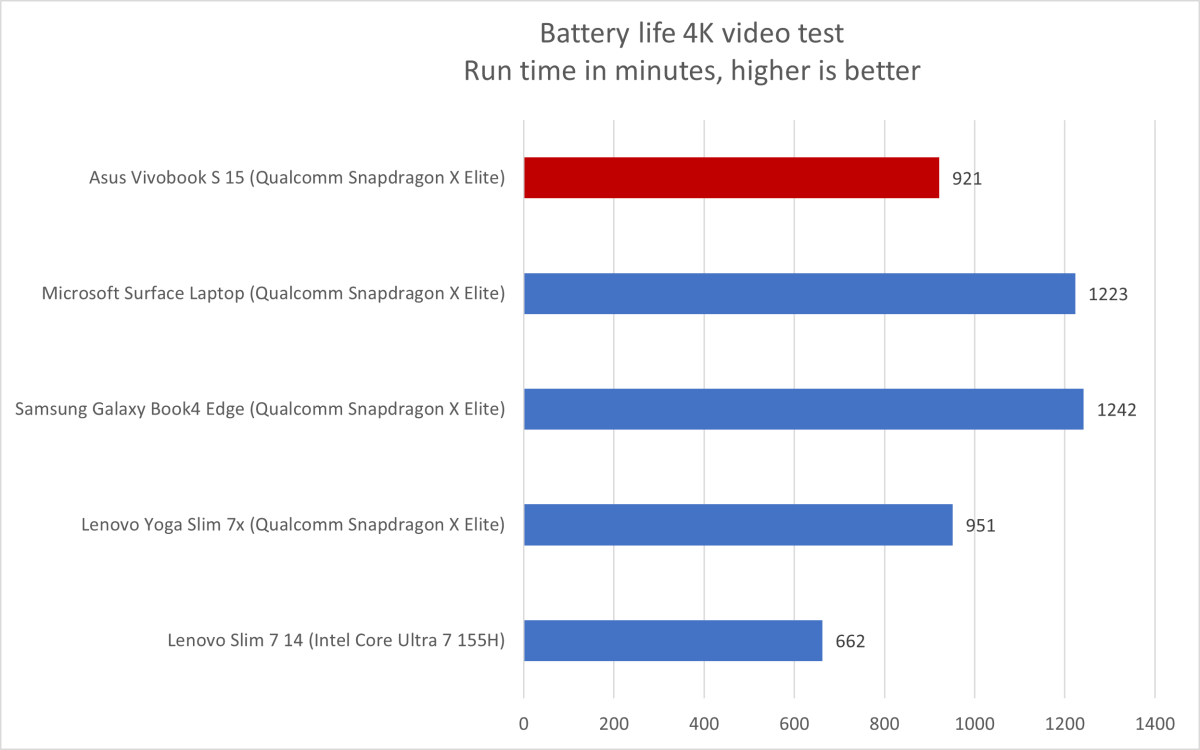
Battery life is the single most compelling reason to choose an ARM-based laptop. In our real-world testing, the 70Wh battery in this machine delivered between 13 and 15 hours of runtime under light usage involving web browsing and document editing. This is a massive leap over the 7 to 8 hours we typically see from the Intel Meteor Lake-based versions of similar hardware.
For professionals on the go, Snapdragon X Plus battery life for business travel means you can leave the charger at the hotel for a full day of meetings. The power-per-watt efficiency of the Qualcomm Oryon CPU is clearly evident here. Unlike Intel or AMD chips that often ramp up fans and heat during simple tasks, the X Plus stays cool and quiet. Even under moderate load, the Vivobook S15 Snapdragon X Plus thermal performance and fan noise are negligible, making it ideal for quiet library environments or conference calls.
Software Compatibility: The Prism Emulation Reality
The elephant in the room with any Windows on ARM device is app compatibility. While Microsoft has made huge strides, we are still in a transition period. Most mainstream apps like Chrome, Photoshop, Zoom, and Slack now run natively on ARM64 architecture, providing peak performance. For apps that haven't been updated yet, the Prism emulation layer handles the heavy lifting.
During our testing, most productivity tools worked without a hitch. However, certain specialized software—like kernel-level anti-cheat for games or specific legacy drivers for older hardware—can still face issues. When considering Windows on ARM app compatibility on Vivobook S15 2026, we expect the ecosystem to be even more robust, but current buyers should check if their "must-have" niche software is supported. For standard Windows on ARM productivity laptops use cases, the experience is now nearly as seamless as using a standard x86 laptop.
FAQ
How long does the battery last on the Vivobook S15 Snapdragon?
In typical daily use, you can expect between 13 and 15 hours of battery life. This is significantly better than previous Intel models and allows most users to get through a full workday and part of the next without needing to hunt for a power outlet.
Can the Vivobook S15 Snapdragon run all standard Windows applications?
Most modern applications like Microsoft Office, web browsers, and creative tools from Adobe run natively or through the Prism emulation layer. However, some specialized software, legacy drivers, and games with strict anti-cheat systems may not be compatible yet.
What is the difference between Snapdragon X Elite and X Plus in the Vivobook S15?
The Snapdragon X Elite features 12 cores and higher clock speeds, making it better for heavy video editing or complex engineering tasks. The Snapdragon X Plus used in this model has 8 cores, which is more than enough for daily productivity but offers less raw power for intensive multi-threaded workloads.
Is the Vivobook S15 Snapdragon suitable for video editing?
It is capable of light video editing, especially in native apps like CapCut or DaVinci Resolve (which has an ARM-native version). However, for professional 4K workflows with many layers and effects, the 12-core Snapdragon X Elite or a dedicated gaming laptop would be a more efficient choice.
How does the Vivobook S15 Snapdragon compare to the Intel version?
The Snapdragon version offers significantly better battery life and stays much cooler during basic tasks. While the Intel version might have a slight edge in absolute software compatibility for older apps, the Snapdragon model provides a much better "on-the-go" experience.
Conclusion: Who Should Buy the X Plus Model?
The Snapdragon X Plus version of the ASUS Vivobook S15 (S5507) was launched at a starting price of $899.99, making it approximately $400 less expensive than the 12-core Snapdragon X Elite model. For many, that $400 saving is the deciding factor. You are getting the same gorgeous 3K OLED screen, the same premium chassis, and nearly the same legendary battery life, but with a slightly slower processor that most people won't even notice during a normal day of work.
If you are a student, a writer, or a business traveler who needs a reliable machine that lasts all day, the Vivobook S15 Snapdragon is a fantastic value. It represents the best of what modern Windows on ARM can offer: incredible efficiency without the premium price tag of the high-end Elite models. Unless you know you need those extra four cores for heavy lifting, the X Plus is the smarter buy for the average person.