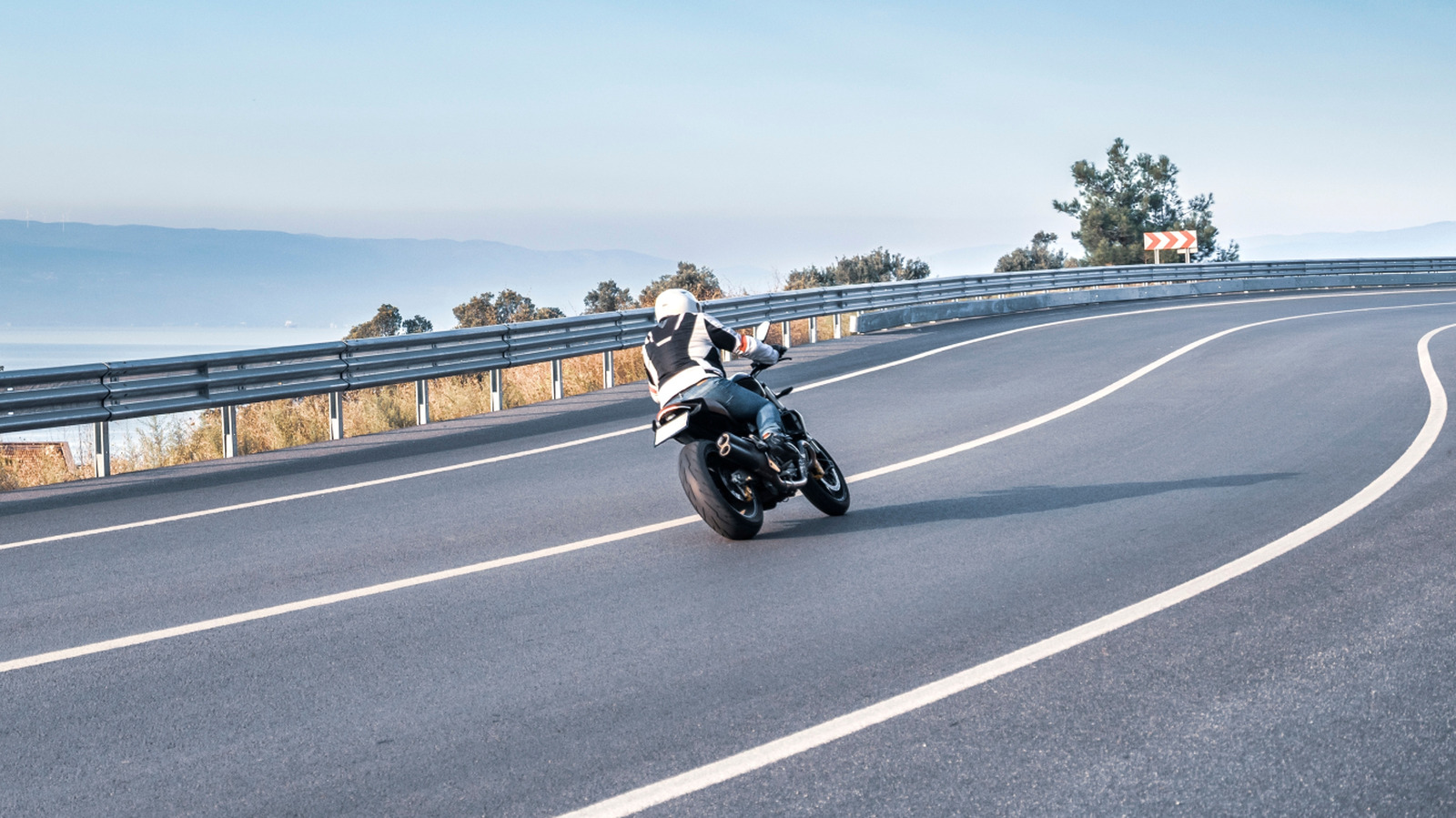
The 2000s represent the pinnacle of raw motorcycle performance. Before traction control and cornering ABS became standard, manufacturers were locked in a fierce battle for triple-digit supremacy. From the record-shattering Suzuki Hayabusa to the turbine-powered MTT Y2K, the fastest 2000s motorcycles offered an analog riding experience that remains legendary. This era was defined by the transition from unrestricted speed to the voluntary 186 mph Gentleman's Agreement, shaping the iconic early 2000s performance motorcycles we celebrate today.
Quick Facts
- Era Definition: The golden decade of high-performance motorcycles spanning 2000-2009.
- Speed Cap: A voluntary 186 mph (300 km/h) limit established by manufacturers in late 2000 to avoid government regulation.
- Top Speed King: The Suzuki Hayabusa (194 mph unrestricted) and the MTT Y2K Turbine (227 mph).
- Key Innovations: The widespread adoption of electronic fuel injection, aluminum monocoque frames, and ram-air induction.
- Market Value: Used 2000s superbikes currently range from $4,000 for high-mileage examples to over $15,000 for collector-grade units.
- The Analog Appeal: These bikes are prized for lacking modern electronic rider aids, offering a pure connection between throttle and rear tire.
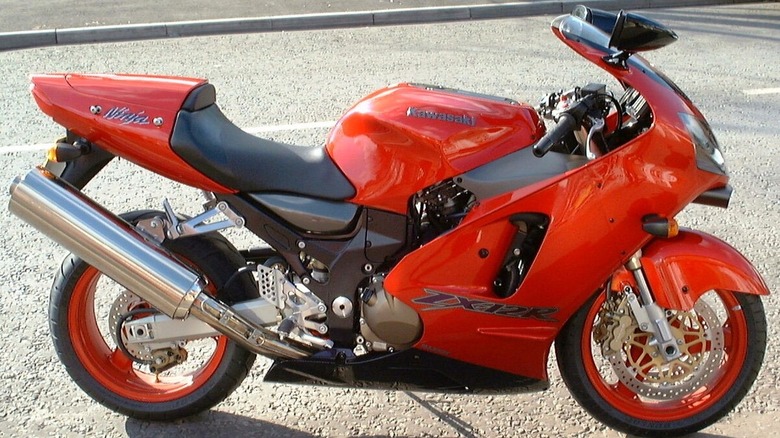
The fastest 2000s motorcycles include the Suzuki GSX-1300R Hayabusa, the Kawasaki Ninja ZX-12R, and the Kawasaki ZZR1400. The Hayabusa was the first production motorcycle to break the 190 mph barrier, while the ZX-12R famously pushed toward the 200 mph mark before a 'gentleman's agreement' among manufacturers capped top speeds at 186 mph across the industry.
The Speed Wars: From Unrestricted Power to the 186 MPH Truce
At the turn of the millennium, the motorcycle industry was obsessed with one metric: top speed. Honda had set the stage with the Super Blackbird, but Suzuki shattered expectations in 1999 with the Hayabusa. As the year 2000 approached, Kawasaki was preparing to launch the Ninja ZX-12R, a machine designed specifically to reclaim the speed crown. The competition was so fierce that European regulators began threatening to ban these "hyperbikes" from public roads.
To prevent a legislative crackdown, major Japanese and European manufacturers reached an informal gentleman's agreement in late 2000. This pact dictated that the top speed of production motorcycles would be electronically limited to 186 mph (300 km/h). This created a unique divide in the decade: the unrestricted legends of 2000 and the electronically limited but technically superior machines that followed.
The early 2000s also marked a massive technological shift. We saw the death of the carburetor as electronic fuel injection became the standard for precision and power. Engineering shifted toward aerodynamic drag reduction and the use of the engine as a stressed member of the frame to save weight. This was a period of experimental courage, where manufacturers weren't afraid to build engines with massive displacement to overcome the wind.
The Hyperbike Legends: Speed Without Limits
In the hyperbike category, the goal was simple: provide enough stability for triple-digit speeds while maintaining enough comfort for a cross-country sprint. These bikes weren't just fast; they were engineering statements.
1. Suzuki GSX-1300R Hayabusa
The Hayabusa is the definitive speed icon of the era. Its bulbous, wind-tunnel-tested bodywork allowed it to slip through the air with minimal resistance. The pre-agreement 1999 and 2000 models are particularly sought after because they lack the electronic speed limiter, reaching a verified 194 mph. With its 1299cc engine producing roughly 173 bhp, it redefined what a street-legal machine could achieve.
2. Kawasaki Ninja ZX-12R
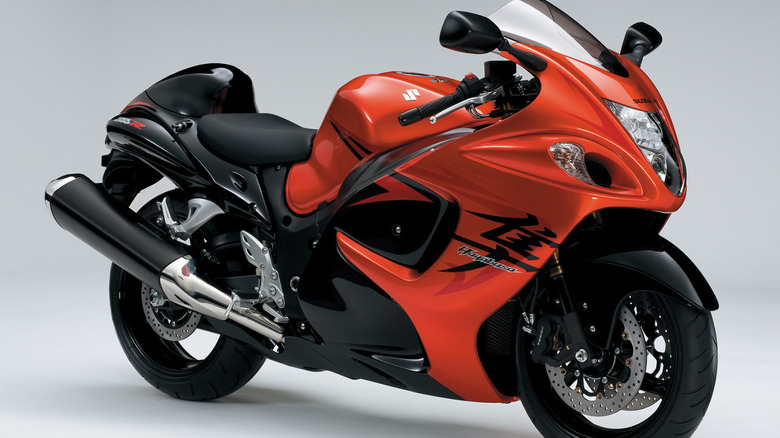
Kawasaki's answer to the Hayabusa was a technical marvel. It featured a monocoque frame design—the first of its kind on a production sportbike—which helped keep the chassis narrow and aerodynamic. While it was the bike that triggered the speed cap, unrestricted early versions were capable of nearly 190 mph. It felt sharper and more aggressive than the Suzuki, appealing to riders who wanted sportier handling alongside world-class velocity.
3. MTT Y2K Turbine Superbike
Introduced in 2000, the MTT Y2K wasn't a traditional motorcycle; it was a jet on two wheels. Powered by a Rolls-Royce Allison 250-C18 gas turbine engine, it was recognized by Guinness World Records as the world's most powerful production motorcycle. It achieved a recorded top speed of 227 mph (365 km/h), producing a staggering 320 bhp and a sound that resembled a fighter jet taking off.
4. MV Agusta F4 R 312
While the Japanese manufacturers stuck to their truce, Italian brands occasionally tested the boundaries. The 2007 MV Agusta F4 R 312 was named for its claimed top speed of 312 km/h. During testing at the Nardò Ring, it achieved a verified top speed of 193.24 mph (310.99 km/h), proving that beauty and high-velocity engineering could coexist in a high-revving 1000cc package.
5. Kawasaki ZZR1400 (Ninja ZX-14)
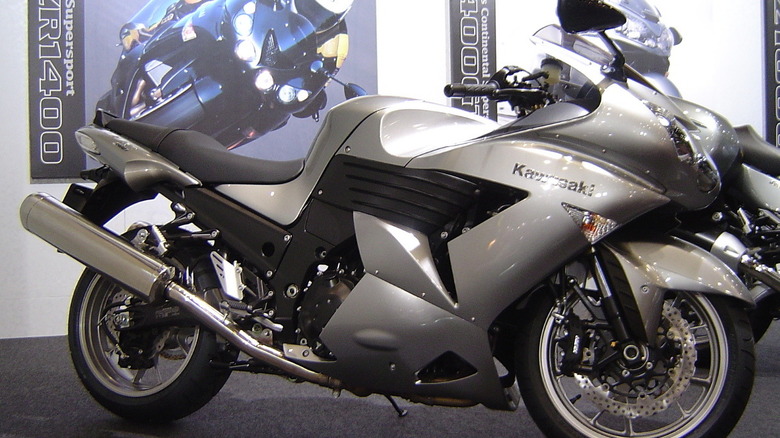
By 2006, Kawasaki regained its footing with the ZZR1400. This bike was the ultimate expression of the "more is more" philosophy, utilizing a massive 1352cc engine. While it was electronically limited to 186 mph, its acceleration was ferocious. It offered a level of refinement and low-end torque that made it the king of the high-speed touring market for the remainder of the decade.
Liter-Class Revolution: Track Performance in a 1000cc Package
While hyperbikes focused on top-end velocity, the 1000cc "liter-class" bikes focused on power-to-weight ratio and track agility. This decade saw the 1000cc class move from heavy sport-tourers to lightweight weapons.
6. Suzuki GSX-R1000 (K5)
The 2005 Suzuki GSX-R1000, known as the K5, is often cited by enthusiasts as the best liter-class bike ever made. It struck a perfect balance between raw power and a lightweight chassis. It lacked traction control, but its buttery-smooth throttle response efficiency allowed experienced riders to use every bit of its 178 bhp. For many, this bike represents the peak of the analog riding experience.
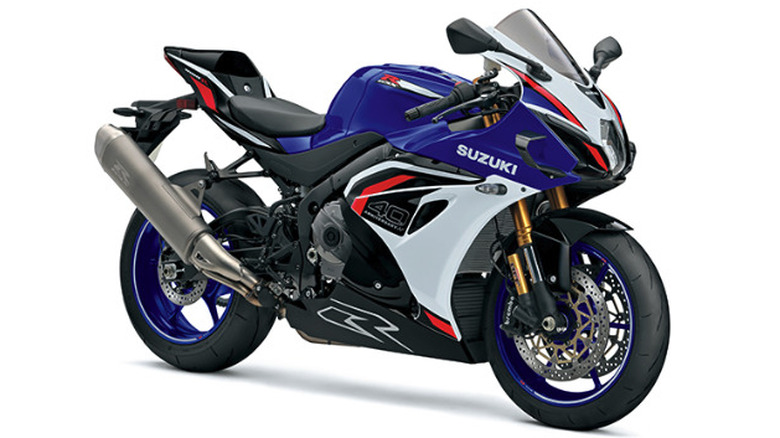
7. Yamaha YZF-R1 (2009)
The end of the decade brought one of the most significant engine innovations: the Crossplane crankshaft. Introduced in the 2009 R1, this technology provided the uneven firing order of a V4 with the compact size of an inline-four engine. The result was incredible "feel" and rear-wheel traction, a design inspired directly by Valentino Rossi's MotoGP bike.
8. Kawasaki Ninja ZX-10R (2004)
The original 2004 ZX-10R earned a reputation as a "widowmaker." It was short, light, and possessed an explosive power delivery that would lift the front wheel in almost any gear. It was iconic early 2000s performance motorcycles at their most unrefined and exciting, demanding total respect from the rider.
9. Honda CBR1000RR Fireblade
Honda took a different approach with the Fireblade, prioritizing mass centralization and rider confidence. By 2008, the Fireblade had become a masterclass in ergonomics and manageable speed. It was a favorite for iconic 2000s sportbikes for track days because it was fast without being exhausting to ride.
10. BMW S1000RR (2009)
Technically launched at the very end of 2009, the BMW S1000RR changed the game overnight. It arrived with more power than any Japanese rival and, more importantly, sophisticated electronics that began the shift away from the raw, analog era. It served as the bridge between the 2000s and the modern, computer-controlled superbike era.
Unique Engineering & All-Day Speed
Not every speed king was a dedicated track bike. The 2000s also saw unique engine configurations and high-speed touring machines that offered a different kind of thrill.
11. Honda CBR1100XX Super Blackbird
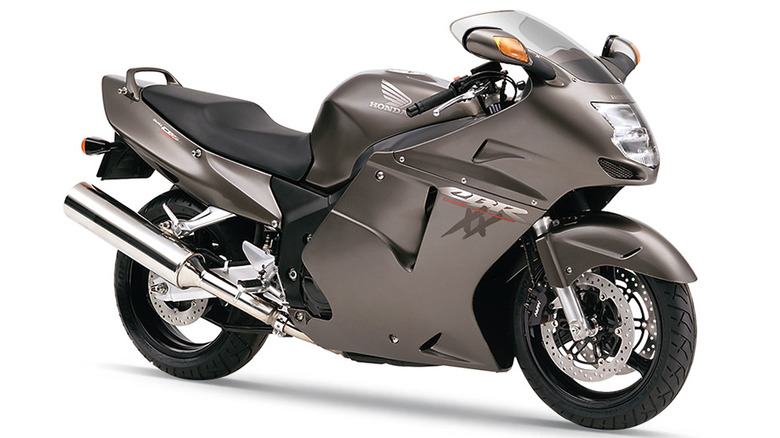
The Blackbird was the bike that the Hayabusa was built to beat. In the early 2000s, it remained a favorite for its incredible build quality and smoothness. It featured a refined aluminum twin-spar frame and a linked braking system, making it one of the most stable platforms for maintaining triple-digit speeds over long distances.
12. Triumph Rocket 3
While not a sportbike, the Rocket 3 belongs in any conversation about speed and power. Launched in 2004 with a 2294cc engine, it produced the most V-twin engine torque (despite being a triple) of any production bike at the time. It could propel a massive cruiser from 0-60 mph in under 3 seconds, proving that speed wasn't just for bikes with fairings.
13. BMW K 1200 S
BMW's entry into the hyperbike market featured a unique Duolever front suspension and an engine angled forward to keep the center of gravity low. It was a high-tech alternative to the Japanese Big Four, offering heated grips and ABS alongside a 170+ mph top speed.
14. Honda VTR1000 SP-1 (RC51)
Built specifically to take on Ducati in World Superbike racing, the RC51 featured a gear-driven cam V-twin engine that produced a legendary exhaust note. It wasn't just fast; it was a homologation special that brought true racing pedigree to the street.
15. Ducati 999
Though its design was controversial at launch, the Ducati 999 was a performance powerhouse. It moved away from the 916's styling to focus on aerodynamics and rider adjustability. It dominated on the track and remains one of the fastest and most focused V-twin motorcycles of the decade.
Buyer’s Guide: Maintaining and Valuing a 2000s Legend
If you are looking to buy a used 2000s superbike guide, you are entering the market at an interesting time. Many of these bikes are currently at the bottom of their depreciation curve, making them some of the best performance bargains available. However, high-performance machines require specific attention.
The used 2000s sportbike market value is heavily dependent on "originality." Bikes with un-cut fenders, original fairings, and stock exhausts are seeing significant collector resale value growth. When inspecting a potential purchase, look beyond the shiny paint and check for signs of hard use or neglected maintenance.
Mechanical Checklist for High-Mileage 2000s Sportbikes
- Charging Systems: Many 2000s bikes (especially Suzukis and Triumphs) are prone to failing regulator/rectifiers and stators. Test the battery voltage while the bike is running.
- EXUP/Power Valves: Yamaha and Honda models often use exhaust valves to boost low-end torque. These can seize over time, leading to a loss of power.
- Valve Adjustments: These high-revving engines have strict valve clearance intervals. Ask for service records; a missed adjustment can lead to engine damage.
- Fuel Systems: Early electronic fuel injection systems can suffer from clogged injectors if the bike sat for long periods. Watch for a choppy idle or hesitation under load.
- Frame Integrity: Check the steering head and swingarm pivots for play, especially on bikes used for wheelies or track days.
These machines are best 2000s motorcycles for experienced riders because they lack the "safety net" of modern electronics. Mastering a 180-horsepower bike with nothing but your right wrist is a rewarding challenge, but it requires respect and a gradual learning curve.
FAQ
What was the fastest production motorcycle of the 2000s?
The Suzuki Hayabusa (1999-2000 models) was the fastest unrestricted production motorcycle, reaching 194 mph. However, the MTT Y2K Turbine Superbike holds the record for the highest overall speed of the decade at 227 mph, though it utilized a non-traditional jet engine.
What was the gentlemen's agreement regarding motorcycle speeds in the 2000s?
The gentlemen's agreement was an informal pact between major Japanese and European motorcycle manufacturers to limit the top speed of their production bikes to 186 mph (300 km/h). This was done to prevent potential import bans and government regulations in Europe following the release of the high-speed Suzuki Hayabusa and Kawasaki Ninja ZX-12R.
How fast did 1000cc motorcycles go in the 2000s?
Most 1000cc superbikes of the 2000s were capable of top speeds between 175 mph and 186 mph. While they were limited by the gentleman's agreement, their power-to-weight ratios improved significantly throughout the decade, allowing them to reach these speeds much faster than their predecessors.
Are motorcycles from the 2000s still considered fast today?
Yes, motorcycles from the 2000s are still incredibly fast by modern standards. While today's superbikes have more advanced electronics and slightly higher peak power, the raw acceleration and top speeds of 2000s legends like the GSX-R1000 K5 or the Kawasaki ZX-14 remain competitive with many current production models.
Which 2000s bike had the fastest 0-60 mph acceleration?
The fastest 0-60 motorcycles of the early 2000s were typically the large-displacement hyperbikes and liter-class sportbikes. The Suzuki GSX-R1000 and the Suzuki Hayabusa both consistently recorded 0-60 mph times in the 2.5 to 2.8-second range, provided the rider could keep the front wheel on the ground.