Quick Facts
- Investment Leader: Chevrolet Corvette C1 (Average price $106,203)
- Rarity Peak: 1953 Buick Skylark (Only 1,640 produced)
- Market Trend: 8.72% CAGR projected through 2035
- Stability Factor: High demand for matching numbers and frame-off restoration examples
- Top Value Driver: Mid-century automotive design (Tailfins and chrome)
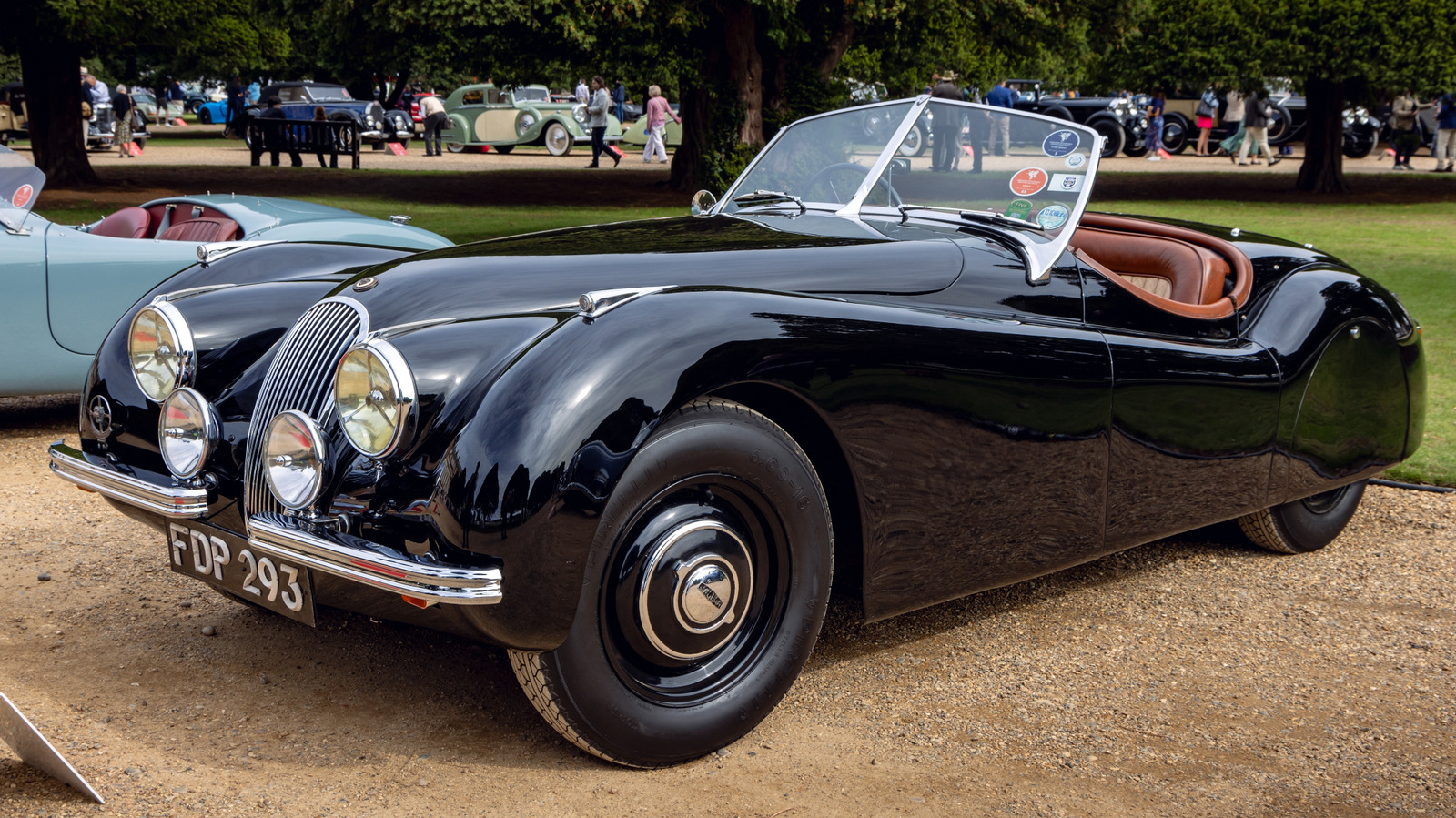
The most valuable 1950s collector cars for resale in 2025 include the Chevrolet Corvette C1, the 1957-58 Cadillac Eldorado, and the 1953 Buick Roadmaster Skylark. With a projected 8.72% CAGR for the classic car market, these mid-century automotive design icons offer stable appreciation. The Tri-Five Chevrolet Bel Air and the Jaguar XK120 Roadster also remain high-demand assets, with average auction prices frequently ranging between $50,000 and $150,000 based on their historical significance and condition.
| Model | Avg. Auction Price (2025) | Key Value Driver | Liquidity Rating |
|---|---|---|---|
| Chevrolet Corvette C1 | $106,203 - $215,000 | First American Sports Car | High |
| 1957-58 Cadillac Eldorado | $114,990 | Peak Tailfins & Chrome | Moderate |
| Tri-Five Chevy (55-57) | $65,000 - $120,000 | Massive Fan Base | Very High |
| 1953 Buick Skylark | $145,000 - $185,000 | Anniversary Rarity | Low-Moderate |
| Jaguar XK120 | $95,000 - $160,000 | European Racing Pedigree | Moderate-High |
The 1950s Automotive Asset Class: Why Values Are Rising
As we move through 2025, the classic car market resale value has transitioned from a niche hobby into a sophisticated automotive asset class. Investors are increasingly looking toward the 1950s era as a hedge against market volatility, driven by a desire for tangible assets with historical permanence. While traditional markets face fluctuations, the best 1950s collector cars for investment 2025 continue to show resilience. Market data indicates a Sharpe Ratio of approximately 1.30 for top-tier vintage vehicles, suggesting they outperform many traditional equities when adjusted for risk.
This decade represents the "Goldilocks" period of car collecting: the vehicles are modern enough to be driven comfortably at highway speeds but old enough to possess the sculptural beauty that modern safety regulations now prohibit. Post-war prosperity in the United States fueled an era of "bigger is better" engineering, resulting in the massive auction hammer prices we see today. Factors affecting 1950s vintage car resale value often come down to the emotional connection of the "tailfins and chrome" era, combined with the mechanical simplicity that allows for high-quality frame-off restoration projects to maintain their value over decades.
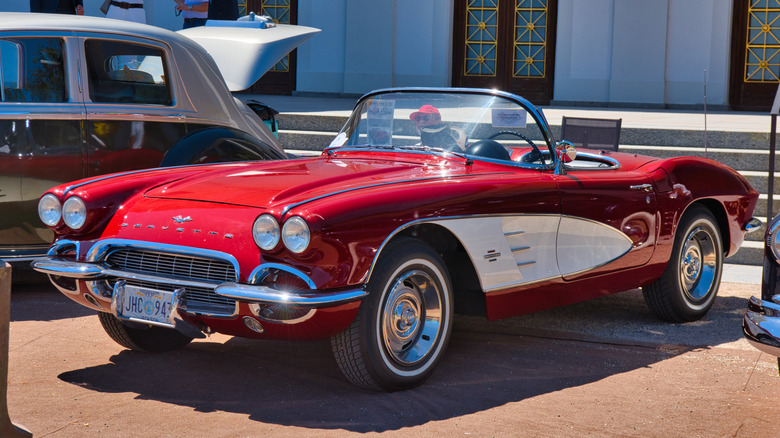
1. Chevrolet Corvette C1: The American Sports Icon
The Chevrolet Corvette C1 is not just a car; it is the genesis of the American sports car movement. For collectors, the C1 represents a decade of rapid evolution. Early 1953 models, featuring the Blue Flame inline-six, are the rarest, while the 1955 introduction of small-block V8 engines transformed the Corvette into a true performance machine. This transition to eight cylinders is a major reason why 1950s car auction prices for later C1 models have remained so high.
In 2025, the market for the C1 remains incredibly robust. Recent data shows that the 1953 Chevrolet Corvette remains a high-value collector car, with average prices reaching $215,000 and pristine examples frequently exceeding $300,000. When analyzing Chevrolet Corvette C1 resale value trends, the "fuelie" models (fuel-injected) from 1957 stand out as peak performance investments, often commanding a 20-30% premium over carbureted versions at Barrett-Jackson results.
- Average Sale Price: $106,203 - $215,000
- Rarity Score: 9/10 (For 1953-1955 models)
- Top Investment Feature: First-ever American fiberglass production sports car
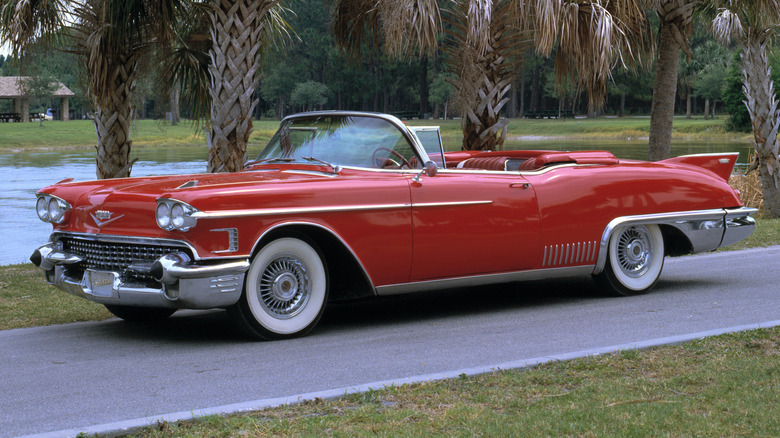
2. 1957-1958 Cadillac Eldorado: The Pinnacle of Luxury
If the Corvette represents American speed, the Cadillac Eldorado represents American stature. During the late 1950s, Cadillac was the "Standard of the World," and the Eldorado was its flagship. These cars are the definitive examples of mid-century automotive design, characterized by soaring tailfins and an abundance of chrome that mirrored the optimism of the jet age.
For those tracking valuable 1950s American luxury cars for collectors, the Eldorado Biarritz (convertible) and Seville (coupe) are the primary targets. The 1957 and 1958 Cadillac Eldorado continues to hold high resale value in 2025, with an average auction sale price of $114,990 and top-condition examples selling for more than $200,000. The 1957 model, in particular, is coveted for its distinctive rear-end styling and the high-compression 365 cubic-inch V8 engine.
- Average Sale Price: $114,990
- Rarity Score: 8/10
- Top Investment Feature: Iconic "chipmunk" tailfins and 325-hp V8 engine
3. The Tri-Five Chevrolets (1955-1957): The Evergreen Choice
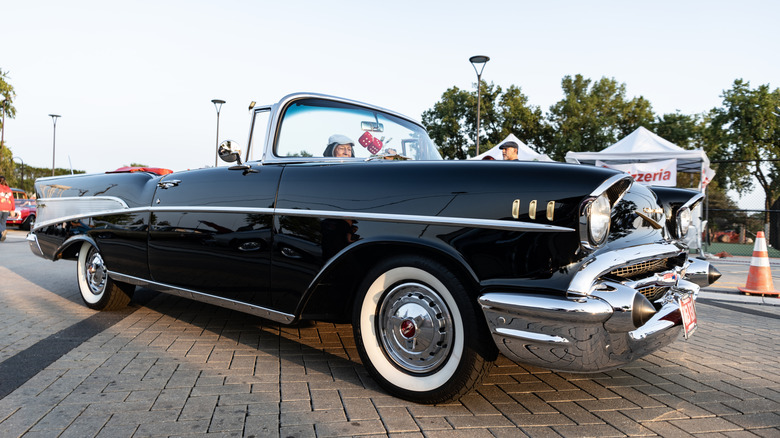
The 1955, 1956, and 1957 Chevrolets—collectively known as the "Tri-Five"—are often considered the most recognizable 1950s collector cars in the world. Specifically, the Bel Air trim level, with its signature side spears and refined interior, offers the highest liquidity in the classic car market. Unlike rarer exotics, there is a massive infrastructure of parts and expertise for these cars, making them a "safe bet" for new investors.
The Tri-Five Chevy market value 1955-1957 has shown remarkable stability because these cars appeal to multiple generations of enthusiasts. The 1957 Bel Air with the "Super Turbo-Fire" V8 and Fuel Injection is the most sought-after variant. While average prices hover around $70,000, "Nomad" station wagons and "Fuelie" convertibles can easily double that figure. The key to value here is mechanical originality; finding a car with matching numbers for the engine and transmission is essential for long-term appreciation.
- Average Sale Price: $50,000 - $130,000
- Rarity Score: 6/10 (High volume, but high demand)
- Top Investment Feature: Universal parts availability and cultural icon status
4. 1953 Buick Roadmaster Skylark: Rarity Meets Style
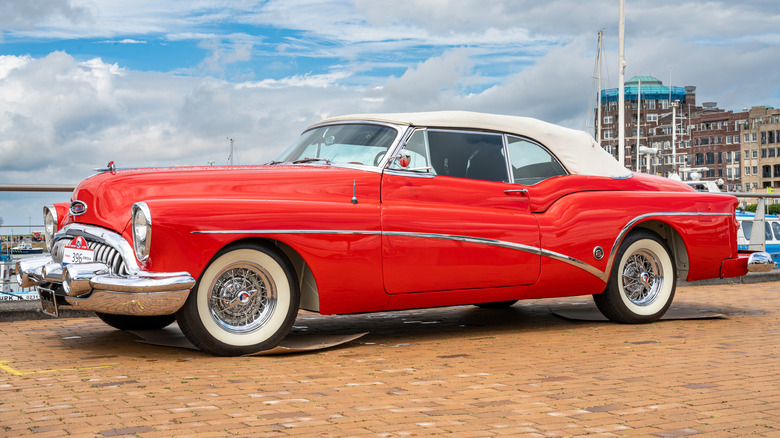
To celebrate Buick’s 50th anniversary, the company released the Roadmaster Skylark, a hand-finished convertible that pushed the boundaries of luxury. This model is a prime example of how limited production numbers directly correlate with valuable 1950s vintage cars status. With only 1,640 units produced, the Skylark was an expensive car when new and remains an elite asset today.
The 1953 Skylark featured the first of Buick’s modern V8 engines, the "Nailhead," and sat on beautiful Kelsey-Hayes wire wheels. Because these were essentially custom-built on the production line, the cost of a proper frame-off restoration is astronomical, which in turn props up the price of already-restored examples. At current auctions, these cars are a litmus test for the luxury market, with auction hammer prices reflecting their status as a "holy grail" for Buick collectors.
- Average Sale Price: $145,000+
- Rarity Score: 10/10
- Top Investment Feature: Extremely low production numbers and 50th-anniversary prestige
5. Jaguar XK120: The European Contender
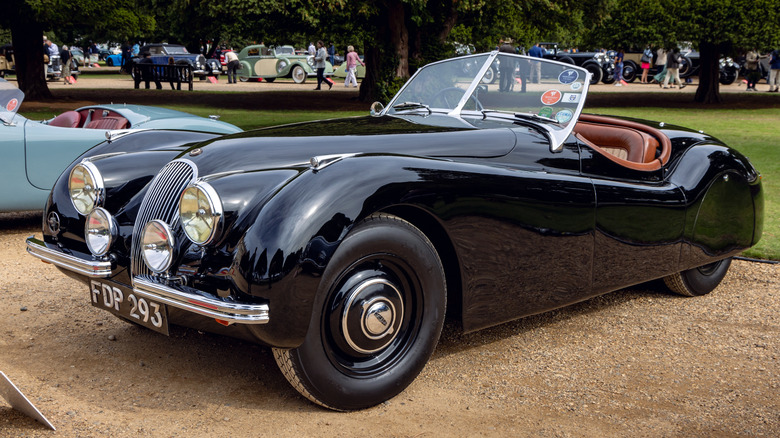
While American steel dominated the 1950s, the Jaguar XK120 provided a sleek, European alternative that captivated US buyers. It was the fastest production car in the world upon its debut, and its influence on open-top motoring cannot be overstated. When evaluating the Jaguar XK120 roadster vs coupe collector value, the roadsters generally command a 15-20% premium due to their iconic silhouette and racing heritage.
The XK120’s 3.4-liter straight-six engine was so well-engineered that variations of it were used by Jaguar for the next four decades. This mechanical longevity makes them more "usable" than many of their contemporaries. In 2025, European collectors and US investors alike compete for these cars at events like the Concours d'Elegance, ensuring that their valuable 1950s vintage cars status remains internationally recognized.
- Average Sale Price: $95,000 - $160,000
- Rarity Score: 7/10
- Top Investment Feature: World-class racing pedigree and timeless aesthetic
Condition & Authentication: Protecting Your Investment
In the 2025 market, the difference between a car that sells for $50,000 and one that sells for $150,000 often comes down to "Condition #1" status versus a "Driver" grade. For 1950s collector cars, authentication is everything. Buyers should prioritize vehicles that possess matching numbers—meaning the engine, transmission, and chassis serial numbers all correspond to the factory records.
A comprehensive frame-off restoration is another significant value multiplier. This process involves stripping the car down to its bare metal frame and rebuilding every component to better-than-factory standards. Furthermore, investors are looking closer at historical indices. For example, the Mercedes-Benz 300 SL Gullwing has demonstrated strong market performance with average prices for non-alloy-bodied examples rising from $1.14 million to $1.51 million over a recent two-year period. While the 300 SL is in a higher price bracket, it signals a broader upward trend for the entire 1950s era. Always consult the Hagerty Price Guide before finalizing a purchase to ensure you are paying a fair market rate based on current trends.
FAQ
Are 1950s classic cars a good investment?
Yes, they have proven to be a stable asset class with a projected 8.72% CAGR through 2035. Unlike modern cars, 1950s collector cars have already finished their depreciation cycle and are now appreciating due to their historical significance and the finite supply of well-preserved examples.
How much do 1950s collector cars usually cost?
The price varies wildly based on the model and condition. A high-quality "driver" version of a Tri-Five Chevy may cost between $50,000 and $70,000, while rare icons like the 1953 Corvette C1 or the Buick Skylark frequently exceed $200,000 at auction.
What is the best 1950s car for a beginner collector?
The 1955-1957 Chevrolet Bel Air is widely considered the best entry point. Because of its massive popularity, there is an abundance of 1950s car auction price analysis for beginners available, and the availability of replacement parts makes maintenance much less daunting than European or low-production luxury models.
What should I look for when inspecting a 1950s car for sale?
Prioritize mechanical originality, specifically matching numbers on the engine and frame. Check for rust in the floorboards and trunk—common issues for cars from this era. Finally, look for documentation of a frame-off restoration, as this typically guarantees the highest potential for future resale value.