Quick Facts
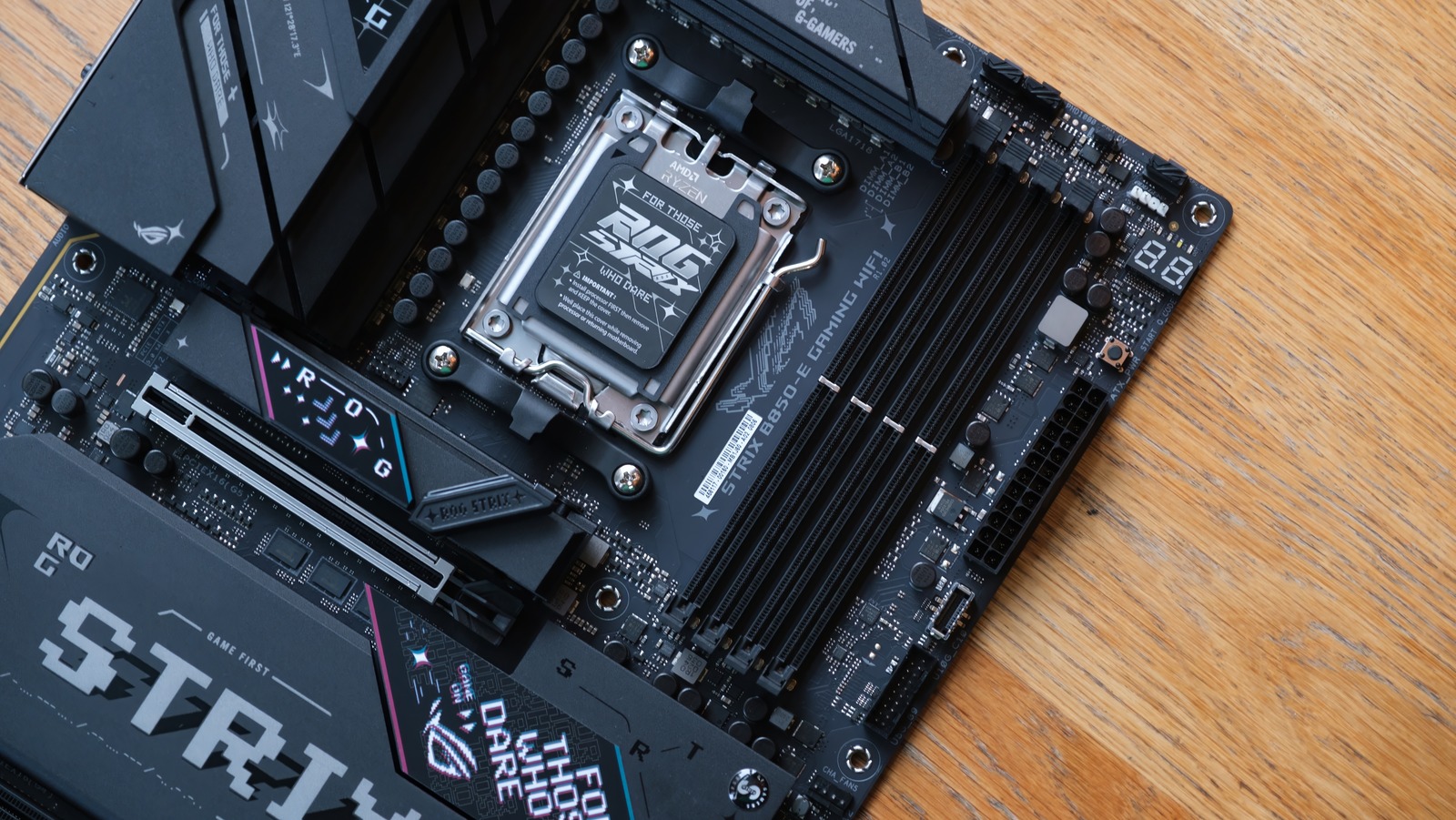
- Socket Safety: The transition to LGA 1718 makes a used AM5 motherboard significantly safer to purchase than AM4, as physical defects are easier to spot.
- Platform Longevity: AMD has committed to supporting the AM5 socket until at least 2027, providing a multi-generational upgrade path that AM4 lacks.
- Memory Standards: AM5 requires DDR5 memory, which offers higher bandwidth but increases the initial total platform cost 2026 compared to DDR4-based AM4 builds.
- Performance Ceiling: While AM4 peaks with the Ryzen 7 5800X3D, AM5 supports Ryzen 9000 series CPUs and future Zen architectures.
- Technical Edge: Modern AM5 boards feature superior VRM power delivery quality and support for PCI Express 5.0 lanes, preventing future hardware bottlenecks.
- Buying Strategy: A used B650 or X670 motherboard represents the best balance of reliability and long-term value for mid-to-high-end builds in 2024-2026.
Buying a used AM5 motherboard is often safer than AM4 due to the transition from Pin Grid Array (PGA) to Land Grid Array (LGA1718). While AM4 processors feature delicate pins that are easily damaged during transit or installation, the AM5 socket places the pins on the motherboard, making it simpler to inspect for physical defects before purchase. Furthermore, since the AM5 platform debuted in late 2022, used boards typically show less electrical degradation and wear than older AM4 counterparts.
Mechanical Reliability: Why Used AM5 is Safer Than AM4
In the world of used PC components, physical integrity is everything. For years, the AM4 platform used a Pin Grid Array (PGA) design where the delicate copper pins were located on the bottom of the processor. If you have ever bought a used Ryzen 5000 series chip, you know the anxiety of checking for bent pins. The shift to the AM5 socket reliability begins with its mechanical design: Land Grid Array (LGA).
With LGA 1718, the pins are moved from the CPU to the socket on the motherboard. This change is a game-changer for second-hand buyers. When you are looking at a used AM5 motherboard, you can simply remove the protective cap and perform a clear visual inspection. If the pins are straight and uniform under a flashlight, the board is likely healthy. On the older AM4 platform, a "functional" motherboard could still be problematic if the previous owner used a CPU with a broken pin that remained stuck in the socket holes.
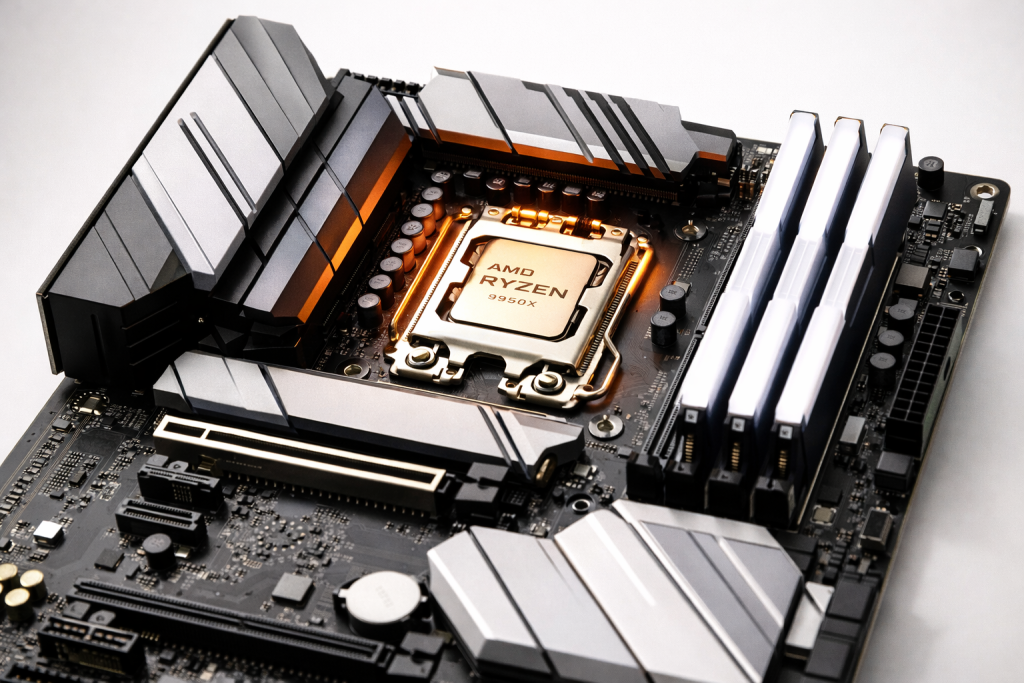
When performing a physical inspection and socket reliability check on a used AM5 motherboard, follow this checklist:
- Socket Pin Alignment: Use your phone’s camera zoom to check for any "glints" of light reflecting inconsistently across the pin array, which usually indicates a bent pin.
- Thermal Paste Residue: Ensure no non-conductive paste has leaked into the socket area, which can cause memory channel failures.
- Capacitor Health: Look for any bulging or leaking capacitors around the CPU socket and VRM area.
- Rear I/O and PCIe Slots: Check for physical shearing or loose ports, which suggests the board was handled roughly during a previous build.
The reliability of used LGA1718 vs AM4 PGA sockets is also superior during shipping. LGA pins are protected by a spring-loaded metal frame and a plastic cover, whereas AM4 CPUs are often shipped in flimsy plastic shells where a single bump can ruin the component. For the buyer, the AM5 transition reduces the "hidden damage" risk significantly.
Platform Runway: Future-Proofing vs. The AM4 Dead-End
The most compelling reason to choose a used AM5 motherboard in 2026 is what we call "Platform Runway." AM4 was a legendary socket, spanning five generations of processors, but it has officially hit a dead end. If you buy a used X570 board today, the best CPU you can ever install is the Ryzen 7 5800X3D. While that is a fantastic gaming chip, it represents the absolute ceiling of that platform.
In contrast, AM5 motherboard future-proofing is a reality. AMD has officially committed to the socket through 2027 and likely beyond. This means a second-hand B650 board purchased today will not only support current Ryzen 7000 and 8000 series chips but is also guaranteed to have AM5 motherboard BIOS compatibility with Ryzen 9000 and future Zen 6 parts. You aren't just buying a motherboard for today; you are buying a foundation for the next three years of CPU releases.
Pro Tip: The BIOS Flashback Requirement When buying a used AM5 motherboard, prioritize models with a "BIOS Flashback" button on the rear I/O. This feature allows you to update the BIOS using only a USB drive and power supply—no CPU required. This is critical if you buy an older B650 board and want to pair it with a brand-new Ryzen 9000 series chip, avoiding the common BIOS trap that plagued early AM4 adopters.
By choosing AM5, you gain access to a multi-generational upgrade path. This eliminates the need to tear down your entire system and replace the motherboard and RAM every time you want a faster processor. For anyone looking at a platform longevity strategy, the AM5 socket support lifespan for future Ryzen CPUs makes it the mathematically superior choice.
Total Cost of Ownership: 2026 Price Comparison
We have to be honest about the used AM4 vs AM5 total platform cost 2026. If you are building on a rock-bottom budget, AM4 is still the king of the "deal." You can find used B550 boards for under $80, and DDR4 memory is essentially being cleared out of warehouses for pennies. However, when you calculate the Total Cost of Ownership over three years, the math starts to favor AM5.
| Feature | Used AM4 (B550/X570) | Used AM5 (B650/X670) |
|---|---|---|
| Socket Type | PGA (Pins on CPU) | LGA 1718 (Pins on Board) |
| Memory Standard | DDR4 | DDR5 |
| Max PCIe Version | PCIe 4.0 | PCI Express 5.0 lanes |
| Storage Speed | Up to ~7,500 MB/s | Up to ~14,000 MB/s |
| Future CPU Support | Discontinued (Zen 3 Max) | Active (Zen 5 and Beyond) |
While the initial buy-in for a used AM5 motherboard and DDR5 memory standards is higher, the resale value of these parts will hold much better in 2027 and 2028. AM4 parts are entering their "legacy" phase, where their value will drop sharply as they become incompatible with modern software and ultra-fast storage.
The one exception to this rule is the Ryzen 7 5800X3D performance. If your goal is specifically 1440p or 4K gaming and you already have a high-end GPU, a used AM4 setup can still deliver 90% of the performance for 60% of the cost. But for everyone else, upgrading from used AM4 to AM5 worth it 2026 because it removes the system bottlenecks that are beginning to appear in newer titles.
Technical Edge: VRMs and PCIe 5.0 Standards
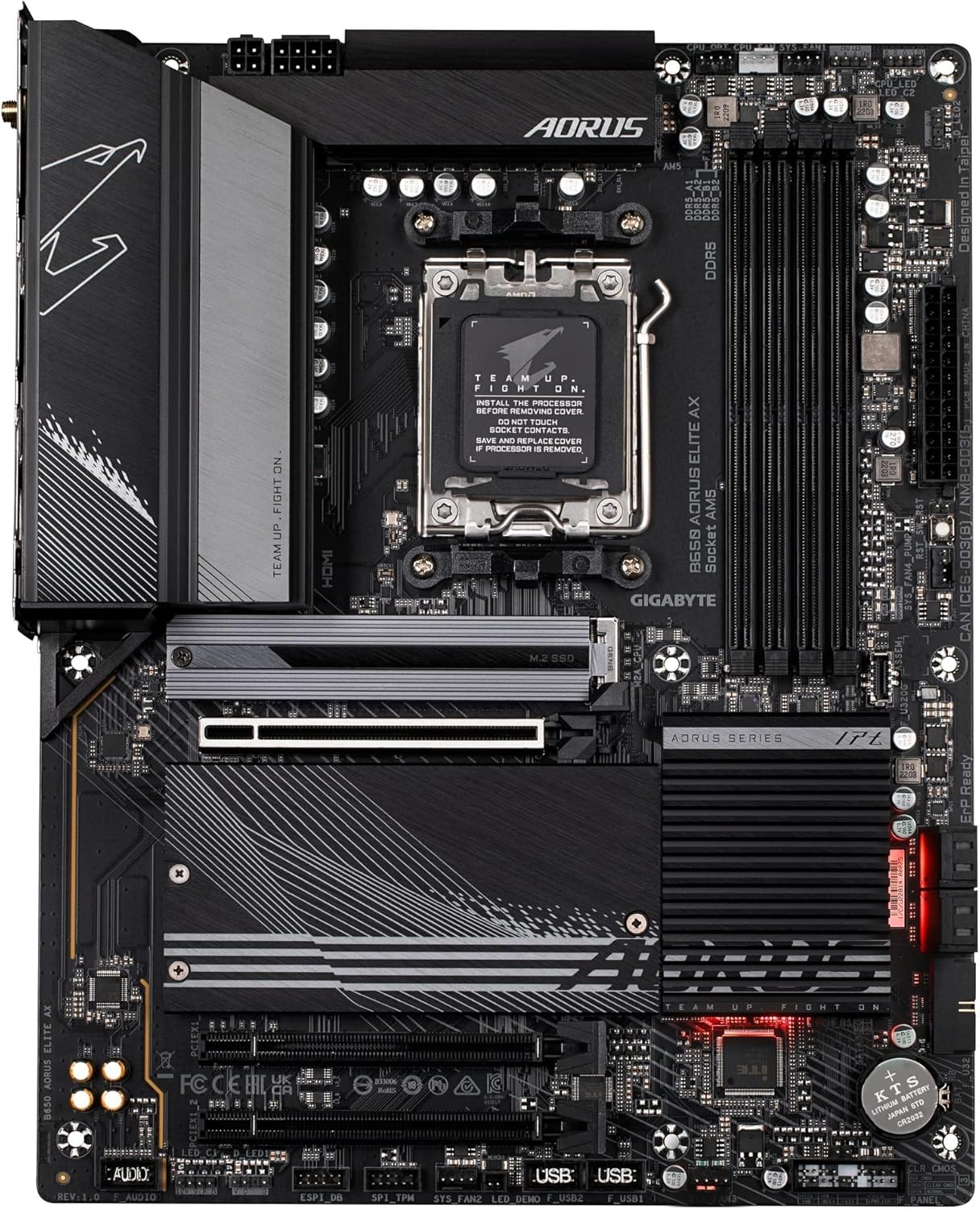
One aspect of the used market that often gets overlooked is the electrical "overbuilding" of the newer generation. Because the AM5 platform was designed to handle CPUs with a 230W PPT (Package Power Tracking), even mid-range B650 motherboards feature VRM power delivery quality that rivals top-tier X570 boards from the previous generation.
When you buy a used AM5 motherboard, you are generally getting a board with a 12+2+1 or 14+2+1 power phase design. These robust Voltage Regulator Modules run cooler and last longer than the smaller VRMs found on older budget AM4 boards. This is vital for the second-hand market because heat is the primary killer of electronics. A board that has spent its life running cool is a board that will last another five years in your system.
Furthermore, the inclusion of PCI Express 5.0 lanes on many AM5 boards provides a massive safety net. While current GPUs don't fully saturate PCIe 4.0, the next two generations of graphics cards and NVMe SSDs will move toward the 5.0 standard. Having a used motherboard that already supports these speeds means you won't be forced into another upgrade just to unlock the full potential of a 2027-era GPU.
FAQ
Is it safe to buy a used AM5 motherboard?
Yes, it is generally safer than buying a used AM4 motherboard because the LGA 1718 socket pins are on the board rather than the CPU. This allows for a much easier visual inspection for damage before you commit to the purchase. Additionally, AM5 boards are newer, meaning they have likely seen less total "on-time" and electrical wear than older AM4 hardware.
What should I look for when buying a used AM5 motherboard?
Your primary focus should be a microscopic inspection of the socket pins. Ensure no pins are bent or missing. Secondly, check for the presence of a BIOS Flashback button, which is essential for ensuring compatibility with newer Ryzen chips. Finally, verify that all M.2 heat sinks and the original I/O shield are included, as these can be difficult to source separately.
How much can I save by buying a used AM5 motherboard?
On the current used market, you can typically save between 25% and 40% off the MSRP of a new B650 or X670 board. Because many early adopters of AM5 are already upgrading to X870E platforms, there is a healthy supply of mid-range B650 boards available at significant discounts, often making them a better value than buying a brand-new AM4 board.
Does a used AM5 motherboard support all Ryzen 7000 and 8000 series CPUs?
Yes, every AM5 motherboard supports the full stack of Ryzen 7000 and 8000 series processors. However, some early B650 and X670 models may require a BIOS update to recognize the newer 8000 series APUs or 9000 series CPUs. This is why choosing a board with BIOS Flashback functionality is highly recommended for used market buyers.
Conclusion: Choosing Your Path in 2026
Deciding between AM4 and AM5 in the second-hand market comes down to your personal horizon. If you need a functional PC today for the absolute lowest price and you don't plan on touching the internals for the next three years, a used AM4 system remains a viable, albeit stagnant, choice. It is the "budget king" of the 1440p era.
However, for anyone building with an eye toward the future, the used AM5 motherboard is the clear winner. The mechanical safety of the LGA 1718 socket, the guaranteed support for upcoming Zen architectures, and the inclusion of modern standards like DDR5 and PCIe 5.0 make it a much more strategic investment. You are paying slightly more upfront for a platform that will grow with you, rather than one that forces you into a total rebuild the moment you want a faster processor.
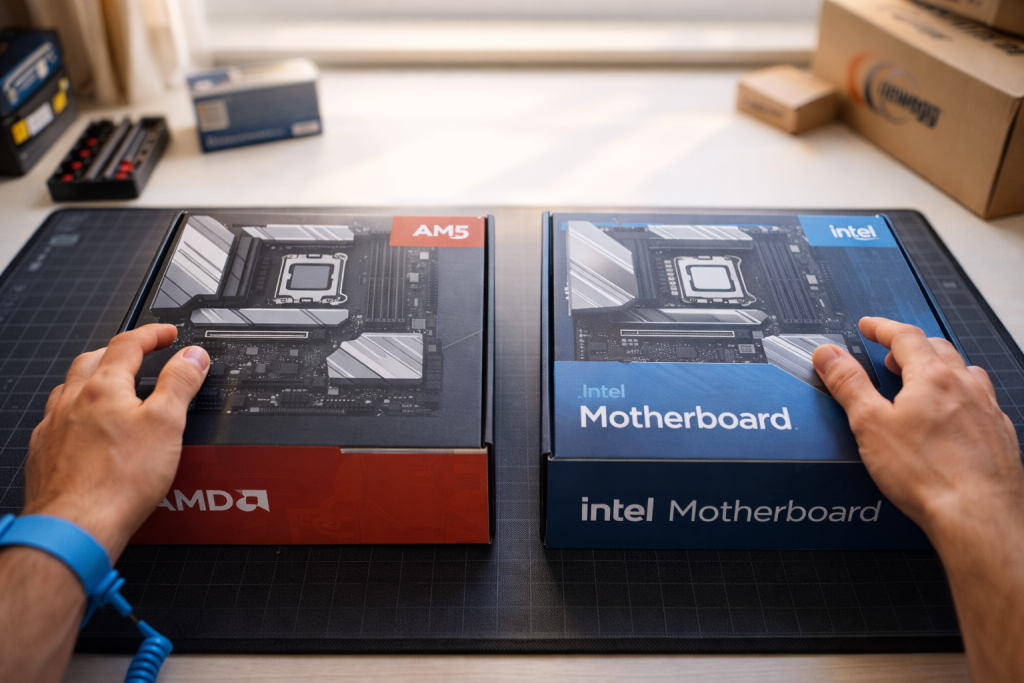
In 2026, the smart money is on the B650 chipset. It offers the best intersection of current-day affordability and future-proof features. By snagging a high-quality used AM5 board now, you are securing a place in AMD's most advanced ecosystem, ensuring your PC remains relevant and powerful well into the end of the decade.