Our Top Picks
- The Gridfinity System: Best for total drawer customization with infinite modularity.
- Stealth Under-Desk Mounts: Best for reclaiming desk real estate from bulky keyboards.
- Hexagonal Cable Hives: Best for taming complex wiring in high-end gaming setups.
- Integrated Audio Hubs: Best for combining headphone storage with small-item organization.
- The Hyperboloid Holder: Best for minimalist aesthetics and high-density tool storage.
3D printed desk organizers provide highly customizable storage solutions that allow you to tailor your workspace to your exact hardware needs. By using materials like PLA filament and FDM printing, makers can create bespoke cable winders and modular trays that eliminate desktop clutter while boosting productivity by up to 30%.

As someone who spends most of my day swapping out computer components and testing the latest laptops, my desk often looks like a hardware store exploded on a mahogany surface. We have all been there—the "junk drawer" that won't close, the USB cables that resemble a bowl of technicolor spaghetti, and the keyboard that takes up 40% of the usable space.
Research indicates that individuals working in an organized, clutter-free workspace can boost their productivity by 20% to 30% compared to those in cluttered environments. Furthermore, a survey of 2,000 U.S. office workers revealed that 84% of employees feel more productive when their workspace is organized, while 86% believe their physical setup directly impacts their happiness.
The solution isn't just buying more plastic bins from a big-box store. Those are designed for "everyone," which usually means they don't fit "anyone's" specific gear perfectly. This is why 3D printed desk organizers have become the gold standard for professionals and PC builders. The personal 3D printer market was valued at approximately USD 5.99 billion in 2024, and much of that growth is driven by people realizing they can manufacture their own bespoke solutions.
| Feature | Store-bought Organizers | 3D Printed Desk Organizers |
|---|---|---|
| Customization | Fixed dimensions/Fixed slots | Infinite (Adjustable STL files) |
| Cost | $20 - $100+ | $2 - $10 (Material cost) |
| Lead Time | Immediate (Retail) | 2 - 12 hours (Local printing) |
| Sustainability | Plastic waste/Global shipping | On-demand/Bio-degradable PLA |
| Durability | High (Injection molded) | Variable (Adjustable Infill density) |
1. The Gridfinity System: Ultimate Modular Drawer Modularity
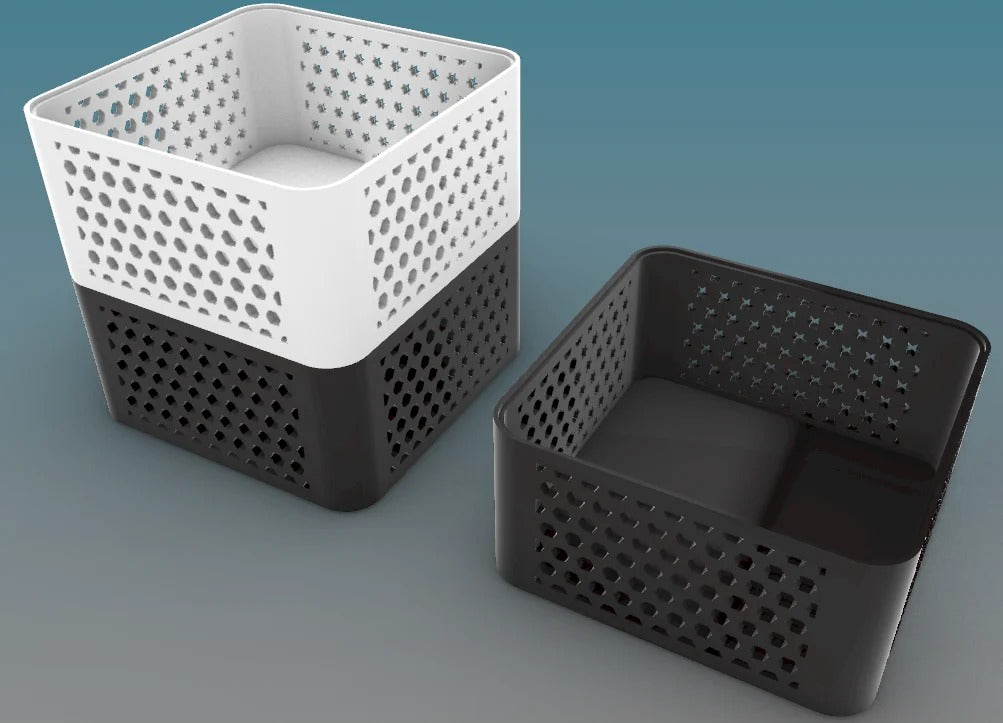
If you haven't heard of the Gridfinity system, you are missing out on the most significant advancement in workshop organization since the invention of the pegboard. Developed by Zach Freedman and embraced by the Maker community, Gridfinity is an open-source standard for modular bins and baseplates. It is designed to turn your messy drawer into a precision-engineered storage machine.
The beauty of these custom 3D printed desk accessories lies in the standardized 42mm grid. You print a baseplate that fits your drawer dimensions, and then you can drop in any combination of bins. Need a holder for a specific set of SD cards? There is a bin for that. Need a scoop-front tray for loose screws? There is a bin for that too. This modular 3D printed drawer organizer system allows you to iterate as your hardware collection grows. Instead of throwing away an old organizer when you get new gear, you simply print one more module and slot it in.
Printing Recipes
- Material: PLA filament
- Infill density: 10-15% (Rectilinear)
- Layer Height: 0.28mm (Draft quality is fine for these)
- Difficulty: Beginner friendly 3D printed desk organizers
2. Stealth Efficiency: Under-Desk Keyboard Mounts
One of the biggest obstacles to a Minimalist workspace is the secondary keyboard. Whether you have a separate board for gaming or a dedicated mechanical deck for coding, having two keyboards on top of the desk is a recipe for an Ergonomic setup disaster. The answer is to go vertical.
Under-desk 3D printed storage solutions, specifically keyboard mounts, allow you to slide your peripheral out of sight when not in use. Unlike generic under-desk trays, these mounts are often designed as slim brackets that screw into the underside of your desk. Because they are 3D printed, you can find STL files that are specifically measured for the thickness of your specific keyboard, ensuring a snug fit without the "wobble" found in retail products. This is one of those 3D printed workspace storage projects that yields immediate dividends in usable square footage.
Printing Recipes
- Material: PETG or PLA+ (for better creep resistance under load)
- Infill density: 40% (Gyroid)
- Wall Loops: 4-5 (Crucial for screw-hole strength)
- Difficulty: Intermediate (Requires hardware mounting)
3. Cable Management Hives: Taming the Gaming Setup
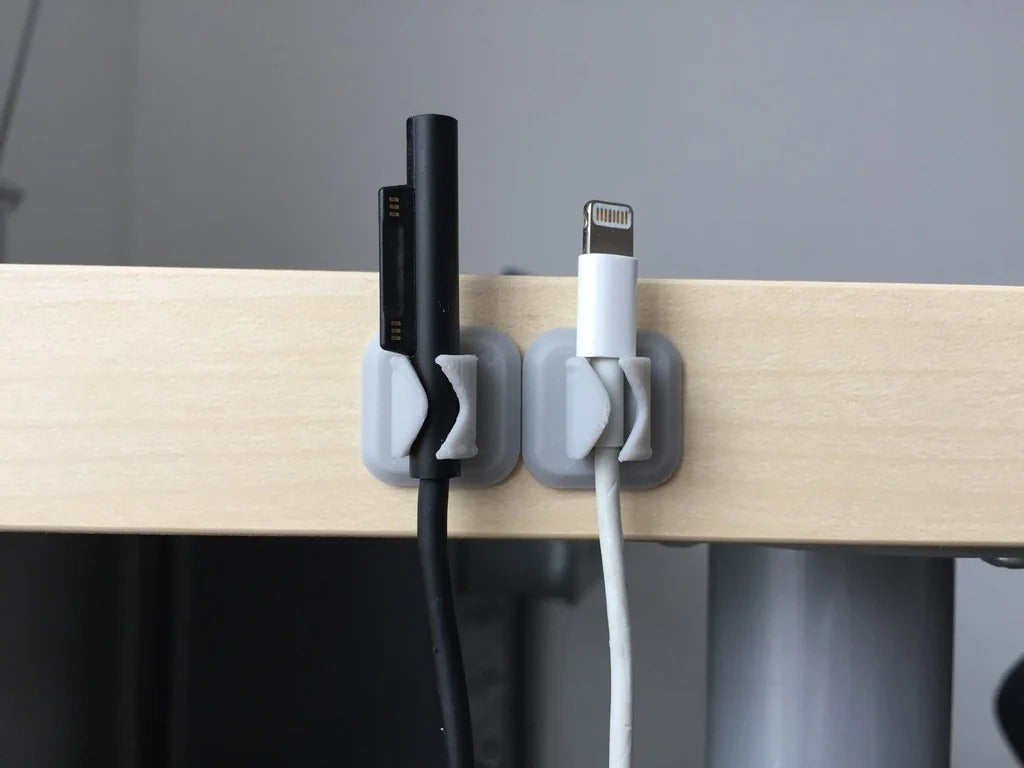
Cable management is the final boss of any PC build. We have all tried the zip-tie approach, only to realize we need to swap out a monitor and have to cut everything loose. This is where 3D printed cable management solutions change the game. The "Cable Hive" or hexagonal winder is a popular community design that uses a Print-in-place mechanism to coil excess cord length inside a small, attractive housing.
For those running complex 3D printed cable management for gaming setups, these hives prevent the dreaded "spaghetti floor." You can mount them to the back of your desk or the wall using command strips. Because the STL files are often parametric, you can scale them up for thick power cables or down for thin mouse wires. By keeping the tension off the ports, you also extend the life of your expensive peripherals.
Printing Recipes
- Material: PLA filament
- Infill density: 20%
- Special Note: Ensure your Extrusion Multiplier is calibrated to prevent the moving parts from fusing.
- Difficulty: Intermediate (Requires good bed adhesion)
4. Audio Hubs: Functional Headphone Stands
A headphone stand that just holds headphones is a wasted opportunity. In a WFH environment, your desk needs to work harder. The latest practical 3D printed headphone stands for desks now feature integrated "hubs" in the base. These are designed with specific cutouts for your USB-C adapters, spare keycaps, or even a slot for a smartphone.
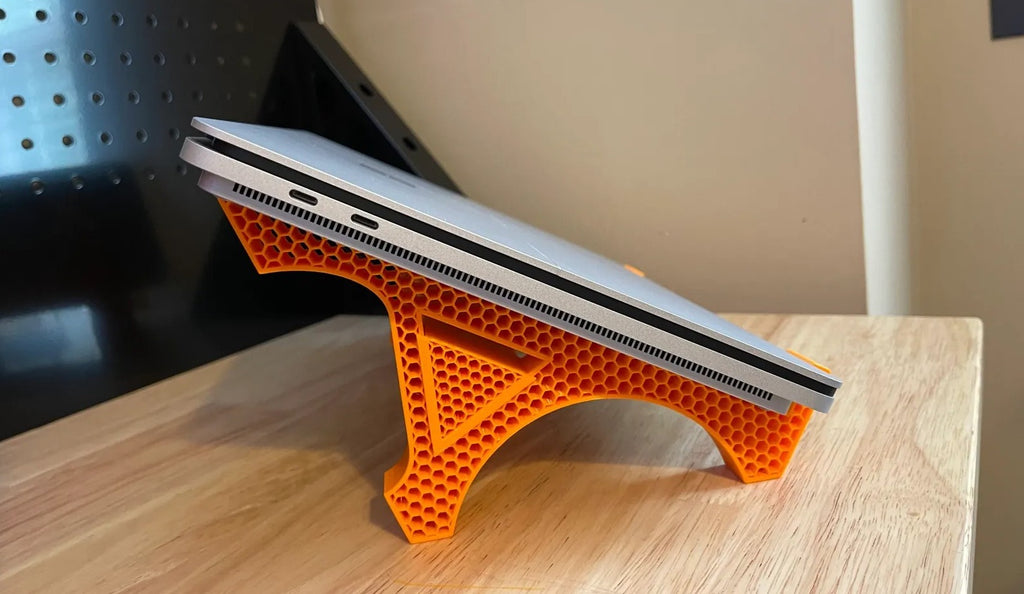
When we look at the Maker community, the most popular designs often feature a Tapered Cantilever design to prevent the headband padding from deforming. Using FDM printing, you can create these stands with internal honeycomb structures that provide incredible stability without using a pound of plastic. You can even color-match the filament to your PC case or your room’s accent wall for a cohesive aesthetic customization.
Printing Recipes
- Material: PLA filament or Wood-filled PLA for a premium look
- Infill density: 15% (with 3-4 bottom layers for weight)
- Layer Height: 0.2mm
- Difficulty: Beginner friendly 3D printed desk organizers
5. The Hyperboloid Holder: Precision Tool Organization
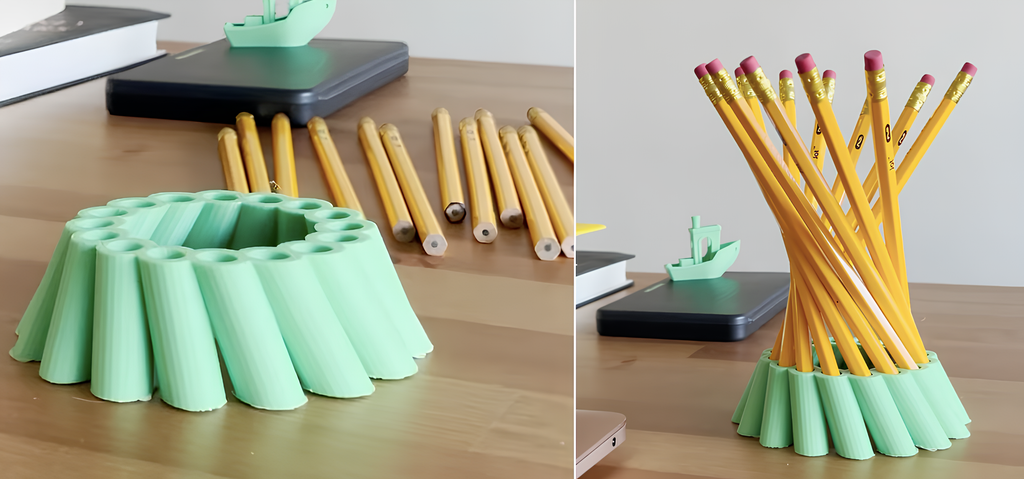
Finally, let’s talk about the Hyperboloid Holder. If you are a builder who always has a screwdriver, a pair of tweezers, and a spudger within reach, this is the functional 3D printed pen and tool holders design for you. It uses a mathematical hyperboloid geometry to hold up to 16 different tools in a footprint no larger than a coffee mug.
The unique angle of the holes means that your tools are splayed outward, making it easy to grab the one you need without knocking over the others. It is a masterclass in how 3D printed desk organizers can provide high-density storage while maintaining a low profile. It looks like a piece of modern art, but it functions like a surgical tray.
Printing Recipes
- Material: PLA filament (Silk or Matte finishes look best here)
- Infill density: 10-15%
- Support: None (This is an Overhang test masterclass)
- Difficulty: Beginner
The Future of the Personalized Workspace
We are moving away from the era of "one size fits all." As the 3D printer market continues its compound annual growth rate of 6.7%, the ability to print your own productivity tools is becoming as common as owning a standard printer was in the 90s.
Whether you are starting with a simple Gridfinity bin or building a complex under-desk mounting system, the goal is the same: to create a workspace that supports your focus rather than distracting from it. By leveraging digital fabrication, you aren't just cleaning your desk; you are engineering a better way to work.
FAQ
Is it cheaper to 3D print or buy a desk organizer?
In almost all cases, 3D printing is significantly cheaper if you already own the printer. A standard 1kg spool of PLA filament costs between $15 and $25 and can produce dozens of Gridfinity bins or several large headphone stands. While a high-end modular organizer might cost $50 at retail, the equivalent amount of plastic in a 3D print usually costs less than $5.
What are the best materials for 3D printing desk organizers?
PLA filament is the best all-around choice because it is easy to print, comes in a vast array of colors, and is rigid enough for most desk tasks. However, if you are printing something that will be under constant stress, such as a space saving 3D printed keyboard mounts or a heavy-duty monitor shelf, PETG is a better choice due to its higher impact resistance and "flex" before breaking.
How long does it take to 3D print a desk organizer?
Print times vary wildly based on the size and complexity of the model. A small cable clip might take 15 minutes, while a large, modular drawer baseplate or a complex headphone stand can take 8 to 12 hours. Using a modern high-speed FDM printer can reduce these times by up to 50% compared to older models.
Are 3D printed desk organizers durable?
Yes, provided you use the correct settings. While they may not be as indestructible as solid injection-molded plastic, a 3D printed part with a proper Infill density and enough wall loops can easily last for years in an office environment. The main enemy of these prints is heat; never leave PLA-printed organizers in a hot car, as they can warp at temperatures above 60°C.
What is the best infill percentage for 3D printed desk accessories?
For most decorative or light-duty organizers like pen holders or bins, 10% to 15% infill is plenty. For structural items like under-desk mounts or headphone stands, we recommend 25% to 40% infill. Always use a strong infill pattern like Gyroid or Honeycomb to ensure the strength is distributed evenly across all axes.