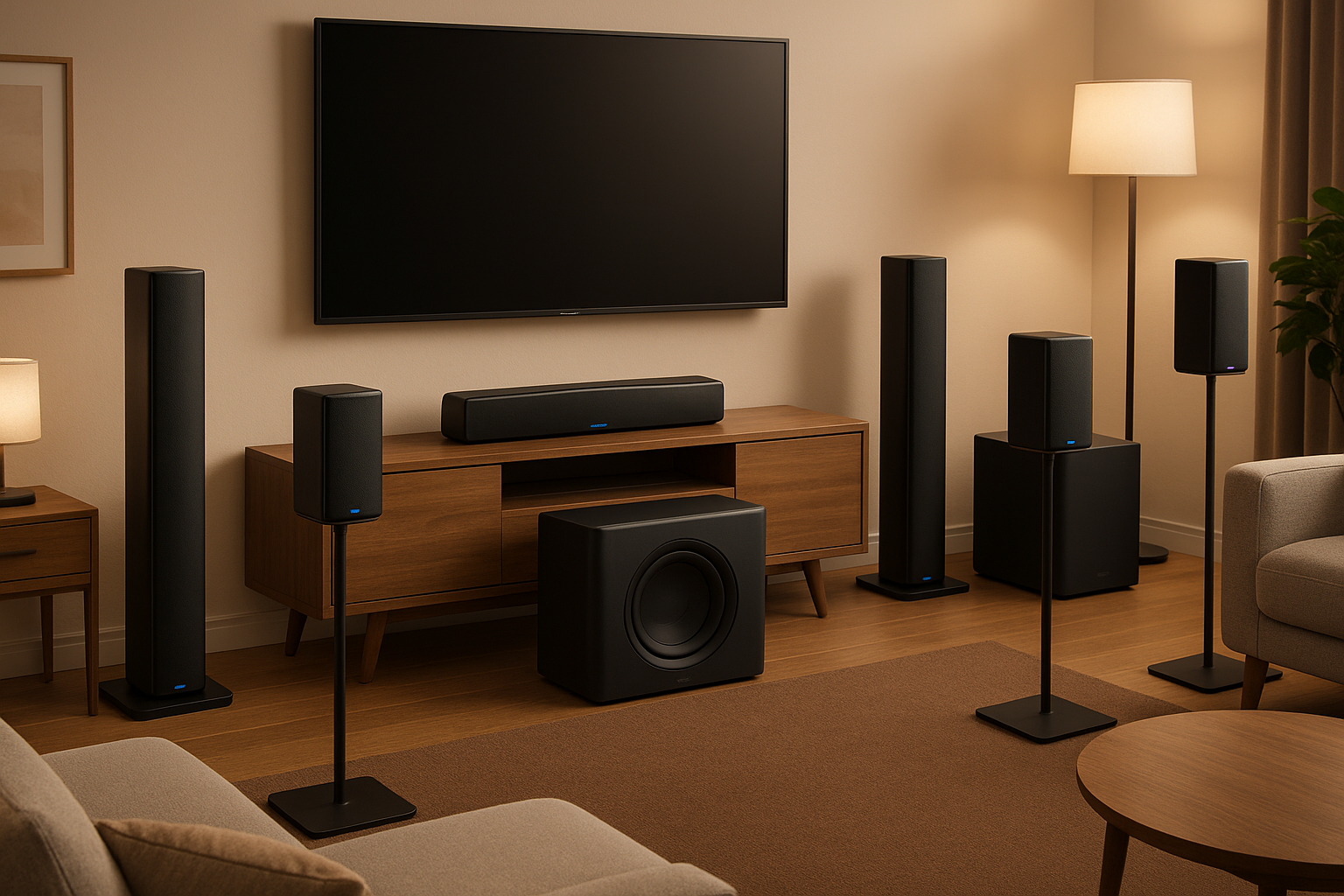
Building a high-quality surround sound system in 2026 requires more than just speakers; it demands a strategic approach to audio formats and placement. Whether you are choosing between Dolby Atmos vs DTS:X or deciding on a 5.1 vs 7.1 channel configuration, the goal is total immersion. This guide covers how to build a home surround sound system from scratch, ensuring your living room becomes a professional-grade cinema with perfect acoustic calibration.
Quick Facts
- Market Growth: The global home theater market was valued at approximately USD 13.67 billion in 2025 and is projected to reach USD 28.29 billion by 2034.
- Industry Standard: In 2024, approximately 90% of professional home theater installations utilized six or more speakers to create surround sound environments.
- Technology Adoption: Immersive audio technologies, including Dolby Atmos and DTS:X, were incorporated into 88% of custom home theater projects according to 2024 industry surveys.
- Format Leadership: Dolby Atmos is the dominant standard for streaming services like Netflix and Disney+, while DTS:X remains a favorite for high-bitrate physical media.
- Layout Baseline: A 5.1 system remains the baseline for most living rooms, while 7.1 and Atmos setups are preferred for dedicated media rooms to eliminate audio dead zones.
- Speaker Height: For traditional surround channels, placing speakers roughly 2 feet above ear level helps create a more diffuse, ambient sense of space.
Building a home surround sound system requires an AV receiver, a subwoofer, and a specific speaker configuration. Standard 5.1 setups use front, center, and side surround speakers, while 7.1 systems add two rear speakers for enhanced immersion. To ensure high-quality audio from modern streaming services, choose components that support object-based formats like Dolby Atmos or DTS:X.
Choosing Your Foundation: 5.1 vs 7.1 Channel Configuration
When you begin the journey of designing your audio space, the first decision is the architecture of the layout. The 5.1 vs 7.1 channel configuration debate often comes down to room size and the level of depth you desire. A 5.1 system is the classic setup, consisting of three front speakers (Left, Center, Right), two surround speakers positioned to the sides of the listener, and a subwoofer for the LFE channel. It is highly effective for smaller rooms or apartments where space behind the seating area is limited.
However, if your room allows for at least three to four feet of space behind your couch, upgrading to a 7.1 system provides a significant leap in realism. By adding two rear surround speakers, you bridge the sonic gap behind the listener. This configuration follows the CTA/CEDIA CEB-22 standard, which aims to create a continuous 360-degree soundstage. In a 7.1 setup, the side surrounds handle ambient effects and lateral movement, while the rear speakers handle directional cues from behind, such as a car driving away or a character calling from a distance.
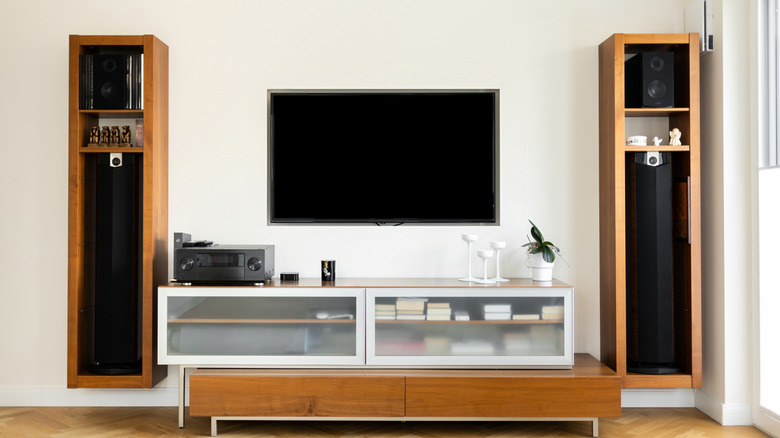
For those looking for the ultimate experience, floorstanding speakers are often preferred for the front left and right channels in larger rooms. These provide the scale and dynamic range needed for heavy orchestral scores or explosive action sequences. In contrast, smaller bookshelf speakers are perfectly adequate for the surround and rear channels, where the audio demand is often more atmospheric than foundational.
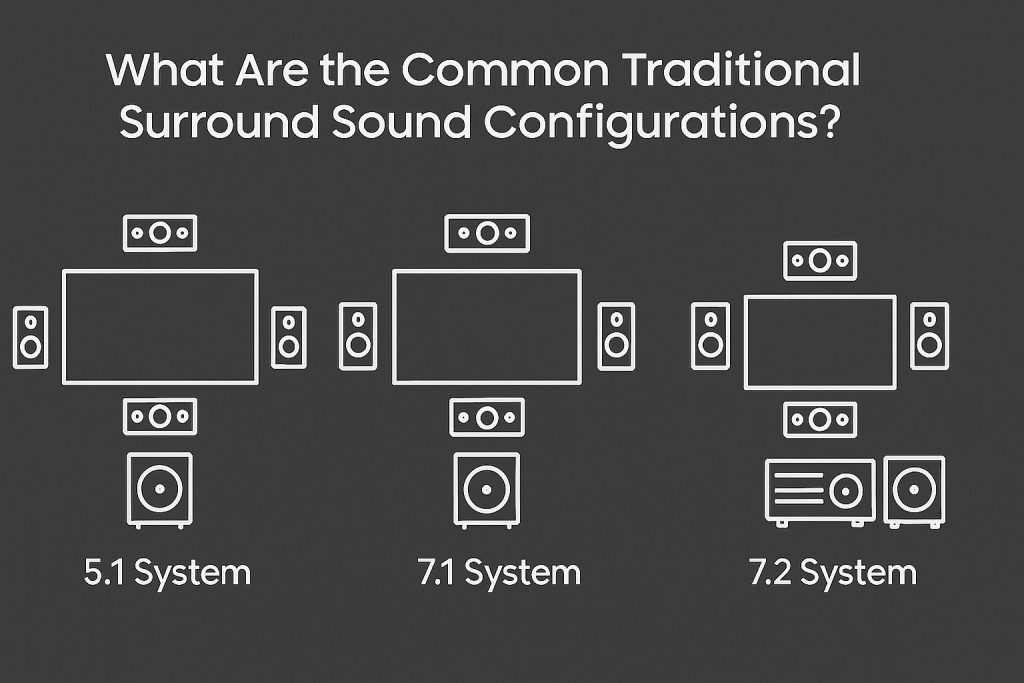
| Feature | 5.1 Surround Sound | 7.1 Surround Sound |
|---|---|---|
| Total Speakers | 5 speakers + 1 subwoofer | 7 speakers + 1 subwoofer |
| Room Size Suitability | Small to Medium (12' x 15') | Large (15' x 20' and above) |
| Audio Immersion | Standard 360-degree field | Enhanced rear soundstage depth |
| Typical Placement | Sides of the listener | Sides AND rear of the listener |
The Technical Blueprint: Home Theater Speaker Placement
Precision is what separates a cluttered room full of speakers from a true home theater. To achieve a professional soundstage, you must adhere to specific angular measurements. The front left and right speakers should be placed at an angle of 22.5 to 30 degrees relative to the center of the screen. This ensures a wide stereo image while maintaining strong phantom imaging between the speakers.
The center channel is arguably the most important component, as it handles nearly all dialogue. Ideally, it should be placed at ear level, directly above or below your screen. If you must place it below the TV, tilt it slightly upward so the tweeters are aimed directly at your ears at the Main Listening Position (MLP). Industry experts recommend that the MLP be positioned at least 18 inches away from the room's centerline to avoid acoustic standing waves that can muddy the bass.
When following a 5.1 vs 7.1 surround sound placement guide, remember that side surrounds in a 5.1 system should be at 100 to 120 degrees. In a 7.1 configuration, the side surrounds move slightly forward to 60 to 110 degrees, with the rear speakers placed at 130 to 150 degrees. This precise home theater speaker placement ensures that as a sound moves from front to back, there are no "holes" in the audio where the sound seems to disappear before reappearing in another speaker.
Next-Gen Audio: Dolby Atmos vs DTS:X for Home Theater
The biggest shift in home audio over the last decade is the move from channel-based audio to object-based spatial audio. In traditional systems, sound is mixed for a specific speaker (e.g., "play this sound in the left surround"). In the Dolby Atmos vs DTS:X for home theater comparison, both formats treat sound as "objects" that can be placed anywhere in a 3D hemisphere.
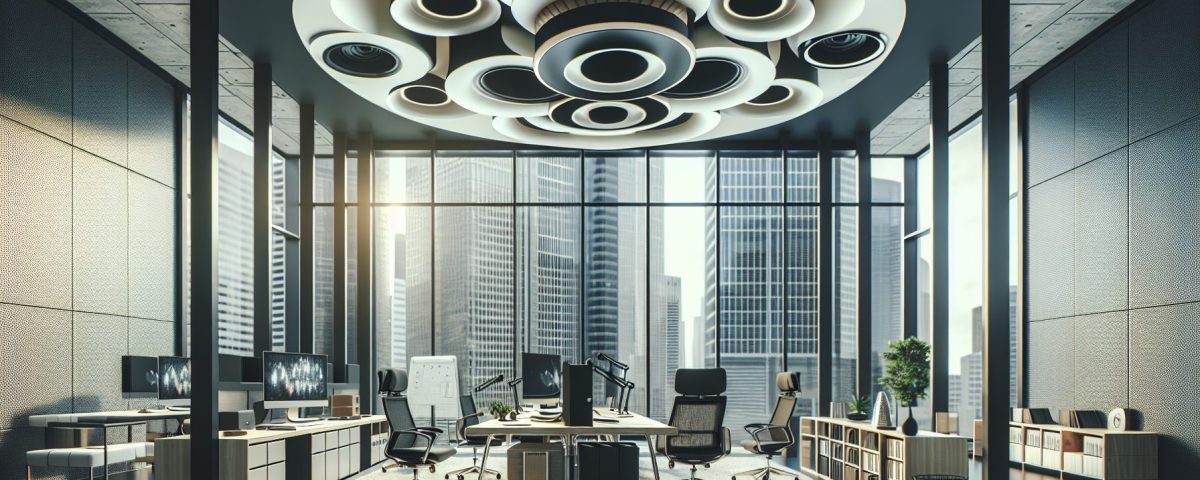
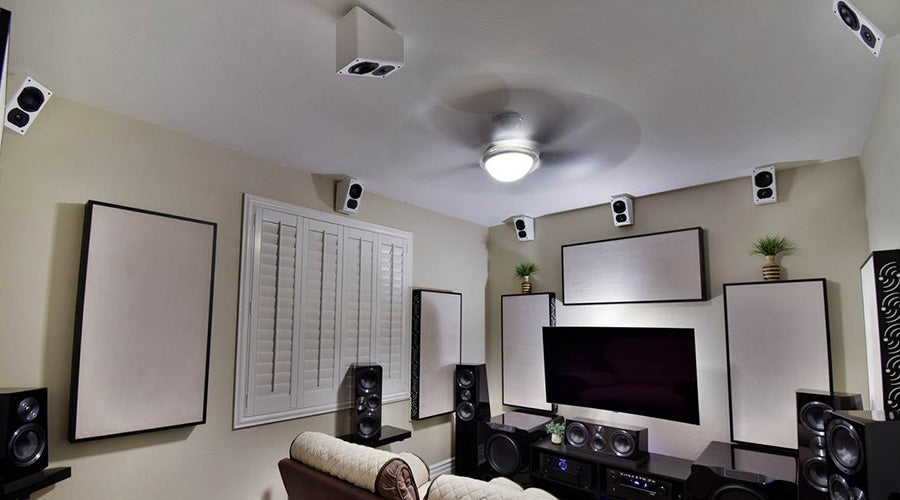
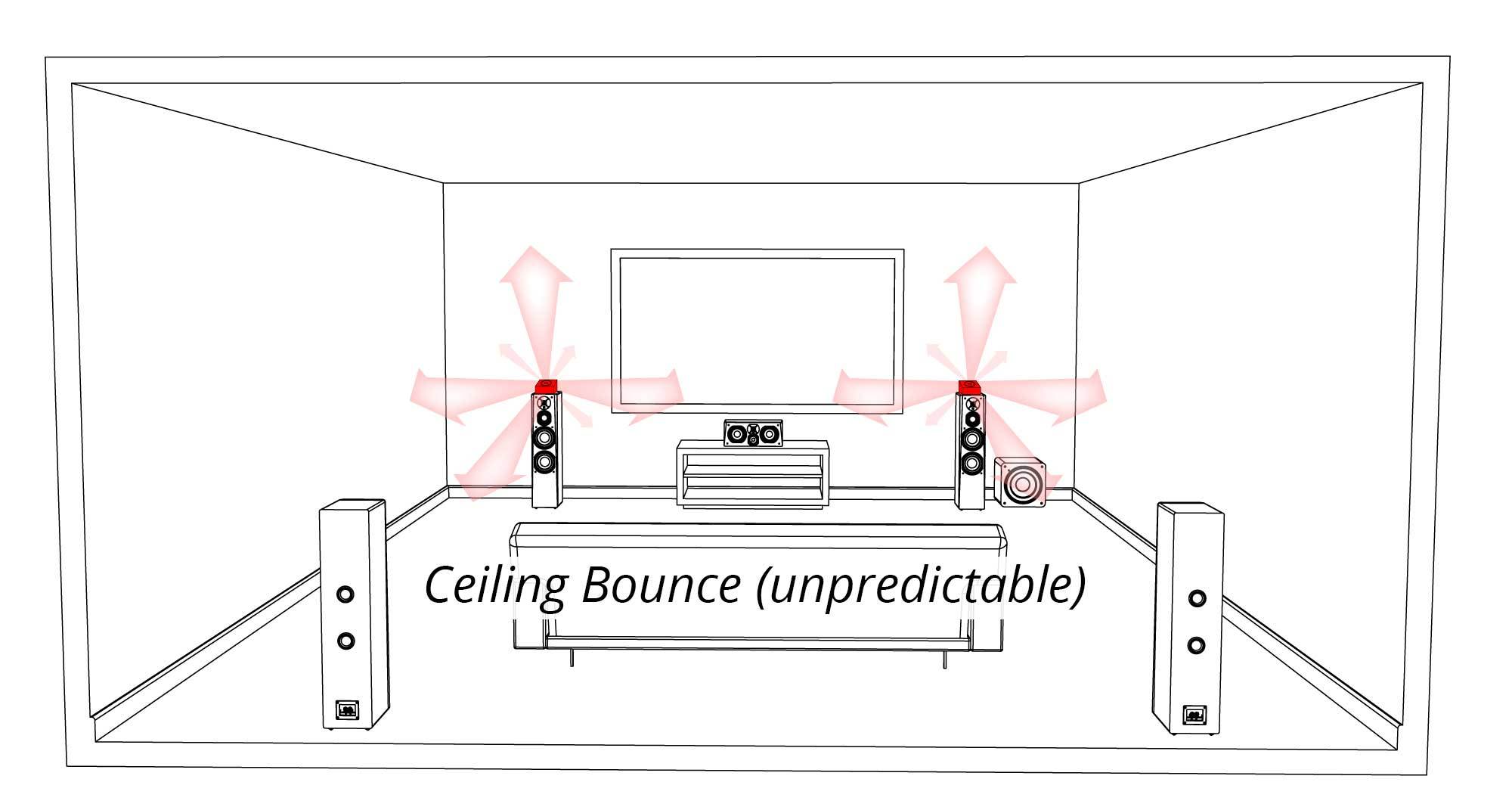
Dolby Atmos uses a three-digit nomenclature, such as 5.1.2 or 7.2.4. The third digit represents the number of height channels. A 5.1.2 system includes the standard five speakers, one subwoofer, and two overhead or height speakers. For those who cannot install in-ceiling speakers, up-firing modules can be placed on top of your existing front speakers to bounce sound off the ceiling, though in-ceiling speakers remain the gold standard for accuracy.
DTS:X offers a slightly different advantage. Unlike Atmos, which has stricter speaker placement requirements, DTS:X is more flexible and can adapt to almost any speaker layout. Furthermore, DTS:X is often praised by enthusiasts for its higher bitrate on physical Blu-ray discs, providing a less compressed, more visceral listening experience. When you are learning how to build a home surround sound system from scratch, ensuring your hardware supports both formats is vital for future-proofing.
Essential Hardware: Choosing an AV Receiver and Subwoofer
The AV receiver is the central nervous system of your surround sound system. When choosing an AV receiver for surround sound, look for support for HDMI eARC (Enhanced Audio Return Channel), which allows high-bitrate formats like Atmos to travel from your TV's built-in apps back to the receiver without loss of quality. Most modern receivers also include a calibration microphone. Using this is non-negotiable; the software measures the distance from each speaker to your seat and adjusts the timing and volume to create a perfectly balanced sweet spot.
Equally important is the subwoofer. While the main speakers handle the melody and dialogue, the subwoofer provides the physical impact. Finding the right spot for bass can be tricky because of room modes. To solve this, audio pros use the "subwoofer crawl":
- Place the subwoofer in your actual sitting chair.
- Play a bass-heavy track.
- Crawl around the room on your hands and knees.
- Where the bass sounds the cleanest and tightest (not just the loudest), that is where the subwoofer should live.
Once placed, you must set the crossover frequency, which is the point where the speakers stop playing bass and the subwoofer takes over. A standard starting point is 80Hz, ensuring your main speakers aren't strained by deep frequencies they weren't designed to handle.
Room Acoustics and Environmental Troubleshooting
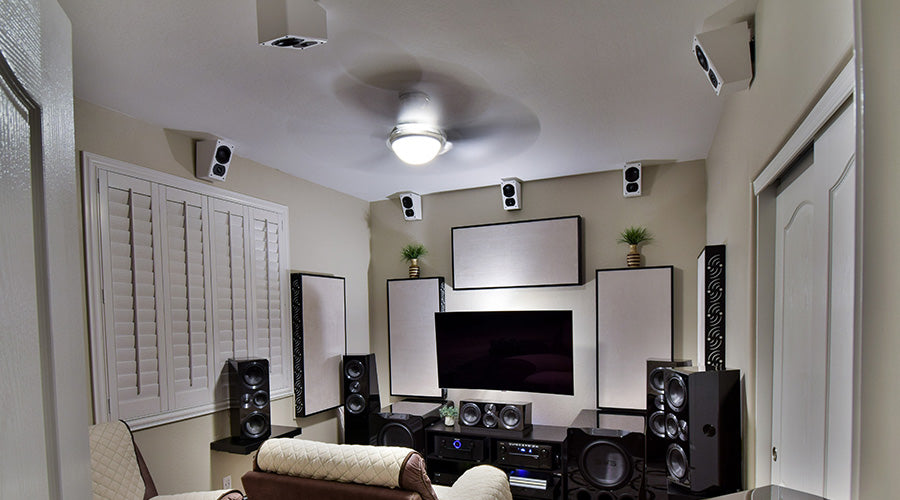
Even the most expensive speakers will sound mediocre in a room with poor acoustics. Hard surfaces like hardwood floors and large glass windows cause sound to bounce, leading to "smearing" where dialogue becomes difficult to understand. To fix this, you don't need a recording studio, but you do need some basic acoustic treatment.
- Bass Traps: Placing thick foam or fabric traps in the corners can prevent the LFE channel from sounding "boomy" or bloated.
- First Reflection Points: Hang acoustic panels or even a thick rug on the side walls halfway between your seat and the front speakers to improve the soundstage.
- Ceiling Geometry: If you are using up-firing Atmos speakers, a flat, hard ceiling is required. Vaulted or popcorn ceilings will scatter the sound, ruining the spatial audio effect.
If you are dealing with a non-rectangular room, your receiver's room correction software (like Audyssey or Dirac Live) will be your best friend. These systems can compensate for asymmetrical walls by adjusting the phase and EQ of individual speakers. Optimizing room acoustics for home audio is often the final 10% of the build that yields the most significant improvement in clarity.
FAQ
What is the difference between 5.1 and 7.1 surround sound?
A 5.1 system uses five speakers and one subwoofer, with the surround speakers usually placed to the sides of the listener. A 7.1 system adds two additional rear speakers behind the listener, creating a more immersive and seamless audio environment in larger rooms.
Is a soundbar better than a surround sound system?
A soundbar is a convenient, space-saving solution, but it cannot match the channel separation and physical immersion of a true surround sound system. Discrete speakers allow for a wider soundstage and more accurate placement of audio effects.
Do I need a receiver for a surround sound system?
Yes, unless you are using a fully active wireless system, a receiver is required to decode audio signals from your TV or player, amplify those signals, and send them to each individual speaker.
What is the best speaker placement for surround sound?
The best home theater speaker placement for living rooms involves placing the front speakers at 22.5-30 degree angles, the center channel at ear level, and surround speakers slightly behind the listener at 100-120 degrees for a 5.1 setup.
What is the difference between Dolby Atmos and surround sound?
Traditional surround sound is channel-based, meaning audio is sent to specific speakers. Dolby Atmos is object-based, allowing sound to move freely in a three-dimensional space, including above the listener, providing a more lifelike experience.
Building your own cinematic sanctuary is a rewarding project that brings the magic of the theater into your daily life. By focusing on correct placement and selecting the right formats, you can create a system that sounds incredible for years to come. If you find the technical setup daunting, consider consulting a local AV professional for a final calibration to truly unlock your system's potential.