Quick Facts
- Frequency: Lubricate the gear head once per year or at the start of every landscaping season.
- Lubricant Type: Molybdenum bisulfide grease is preferred for its heat dissipation and friction reduction properties.
- Noise Comparison: Ryobi 40V cordless string trimmers operate at noise levels between 62 and 68 decibels, significantly quieter than gas alternatives.
- Key Indicator: The "ooze method" ensures the gearbox is full when grease begins to exit the threads during application.
- Safety Protocol: Always remove the 40V or 18V battery or disconnect the spark plug before performing maintenance.
- Equipment Life: Proper preventative maintenance can prevent bearing seizure and extend the tool longevity of your trimmer.
To properly lubricate a string trimmer, apply grease to the gear head fitting once a year or immediately if you hear grinding. Checking your operator's manual is the first step, as some budget Ryobi models feature sealed bearings that do not require external lubrication, while others need a regular application of molybdenum bisulfide grease to ensure smooth operation and prevent mechanical wear.
Does Your Ryobi Trimmer Need Lubrication?
Maintaining a yard often means dealing with the constant hum of outdoor power equipment. If you have made the switch to battery power, you likely appreciate that Ryobi's Whisper Series outdoor tools are between 70% and 86% quieter than traditional gas-powered equipment. However, even the quietest electric motor cannot mask the sound of metal-on-metal grinding if the gearbox runs dry.
Before you grab your grease gun, you need to identify if your specific model is maintenance-friendly. Ryobi produces a wide range of trimmers, from the entry-level 18V ONE+ series to the high-performance 40V Expand-It systems. Many budget-friendly models, such as the RY24310, are designed with sealed bearings. These units are lubricated at the factory and are not intended to be opened by the user. If these models start making noise, it usually signals that the internal components have reached the end of their lifespan.
For most mid-range and professional-grade Ryobi trimmers, you will find a small hex-head screw located on the side of the gear case near the string head. This is your access port. If your tool has this screw, you should be performing Ryobi string trimmer maintenance at least once a year. A common sign that you need to act is a high-pitched whine or an increase in vibration felt through the handle. These symptoms suggest that the grease inside the gearbox housing has broken down or migrated away from the gears, leading to increased friction and heat. Knowing how often to lubricate Ryobi 40v string trimmer is key to preventing a total mechanical failure.

Choosing the Right String Trimmer Gear Head Grease
When it comes to selecting a lubricant, not all grease is created equal. The gearbox of a string trimmer operates at incredibly high rotational speeds, often exceeding 7,000 RPM. This environment generates significant heat, which can cause low-quality lubricants to thin out and leak or, worse, oxidize and harden into a useless paste.
The gold standard for this application is molybdenum bisulfide grease. This specific lubricant contains "moly" particles that plate the metal surfaces of the gears. Even if the base oil of the grease is pushed away during high-speed rotation, the molybdenum provides a dry film that continues to offer friction reduction. It is particularly effective at heat dissipation, which is vital for protecting the drive shaft assembly during long sessions of heavy clearing.
Many homeowners ask, can you use white lithium grease on string trimmers? While white lithium grease is a fantastic general-purpose lubricant for door hinges or garage door tracks, it often lacks the high-pressure additives required for heavy-duty gear sets. It may work in a pinch for light trimming, but for long-term health, a specialized string trimmer gear head grease or a high-quality silicone-based lubricant is a much safer bet. Using the best type of grease for string trimmer gear head ensures that the protective coating remains intact even when the tool is pushed to its limits.
Step-by-Step: How to Apply Grease to the Gear Head
Once you have identified that your trimmer requires maintenance and you have the correct lubricant on hand, the actual process of how to lubricate string trimmer components is quite straightforward. Follow these steps to ensure a clean and effective application.
- Safety First: Before touching the cutting head, ensure the power source is completely neutralized. For cordless models, slide the battery out of the port. For gas models, pull the lead off the spark plug to prevent an accidental start.
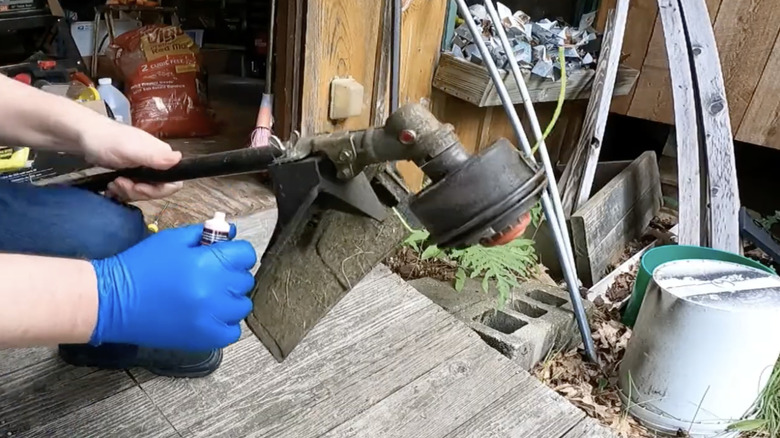
- Clean the Area: Use a stiff brush or a damp rag to remove grass clippings, dirt, and dried mud from the gearbox housing. You do not want any debris falling into the gear case when you remove the access screw.
- Open the Port: Using a 1/2 inch socket or a wrench, carefully unscrew the grease port bolt. Set it aside in a secure place where it won't get lost in the grass.
- Prepare the Grease: If you are using a squeeze tube of grease, you may need to trim the tip so it fits snugly against the port. Some Ryobi-specific grease tubes are designed to thread directly into the hole.
- The Ooze Method: Gently squeeze the grease into the port. As the internal reservoir fills, the old, darkened grease or the new lubricant will eventually start to back up. Continue until you see the grease begin to ooze out of the threads. This is the signal that the cavity is sufficiently filled.
- Reassemble and Distribute: Replace the screw and tighten it securely, but do not over-tighten, as the housing is often made of aluminum and can strip easily. Reinstall your battery and run the trimmer at half-throttle for about thirty seconds. This helps the gears pick up the new grease and distribute it evenly across the entire drive shaft assembly.
Pro-Tip: The Ooze Method To ensure you’ve applied enough lubricant without over-pressurizing the seals, watch the threads of the port closely. When the grease begins to push back out toward you, the gearbox is full. This prevents air pockets that could lead to localized overheating.
Learning how to fix grinding noise in Ryobi string trimmer is often as simple as following this five-minute procedure. If you are unsure where to apply grease on Ryobi weed eater head, look for the only bolt on the gear case that doesn't appear to be holding a guard or a bracket in place.
When Greasing Isn't Enough: Replacing the Gear Head
While regular lubrication is a miracle worker for tool health, it cannot fix hardware that is already physically damaged. If you apply fresh grease and the tool still produces a heavy grinding sound or if the head is difficult to spin by hand, you may be dealing with bearing seizure or a stripped gear set.
One way to check for severe mechanical wear is to remove the string head and try to rotate the output shaft manually. If you feel significant "catch" points or if there is excessive side-to-side play in the shaft, the grease was likely applied too late to save the components. In these cases, the most cost-effective solution is often replacing the entire gear head assembly. For many popular Ryobi models, searching for Part #308210009 will provide the correct replacement unit.
Consistently monitoring for signs string trimmer gearbox needs lubrication—such as a change in the pitch of the motor or the head becoming hot to the touch—will save you the cost of these replacement parts. A well-maintained gear set should run with minimal rotational resistance and should never reach temperatures that make the gear case painful to touch. If you want to stop weed eater noise before it becomes a permanent failure, listen to what your tool is telling you during every use.
Seasonal Storage and Maintenance Tips
The way you store your tools over the winter is just as important as how you use them in the summer. Maintenance experts recommend greasing a trimmer's gear head right before putting it away for the season. This prevents any moisture that may have entered the gearbox from causing rust on the precision-machined gears during months of inactivity.
Temperature control is also a factor in seasonal storage preparation. Ideally, your Ryobi tools should be kept in a climate-controlled environment between 50°F and 100°F. Extreme cold can cause the oil in the grease to separate from the thickener, a process known as bleeding. If this happens, the grease may not provide adequate protection when you first pull the trigger in the spring.
Finally, always perform a deep clean before storage. Grass clippings hold moisture against the metal housing, which can lead to corrosion over time. A clean tool is a long-lasting tool, and a few minutes of preventative maintenance in the fall will ensure your trimmer is ready to perform the moment the grass starts growing again.
FAQ
Do you need to grease a string trimmer head?
Yes, most string trimmers with a dedicated gear case require regular lubrication to prevent the metal gears from wearing down due to friction. However, you should check your specific Ryobi model first, as some entry-level units use sealed bearings that are not designed for user maintenance.
What type of grease is best for string trimmers?
The best grease for this job is a high-quality molybdenum bisulfide grease. This type of lubricant is designed to withstand high temperatures and extreme rotational speeds. Lithium-based greases are also acceptable, but molybdenum provides a better protective coating for the internal gear teeth.
How often should a string trimmer be lubricated?
Under normal residential use, you should lubricate the gear head once a year. If you use your trimmer commercially or for several hours every week, you may need to apply grease twice a season. Always add grease immediately if you notice unusual vibrations or a grinding noise.
How do you grease a trimmer gearbox?
To grease the gearbox, first remove the power source (battery or spark plug). Locate the grease port screw on the side of the gear housing and remove it. Insert the nozzle of your grease tube into the hole and squeeze until grease begins to ooze out of the threads. Replace the screw and run the tool briefly to distribute the lubricant.
Where do you put grease in a string trimmer?
Grease is applied through a specific access port located on the gearbox housing, which is the metal component right above the spinning string head. This port is usually sealed with a small hex-head bolt that requires a socket or wrench to remove.
Does the trimmer drive shaft need lubrication?
While the gear head is the most critical area for grease, many Ryobi Expand-It attachments also benefit from a light coating of grease on the drive shaft assembly where it connects to the power head. This ensures smooth power transfer and prevents the shaft from binding or becoming stuck inside the tube.