Quick Facts
- Service Life: A well-maintained set typically lasts between 15,000 to 30,000 miles depending on riding conditions.
- The Golden Rule: Always replace the front sprocket, rear sprocket, and chain as a matched set to prevent premature wear.
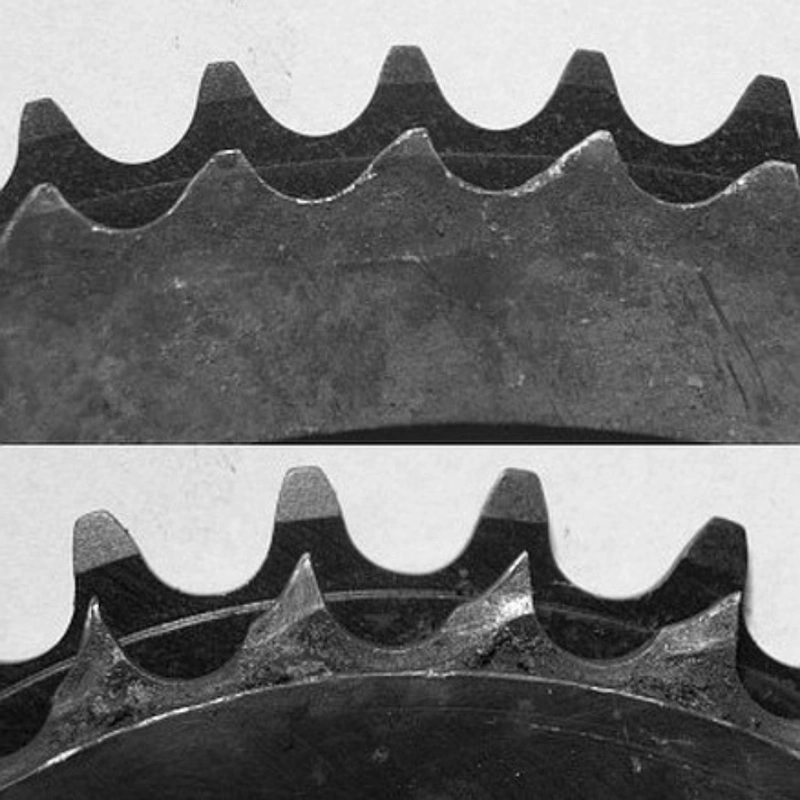
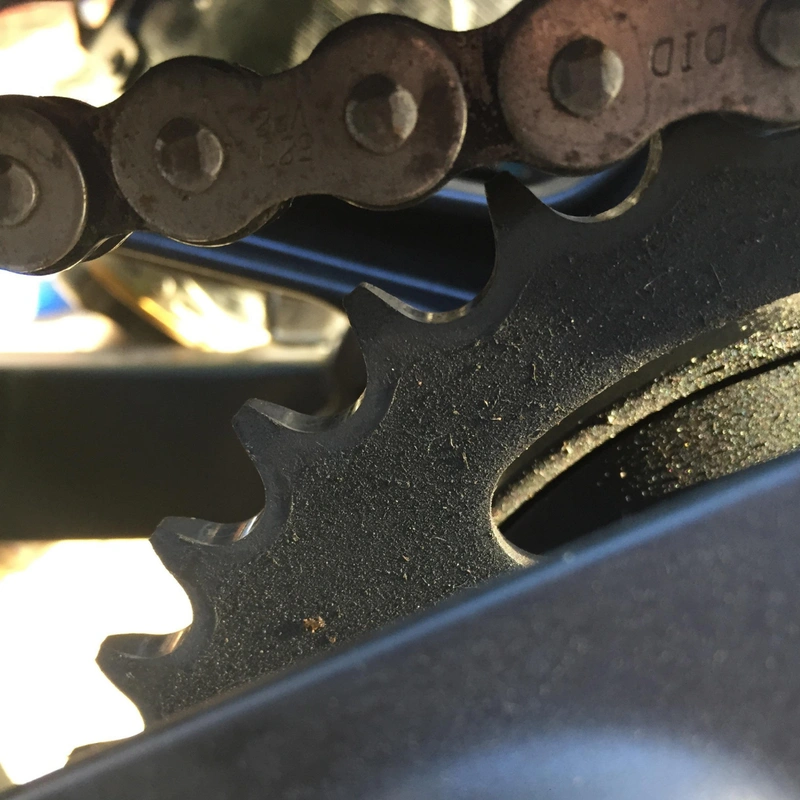
- Primary Visual Sign: Look for hooked sprocket teeth that resemble a shark fin rather than a symmetrical mountain peak.
- The Diagnostic Test: Pull the chain at the 3 o’clock position; if you see more than half a tooth's depth, the components are exhausted.
- Critical Threshold: Sprockets are considered failed when tooth wear reaches 10% of the original tooth width.
- Material Choice: Steel offers the best longevity for street use, while aluminum alloy sprockets are reserved for weight-sensitive racing.
Identifying motorcycle sprocket wear early is critical for rider safety and drivetrain longevity. While often overlooked, worn sprockets can lead to chain skipping or even engine damage. By performing a regular motorcycle sprocket inspection and recognizing signs like hooked sprocket teeth, you can ensure your final drive system remains efficient. Visual indicators include teeth that look asymmetrical or like shark teeth; if you can pull the chain away to reveal half a sprocket tooth, the set is dead.
Visual Guide: Identifying Hooked or Shark Tooth Profiles
When you first look at a brand-new sprocket, the teeth are perfectly symmetrical. The tips are usually slightly radiused or squared off, and the "valleys" between the teeth are uniform and U-shaped. As the miles rack up, the constant friction and high-tension loads from the chain begin to reshape the metal. The most common sign of motorcycle sprocket wear is the development of hooked sprocket teeth. This happens because the chain only pulls on one side of the teeth. Over time, the metal wears away on the trailing edge, creating a profile that looks like a shark fin pointing toward the front of the bike.
This asymmetrical wear is often accelerated by drivetrain snatch, which occurs during aggressive downshifting or rapid throttle transitions. As the chain links experience pitch elongation—frequently mislabeled as "stretching"—the rollers no longer sit deeply and centrally in the sprocket valleys. Instead, they ride higher up on the tooth face, grinding away the material. If you notice the tips of the teeth becoming sharp or "pointed" like a needle, the sprocket has lost its structural integrity.
Another subtle but important sign is lateral wear. If the sides of the teeth are shiny or scored while the rest of the sprocket remains dark or dirty, you likely have an issue with axial alignment. This means your rear wheel is not perfectly straight, forcing the chain to enter the sprocket at an angle, which thins the teeth from the side. Regular visual guide to motorcycle sprocket teeth wear patterns can save you from a catastrophic failure on the road.

The Pull Test: A Concrete Diagnostic Benchmark
While visual inspection is helpful, it can sometimes be subjective. To get a definitive answer on the health of your drivetrain, you need to perform a motorcycle chain pull test. This physical diagnostic measures the coordination between the chain's pitch and the sprocket's teeth. When a chain wears out, the distance between the pins increases due to bushing wear inside the rollers. This means the chain no longer perfectly "meshes" with the sprocket.
To perform the test, go to the very back of the rear sprocket (the 3 o'clock position if you are looking at it from the side). Grab a link of the chain and pull it directly away from the sprocket toward the rear of the motorcycle.
- Healthy System: The chain should barely move. It should remain seated firmly against the teeth.
- Moderate Wear: You can see a small gap, but the chain still covers most of the tooth.
- Failed System: If you can pull the chain far enough to reveal more than half of a sprocket tooth, the components are finished.
At this point, the chain and sprocket are no longer working in harmony. The pitch elongation has reached a point where the chain is trying to climb out of the teeth. This is often when riders begin to notice a "notchy" feeling or excessive driveline vibration. If you continue to ride in this condition, you risk the chain jumping the teeth entirely, which can result in a locked rear wheel or a shattered engine case.
The Hidden Danger: Inspecting the Countershaft Sprocket
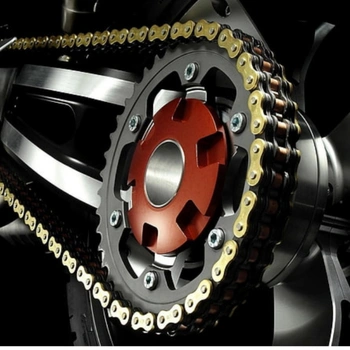
Most riders focus on the rear sprocket because it is large and easy to see. However, the front sprocket, also known as the countershaft sprocket, is usually the first to fail. Because it is much smaller—often having only 14 to 17 teeth compared to 40+ on the rear—it must rotate several times for every single rotation of the rear wheel. This means each tooth on the front sprocket handles significantly more contact and friction per mile.
The countershaft sprocket is usually hidden behind a metal or plastic cover, often coated in a thick layer of old chain wax and road grime. During your motorcycle sprocket inspection, it is vital to remove this cover. You are looking for the same signs: hooked sprocket teeth and thinning. Because the front sprocket is made of case-hardened steel, it can sometimes look okay even when it is worn down to the point of being dangerous.
Warning: A failed front sprocket is particularly dangerous. If the teeth shear off or the chain slips here, the chain can bunch up and punch a hole through your engine crankcase, leading to an immediate loss of oil and a very expensive repair bill.
Listen for auditory signs of worn motorcycle sprockets and chains. A high-pitched whining noise that changes with speed, or a rhythmic clunking at low speeds, often indicates that the front sprocket has become so worn that the chain is no longer rolling smoothly over it.
The Matched Set Rule: Why Replacement is All-or-Nothing
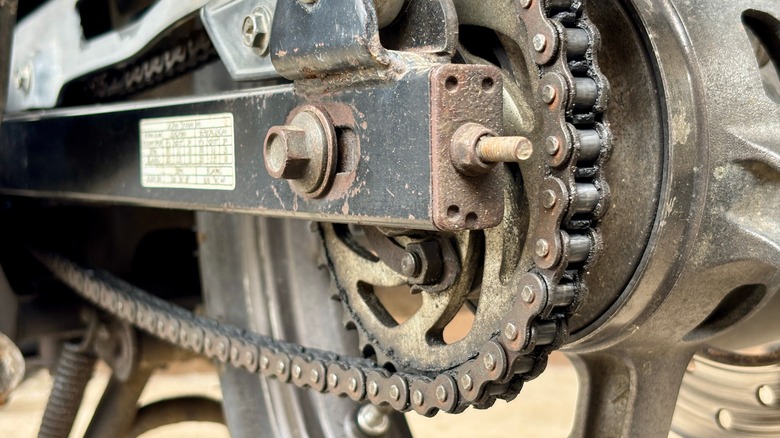
A common mistake among DIY mechanics is trying to save money by replacing only the chain or only the sprockets. This is a false economy. The chain and sprockets wear together into a unique "mating" pattern. If you put a brand-new chain on worn, hooked sprocket teeth, the sprocket will immediately begin to pull the new chain out of alignment, causing it to wear out in a fraction of its normal lifespan.
Conversely, putting a new sprocket on a worn chain is even worse. The elongated pitch of the old chain will concentrate all the engine's power onto the tips of the new sprocket teeth, flattening them out within a few hundred miles. There are many reasons to replace motorcycle chain and sprockets as a set, but the primary one is simple: it ensures the entire final drive system starts with a perfect pitch match.
When choosing your replacement kit, you'll need to decide between materials. For 90% of riders, steel is the correct choice.
| Feature | Steel Sprockets | Aluminum Alloy Sprockets |
|---|---|---|
| Durability | High (15,000 - 30,000 miles) | Low (3,000 - 7,000 miles) |
| Weight | Heavy | Extremely Light |
| Common Use | Touring, Commuting, Street | Racing, Motocross |
| Maintenance | Forgiving | Requires frequent cleaning/lube |
| Cost | Budget-friendly | Premium |
Aluminum alloy sprockets are excellent for reducing unsprung weight and improving acceleration on a race track, but for a daily rider, they wear down far too quickly. For most, case-hardened steel provides the reliability needed for long-distance travel.
Maintenance Tips to Extend Sprocket Life
The longevity of your drivetrain is directly proportional to how well you maintain it. The goal is to minimize friction and ensure that the load is spread evenly across all components.
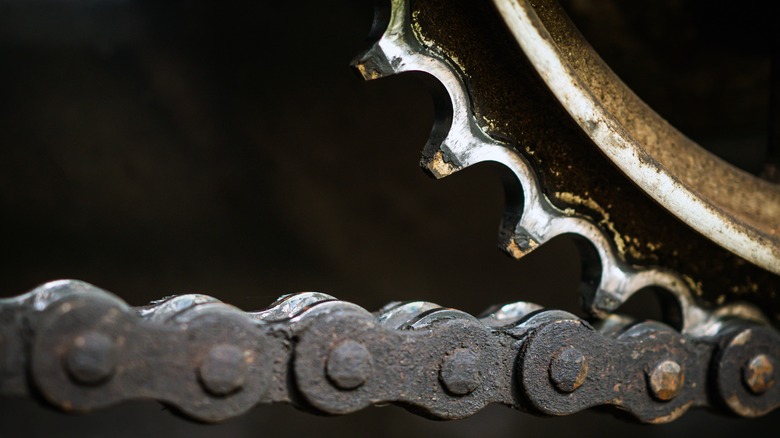
- Clean and Lubricate Frequently: You should clean and lube your chain every 250 to 500 miles. Use a dedicated chain cleaner to remove the grit that acts like sandpaper on your sprocket teeth.
- Verify Alignment: Lateral wear is a silent killer. Use a laser alignment tool to ensure that the countershaft sprocket and rear sprocket are in a perfectly straight line. Even a fraction of a millimeter of misalignment can cause one side of the teeth to thin out prematurely.
- Manage Chain Slack: Both too much and too little slack are harmful. If the chain is too tight, it puts immense pressure on the countershaft sprocket and the output shaft bearing. If it is too loose, the resulting drivetrain snatch creates an impact force that hammers the teeth into a hooked shape.
- Inspect O-ring Seals: If you see "red dust" around your chain links, the O-ring seals have failed, and the internal factory grease has dried out. This will lead to stiff links, which will quickly destroy even the highest-quality sprocket.
By staying proactive with your motorcycle sprocket inspection and addressing issues as soon as you see signs of wear, you can maximize your mileage and keep your rides smooth and safe.
FAQ
How can you tell if a motorcycle sprocket is worn?
You can identify wear by looking for teeth that have become pointed, thin, or hooked in one direction. Additionally, if the valleys between the teeth look flattened or if you can see significant silver scoring on the sides of the teeth, the sprocket has reached the end of its service life.
Should I replace both sprockets and the chain at the same time?
Yes, technicians strongly recommend replacing the front sprocket, rear sprocket, and chain simultaneously. Because these parts wear together into a matched set, using an old component with new ones will cause the new parts to wear out prematurely due to mismatched pitch elongation.
What does a hooked motorcycle sprocket look like?
A hooked sprocket features teeth that are no longer symmetrical. Instead of a balanced peak, the teeth curve forward toward the direction of rotation, resembling the dorsal fin of a shark. This happens as the chain rollers pull against the metal and gradually move it forward.
Is it dangerous to ride with a worn sprocket?
It is very dangerous. A severely worn sprocket can cause the chain to skip, leading to a loss of power or, in worse cases, a derailed chain. A derailed chain can wrap around the rear hub and lock the wheel, or whip forward and crack the engine casing.
How many miles do motorcycle sprockets usually last?
On average, a well-maintained set lasts between 15,000 and 30,000 miles. However, this lifespan can be significantly shorter if the chain is not lubricated, if the bike is ridden in sandy or salt-heavy environments, or if the chain alignment is incorrect.